Big Ron’s big gaffe
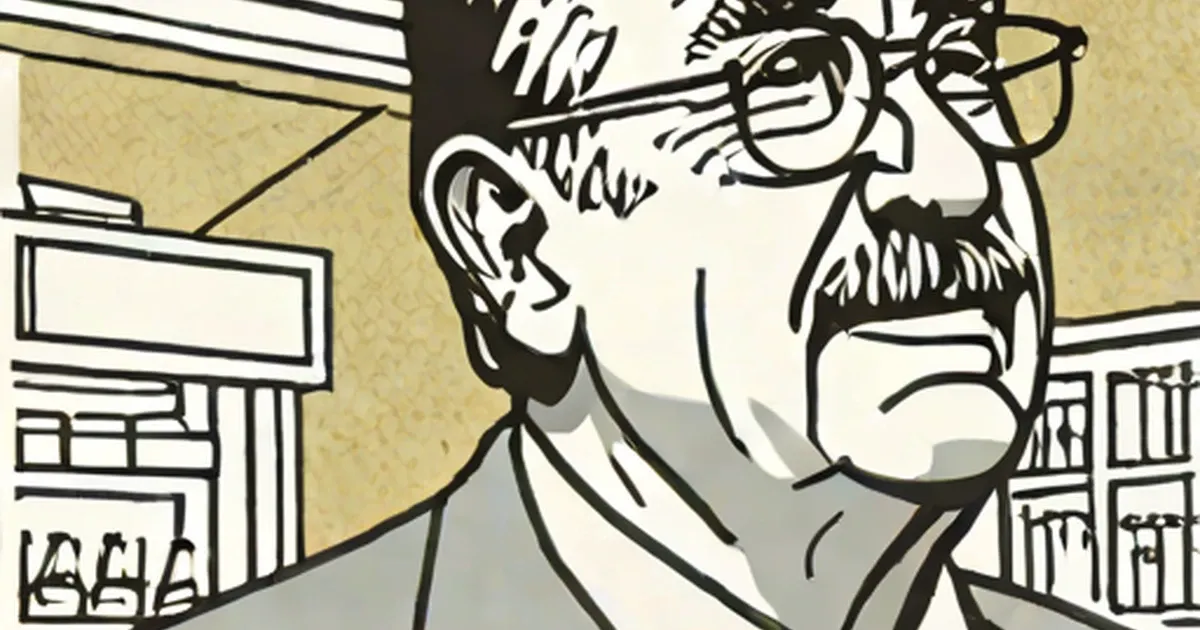
Ron Atkinson, one of the most familiar voices in English soccer, bows out in disgrace after a racist insult is accidentally broadcast live on TV.
For years, the face and voice of Ron Atkinson had been well-known to millions of armchair soccer fans in Britain.
The ex-manager was loved, loathed and ridiculed, in roughly equal measures, for his idiosyncratic style in the commentary booth. He mangled the English language to such an extent that his spiel became known as “Ronglish” -- a language of its own.
He would begin nearly every sentence with either “Tell you what...,” or “To be fair...,” or both. Then he would unleash a baffling stream of obscure expressions such as “early doors,” “spotter’s badge,” “he’s done a little lollipop,” “curly finger,” and -- a particular favorite -- “little eyebrows.” (For a full detailed guide to the language, visit http://www.dangerhere.com/ronglish.htm.)
With his permanent suntan (an unusual sight in England), penchant for expensive jewelery, colorful private life, and habit of singing in a cod-Sinatra crooning style -- he even released a Christmas single in 2002 -- “Big Ron” was hardly the shy, retiring type.
But on April 20th, his career came shuddering to a halt, as his Ronglish deserted him and something much more straightforward came out of his mouth.
After Chelsea’s 3-1 defeat in the first leg of their European Champions’ League semi-final in Monaco, Atkinson was in the commentary booth, watching some action from the game again on tape, wondering what had brought about Chelsea’s second-half collapse. The ITV coverage of the game in Britain had ended, but unknown to Atkinson, the microphone was still live, and the broadcast to some Middle Eastern countries was still in progress, when he made a crude racist insult about Chelsea’s black defender Marcel Desailly.
I’ll spare you the full gory details of what he said. Let’s put it this way: the first word was unrepeatable, the second was “lazy,” the third was “thick” and the fourth began with “n.”
The next day, the news of the gaffe reached the British media. Soon it was one of the biggest talking points in the country. Atkinson expressed his remorse and apologized profusely, explaining that his frustration at Chelsea’s performance had got the better of him, and he had said something totally out of character.
Atkinson quickly offered his resignation to ITV, and it was accepted. Not surprisingly, he also lost his contract to write columns for The Guardian, a liberal broadsheet newspaper.
He strongly denied being a racist. Many people in the game, including some black players who had worked with him, told the press that they believed him; others were less sympathetic.
The issue of racism in English soccer had never really gone away, and Ron Atkinson’s outburst brought it back to the fore.
There had been some black players in professional soccer in England as far back as the 1890s, but they were very few and far between until the 1970s.
Although racism undeniably played a part in this, the make-up of the population also had a lot to do with it. The non-white population was very small until the late 1940s, making this quite different from the history of racial division in North American sports, although there are some parallels. Encouraged by the British government as it faced a post-war labor shortage, a large number of black people migrated from the ex-colonies (and soon to be ex-colonies) in the Caribbean.
Soccer was an underdeveloped sport in those West Indian islands (cricket was the order of the day), so this wave of migration didn’t bring a pool of ready-made players to England. There was no big change in the racial make-up of the game until well into the 1970s, when the first large generation of British-raised black children came of age.
Even in the late 1970s, the idea of a black player appearing for an English team was still widely regarded as a novelty. But one of the best teams in the country at that time, and arguably the most entertaining team to watch, was West Bromwich Albion, regularly featuring three black players -- Brendan Batson, Laurie Cunningham and Cyrille Regis -- more than any other team in the top division of the league. Who was their bright young manager? You guessed it: Ron Atkinson.
After making a big impression at West Bromwich, Atkinson landed the more high-profile job of managing Manchester United in 1981. He couldn’t live up to the high expectations there, and was fired five years later. Then came a string of short-lived and mostly unsuccessful appointments elsewhere, followed by a full-time move to the more comfortable world of TV commentary.
But, while his career was in decline, Atkinson was given a lot of credit for the opportunities that he’d given to black players in those earlier days, at a time when they were met with open hostility from many fans and even from some team managers. It was quite common for people to hold stereotypical beliefs about them: that they were lazy, that they didn’t enjoy the physical aspects of the game, and (even though most of these players had lived in England all their lives) that they couldn’t handle cold weather.
Some fans resented their presence in the English game, especially when they began to appear in the national team. When Regis was first selected for the England squad, among the torrent of hate mail was a package containing a bullet, with a message suggesting that another one would be winging its way towards him if he stepped onto the field in an England shirt.
In recent years, racism among soccer fans in England has gradually declined to a pretty low level, reflecting changes in society and the rising number of black players in the game. Only the most hardened bigot could shout racial abuse at the opposing team’s black players, while accepting the ones in his own team.
Given Ron Atkinson’s small but significant role in the emergence of black players in the game, it was particularly depressing that he, of all people, should come out with such a blatantly racist outburst. If he had this attitude, what does it tell us about other managers from his era, who employed less black players than he did, or none at all?
Perhaps the easiest way of looking at this is to dismiss the 65-year-old Atkinson as a relic of a bygone age -- part of a generation that was born into a practically all-white society, and has never fully come to terms with the changes in the world around it. It’s hard to imagine any of today’s younger managers saying what he said -- either now, or in 20 years’ time when they’re rambling incoherently in commentary booths.
What does the future hold for Ron Atkinson? At his age, and with a lucrative career behind him, retirement must be an option. But he’s been such a familiar presence for so many years, it seems almost inevitable that somebody in the media world will eventually give him another chance. They’ll play down the significance of his gaffe, and portray him as a “victim of political correctness” -- the usual ploy of the tabloid press in such circumstances.
He seems genuinely remorseful, ashamed and upset by what he did. As someone who has clearly enjoyed being in the spotlight, he would surely hate to be remembered for this episode. However, anything he does in the future is certain to be overshadowed by those four words. If only he’d stuck to talking gibberish.