Women of the Harlem Renaissance
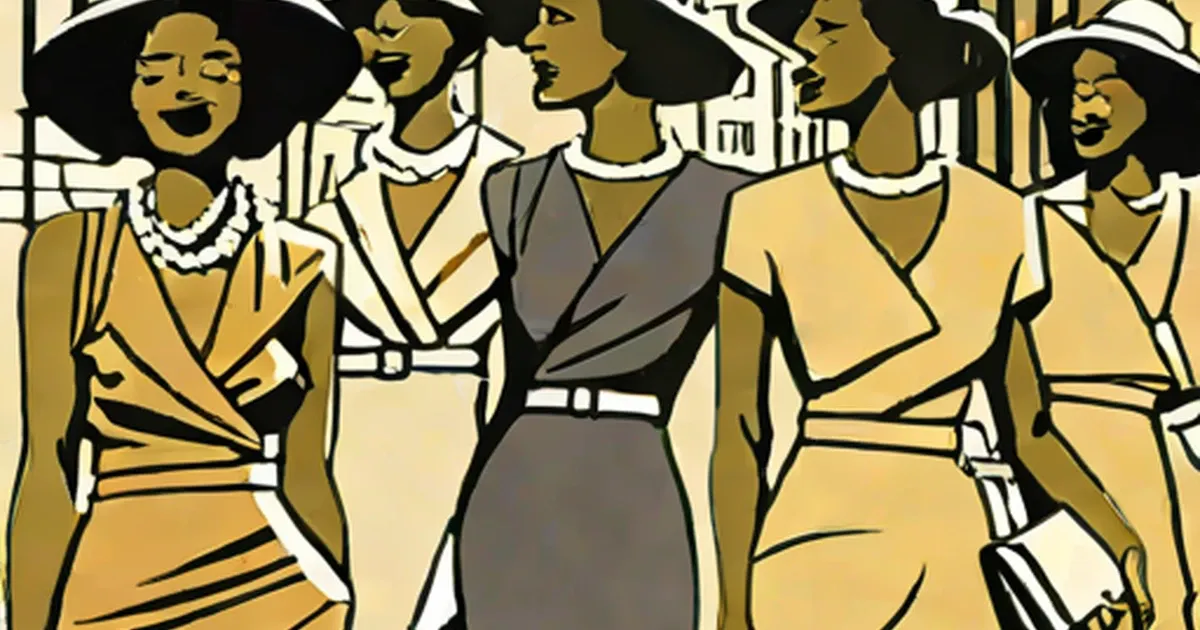
Harlem Renaissance was an intellectual movement that stirred up in the African-American community in 1920s, till the early 1930s. This was not only a literary movement but also showed developments in the African American performing arts and politics. Know more about the women who played a crucial role during the Harlem Renaissance.
Calling Dreams
The right to make my dreams come true
I ask, nay, I demand of life;
Nor shall fate’s deadly contraband
Impede my steps, nor countermand;
Too long my heart against the ground
Has beat the dusty years around;
And now at length I rise! I wake!
And stride into the morning break!
- Georgia Douglas Johnson
The Harlem Renaissance or the New Negro Movement began in the 1920s in Harlem, New York. The movement started after the World War I, and lost momentum during the Great Depression, in 1935. The middle-class African American families of the South moved to the industrial cities after the Civil War, in search of jobs. Many settled down in the newly-built suburb of Harlem. These families were educated and socially conscious. During the 1910s, a new wave of racial equality took its foothold. The protests for civil rights by the African American leaders inspired artists from all walks of life. It was during this period that critics took a serious note of the literature and art of the African Americans. The Harlem Renaissance was not only confined to the American land, but spread its wings over Europe.
There were dozens of women who actively shaped the Harlem Renaissance with their contributions in literature and art. The few women who dared to make a difference are discussed below.
Georgia Douglas Johnson
( 1880-1966)
Georgia Johnson Douglas was born to George Camp and Laura Jackson Camp in Atlanta, Georgia. Her mixed heritage was a theme in some of her literary works. She completed her graduation from Atlanta University Normal School, in 1896. She also attended the Oberlin Conservatory of Music, in 1902, and the Cleveland College of Music. She went on to become a poet, playwright and journalist.
She published her first poem in 1916, in NAACP’s Crisis magazine. Her first book of poetry The Heart of a Women was published in 1918. It focused on the experiences of a woman. In the collection
Bronze
(1922), her poems were based on racial experiences she had faced in her career. Her best known book An Autumn Love Cycle was published in 1925. She had written more than 200 poems, 40 plays, 30 songs, and edited 100 books by the 1930s. Most of the unpublished work by Georgia Johnson was lost, as most of her papers were thrown away after her funeral.
Augusta Savage
( 1892-1962)
Augusta Savage was born to Edward Fells and Cornelia Fells in Green Cove Springs, Florida. She studied at the Florida State Normal School. She studied at Cooper Union between 1921-24. She studied sculpture under Hermon MacNeil in Paris, and at Academia de la Chaumiere, with Charles Despiau, between 1930-31.
Augusta Savage was a great sculptor who had to struggle to get recognition for her art due to the barriers of race and sex. She had sculpted the busts of African American leader, W.E.B. DuBois, for a New York Public Library branch. She also sculpted the bust of Marcus Garvey, Frederick Douglass, James Weldon Johnson, W.C. Handy, and others. Her piece ‘Gamin’ brought her recognition and she won a scholarship from Julius Rosenwald Foundation, which helped fund for her study in Europe in 1930. In 1937, the Harlem Community Art Center appointed her as its first director. In 1939, she opened her own gallery. She was commissioned to sculpt pieces based on James Weldon Johnson’s Lift Every Voice and Sing for the 1939 New York World’s Fair. Only a few photos of her exhibits remain, as the pieces were destroyed after the fair.
Nella Larsen
( 1891-1964)
Nella Larsen was born to a West Indies-born father and a Danish mother. She was a famous writer during the Harlem Renaissance. Her two novels Quicksand and Passing, were based on gender and racial issues. She became the first African American woman to win the prestigious Guggenheim Fellowship for creative writing. Her career was cut short with the end of Harlem Renaissance. She devoted the next 30 years of her life, as a supervising nurse in a hospital in New York.
Bessie Smith
( 1894-1937)
Bessie Smith was born in Chattanooga, Tennessee. Ma Rainey, the famous blues singer, supported Bessie during her early career. After completing her tour of the South, she moved to New York City in 1923. Her deep, expressive voice had remarkable intensity and power. She recorded with leading jazz musicians including Louis Armstrong, James P. Johnson, and Benny Goodman. She became a popular blues singer and was reported to earn $2,000 a week, during her time. She lost most of her fan following to radio and Hollywood movie music. She became an alcoholic, but still managed to fulfill her singing assignments. Bessie was killed in a car crash in Clarksdale, Mississippi.
The glorious days of the Harlem Renaissance came to an end with the onset of the Great Depression. Organizations like the NAACP and the Urban League, which once funded the growth of art and literature, focused on economic and social issues which cropped up in the 1930s. The 1935 riot between the black community and white shop-owners in Harlem brought the Harlem Renaissance to a stand-still. The New Negro Movement ended gradually after most of the people who helped in the birth of the movement moved out of Harlem or stopped writing. The new talent which emerged did not correlate with the Harlem Renaissance.
The Harlem Renaissance gave a new identity not only to the African Americans, but to the entire black community around the world. It made the world sit up and appreciate the talent of the African Americans.