Volcanologist Job Description
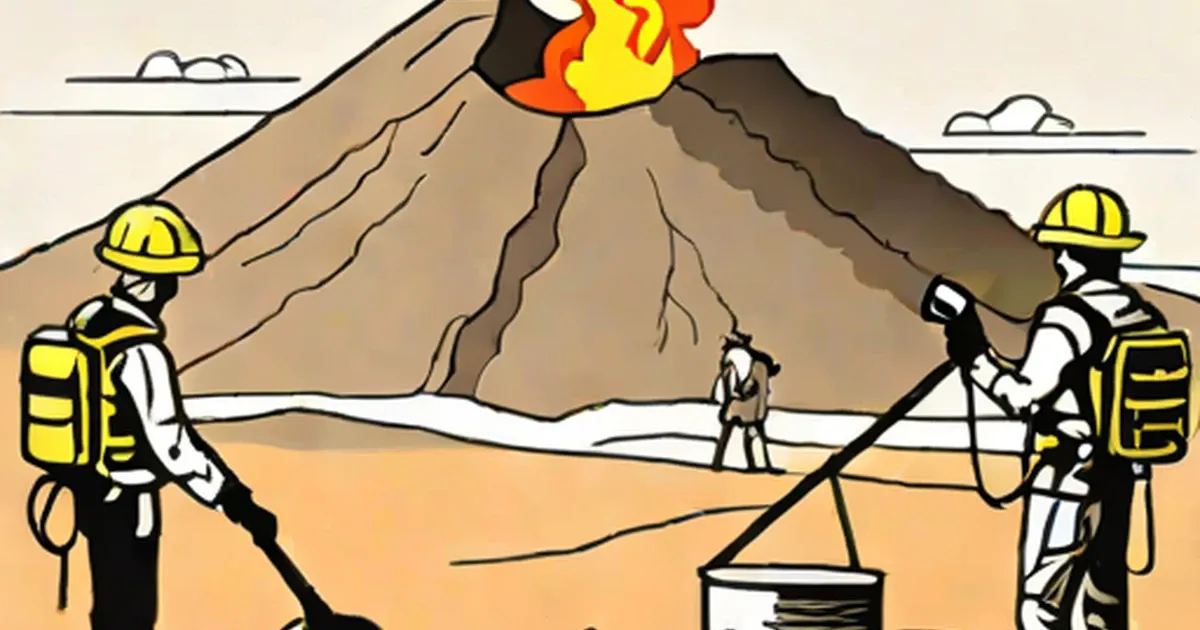
All you need to know about volcanologist job description. Also contains notes on the annual salary, educational qualification and the types of volcanologists.
A volcanologist career is very hot and explosive, literally! He/she has to keep up with the ever unpredictable, hot headed friends of theirs called volcanoes. When they are not visiting their ‘dormant volcano’ friends, one can find them knocking on the door of an ‘active volcano’ friend. Please excuse the puns, you see, one has a tendency to get carried away like the silent but destructive force of flowing lava. Find out all you need to know about volcanologist job description. On a more serious note, volcanologists are geologists, who specialize in the study of volcanoes. This is a highly challenging, yet rewarding career, where most probably you will be spending a lot of time in Hawaii. This job is one that is not meant for the faint hearted as it is a serious high-risk job with clear and present danger, but when you have the lives of millions in your hands, it can be very rewarding. Read more on geologist job description.
Job Description of a Volcanologist Volcanologist Educational Requirements One of the volcanologist facts is that you need to study for about 10 to 13 years to become a qualified and certified volcanologist! The minimum educational requirements for a volcanologists job, at the entry level, is a masters degree, and for higher posts, one needs a Ph.D. Masters degree in earth science or geology is sufficient, where subjects like math, mineralogy and paleontology etc. are very essential. Studying subjects like computers, algebra, trigonometry, physics, chemistry and biology in school, can really help in later graduation studies. Many budding volcanologists start their career by getting a bachelor’s degree in geology. Courses in oceanography and atmospheric sciences are also important. Since there is no particular qualifying degree that you need, it is best to cover most of geology and geophysics studies, so that you are equipped to study effects of volcanoes.
Volcanologist Job Description A volcanologist job description involves a lot of gut and thinking. They study world famous volcanoes and the possibility to harness their energy. A large part of their job is understanding why volcanoes erupt, how they erupt and how these natural disasters affect life on this planet. A regular field day would mean visiting dormant or active volcano sites, collecting data, and then analyzing and interpreting this data. This means that they have to be a step ahead of volcanic eruptions
and predict future eruptions because a vast majority of the population that lives near active volcanoes is in constant danger. Not only this, but they also study the debris emitted by volcanoes. Ideal routine of a volcanologist is living in a tent for two to three months, doing the above mentioned tasks. Backpacking, hiking, climbing is part of the job description. What more could an outdoor and environmentalist lover want?
Volcanologist Types
There are different types of volcanologists depending on their field of specialization, and the type of volcanoes that they study. They are:
- Physical Volcanologist: They Study the eruption process and the erupted deposits. They are present at the eruption site, and are responsible for predicting the future eruptions and also study the past volcanic behavior.
- Petrologists: They study the minerals and the rocks emitted by the volcano to get a clearer picture of the pressure and temperature of magma chambers in earth’s crust.
- Geodisists: They study the changes a volcano goes through during the eruption. They also try to map out the flow of the magma inside the crust.
- Geochemists: They deal with the gaseous emissions and their effect on climate change, and the content of the volcanic eruption. They study the magma and try and collect information regarding the next eruption. Most of the equipment is handled by this group of volcanologist. More on volcano facts.
Volcanologist Annual Salary
The average annual salary of a volcanologist is about $75,000 USD to $79,000 USD. A fresh volcanologist can make around $35,000USD to $39,000 USD, where as an experienced volcanologist earns about $76,000 USD to $ 86,000 USD.
Like I said before, a volcanologist job description requires him/her to face dangerous situations as there have been incidents where entire teams have been lost due to the unpredictable nature of this job, so though dangerous, it is a highly rewarding career. The up side of visiting active volcanoes is all the exotic places you get to visit! Imagine your work place is in Hawaii, overlooking a vast expanse of pristine sea. To many of us who have seen a movie called Dante’s Peak, the job of a volcanologist can seem glamorous, but sadly only if one were Pierce Brosnan. On the up side, you are saving lives just like him after all!