Types of Brass Instruments
The melody created by brass instruments is absolutely magical and mesmerizing. Trumpets, saxophone, clarinet and a few others fall in the category of brass instruments. Depending on the way they are played, they are classified in different types. The article below will throw more light on types of brass instruments.
An opera or an orchestra would be a real damp squib, if it were not for the lovely and melodious brass musical instruments. Different types of brass instruments add that extra zing to music concerts, with their distinct melody. Trumpets, saxophones, clarinets, etc. are categorized as brass instruments. Such instruments are brass music instruments, which are basically those where the sound or the tone is generated by the lip vibration of the player, blowing into a resonator. This resonator is tubular in shape and is made of brass.
Brass instruments have been a part of music history since ancient times, and so there are a few types of brass instruments, that are now obsolete. Those instruments which are not obsolete, are nevertheless significant, when it comes to musical instruments. Lets take a look at what are the various types of brass instruments in the contemporary and modern eras –
Valved Brass Instruments
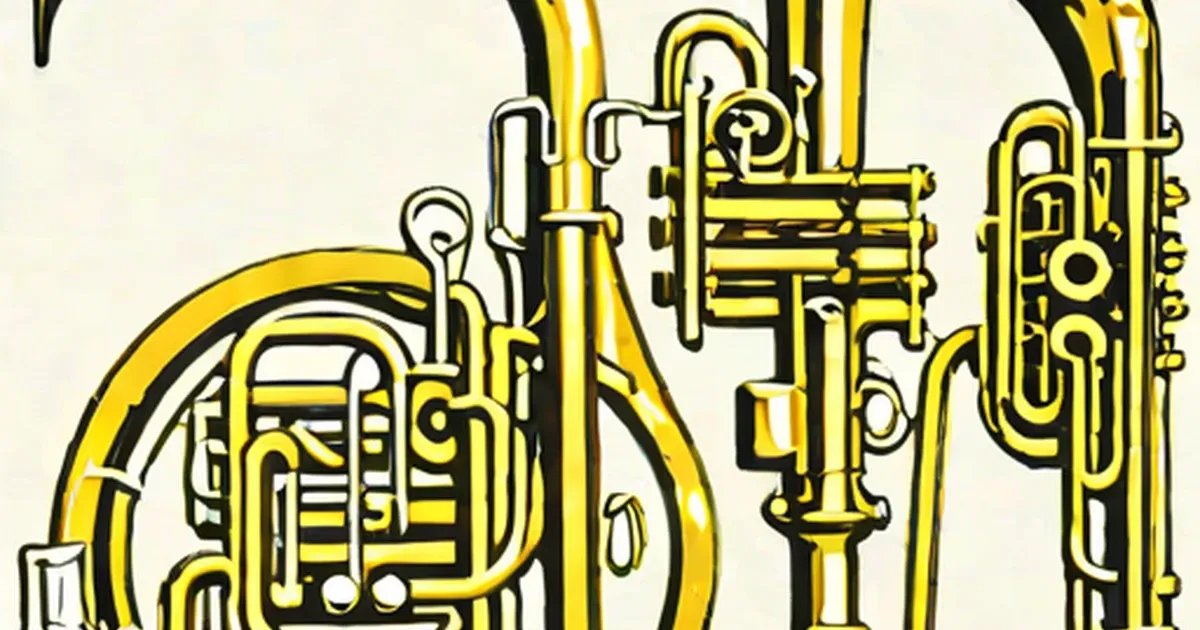
Valved Brass instruments are those type of brass instruments which have a set of valves ranging between 3 and 4, going to 7 in some instruments. These valves are worked upon by the player’s fingers,creating additional tubing in the instrument. Most of the modern brass instruments, like the trumpet, the French horn, the euphonium, the tuba, the cornet, the sousaphone, the old saxhorn and some others as well, are valved brass instruments.
The Seasoned Campaigner: Trumpet is the oldest and the most popular type of brass instruments. It dates back to almost 1500 BC and is the most obvious choice amongst the brass instruments, for the classical and jazz musicians
. It is made of a brass tubing, designed in an oblong shape. In fact, a trumpet can be categorized as classic brass instrument. The most common type of trumpet, is the transposing instrument. Be it a music band or a traditional orchestra, trumpet reigns and how!
A la Bugle – Horn
: The horn or the French Horn, is another classic type of brass instrument, inspired from the natural horn. It consists of a whopping 12 feet of tubing, covered with a coil and has a flared bell. Horns typically have valves, operated by the left hand, to direct the air into the tubing for a change of pitch. There are various types of horns like the natural horn, the double horn, the single horn, the March horn, the Wagner tuba, the Vienna horn and so on. It is most often referred to as just the horn, and is a regular feature of an orchestra and other chamber music types.
The Unassuming – Tuba
: Tuba is perhaps the biggest brass instrument. Its uniqueness is its low pitch. A tuba is played by vibrating the lips into a cupped mouthpiece. Interestingly, ‘tuba’ is the Latin word for a trumpet, and those who love this instrument, will be happy to know that this instrument is the latest entrant to the modern symphonic orchestra. Tuba often provides symphony for jazz music and was a part of the jazz, long before it was a part of the orchestra.
The Cousin of the Trumpet – Cornet
: This instrument could be safely called the sibling or cousin of the trumpet, because of its stark similarity with trumpet. Although a cornet is more compact, it has a conical bore and has a unique tone quality, that is mellower than the trumpet. A concert band, brass band and symphonic repertoire, all have cornets playing a significant role when it comes to creating a harmony.
Slide Brass Instruments
When you talk of slide brass instruments, they appear to be a bit more complicated. They are made in such a way, that a part of that instrument has to collide on to another, to create a symphony or a harmony. Instruments from the ‘trombone’ family, are usually classified as slide brass instruments.
‘Reed’ the Lips – Trombone
: Trombone is a lip reed instrument. It is an aerophone, where music is created when the player’s vibrating lips make the air column within the instrument to vibrate. Its identified by its special telescopic slide, which is used to vary the length of the tube, to result in the pitch variation.
Wood Wind Instruments
Woodwind instruments are those instruments, that are played by blowing air against an opening in the instrument, which causes the air in the resonator to vibrate. Flutes and saxophones are primarily and traditionally woodwind instruments, but some of the variations of these instruments are made of brass, especially, the saxophone.
The King of Brass Instruments – Saxophone
:
Saxophone is undoubtedly the most popular brass instrument, almost as well known as the trumpet, or may be even more. Sax, as it is simply called, has a single reed mouthpiece and is a conical-bored, transposing instrument. It is made of a conical tube of thin metal, flared at the tip, in the shape of bell. This instrument, interestingly enough, has been named after its inventor, Adolphe Sax . Saxophones have carved a niche for themself in military band music, as well as the popular music, jazz, rock and roll
, blues, big band music, etc. Be it any form of music, Saxophones cannot be ignored and if you do not know about them, well, you might even be a subject of social ridicule!
All of the brass instruments are classified into different categories, pertaining to their design, the way they are played, redundancy and their initial harmonic tone. Some other brass instruments according to these criteria, are are alphorn (wood), conch (shell), didgeridoo (wood, Australia), shofar (horn) and vladimirskiy rozhok (wood, Russia).
I opted to not elaborate these classifications and families of brass instruments, as it would have made this already long article even longer! So get a hold of atleast one of these type of brass instruments, and go the symphonic way! Hopefully, people would not say that you are ‘blowing your own trumpet’!