Tundra Biome: Tundra Plants and Animals
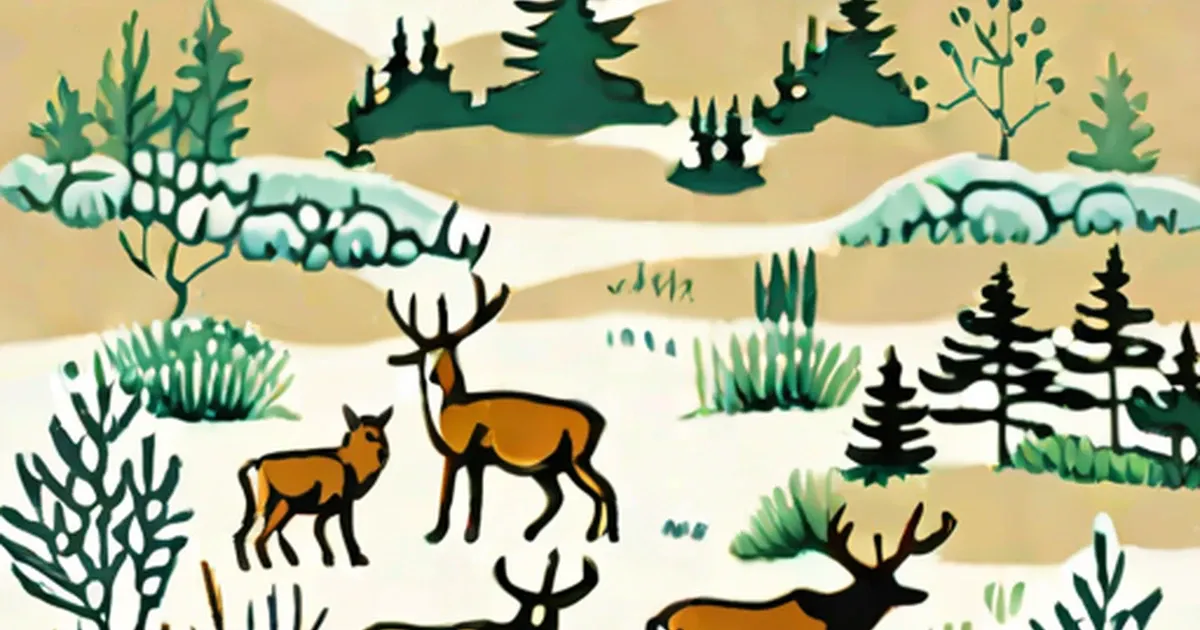
Although the Tundra Biome is one of the most inhospitable habitats in the world, there are surprisingly quite a few interesting tundra plants and tundra animals that exist here.
The world’s major habitats, characterized by the dominant forms of plant and animal life that exist in them, are known as biomes. Each biome’s location is defined by the climate of the region.
What are the Types of Tundra Biome?
Extremely cold temperatures and frozen, treeless landscapes characterize the tundra biome. While some sources claim that the word “tundra” originates from the Kildin Sami term “tundar”, which means “treeless mountain track” or “uplands”, others say that it has been derived from the Finnish “tunturia”, meaning “barren land”. The tundra is divided into two types: The Arctic Tundra, which is also present in Antarctica, and Alpine Tundra. The ecological boundary region, or ecotone, which demarcates the tundra and the growth of forest, is referred to as the timberline or tree line.
Where is the Tundra Biome found?
The Arctic tundra lies between the North Pole and the taiga or the coniferous forests. In North America, it occurs in Greenland, Canada and Northern Alaska, in northern Europe, it is mainly found in Scandinavia, and in northern Asia, it is found in Siberia.
The Antarctic tundra occurs on various Antarctic as well as sub-Antarctic islands, which include the Kerguelen Islands, the South Sandwich Islands, and South Georgia.
The Alpine tundra can be found at very high elevations on frozen mountaintop regions. In North America, it occurs in Mexico, U.S.A., Canada, and Alaska. In South America, it is found in the Andes Mountains. In northern Europe, it is found in Sweden, Russia, Norway, and Finland. In Africa, it can be found in Mt. Kilimanjaro. And in Asia, it occurs in the Himalayan Mountains, which is located in Southern Asia, and in Mt. Fuji, in Japan.
What are the Conditions in the Tundra Region?
The Arctic Tundra is considered to be the youngest biome in the world, having been formed 10,000 years ago. Located in the latitudes 55 degrees to 70 degrees north, this vast and treeless territory covers approximately 20 percent of the surface of the Earth, encompassing the North Pole. Of all the biomes in the world, the tundra is considered to be the coldest. With less than 10 inches of rain in a year, it is also the driest.
The main seasons of the tundra region are winter and a short summer. The summers in the tundra sometimes last just for 6-10 weeks, while the winters are long. Spring and fall are just brief interludes that occur between the winter and summer. In the winter, the nights can go on for weeks, with the sun barely rising, and the temperature often plummeting as low a -94 degrees F.
Due to the Arctic tundra being as close as it is to the North Pole, the days in the summer are 24 hours long, which is the reason the Arctic is also referred to as the “Land of the Midnight Sun”. The temperature in the summer rarely rises above 50 degrees F, which is just sufficient enough to thaw the top layer of the ground, which is referred to as permafrost. Due to the rain and melting snow in the summer, the soil on the surface gets very soggy. The permafrost, which lies about six inches below the surface, remains frozen throughout the year.
Another characteristic feature of the Arctic tundra is that it is very windy, with winds blowing at 30-60 miles per hour (48-97 kilometers).
What are the Plants that Grow in the Tundra Biome?
Considering the extremely inhospitable conditions of the tundra biome, there are as many as 1,700 different plant species that grow here. The tundra plants consist mostly of mosses, grasses, lichens, sedges, and shrubs. About 400 types of flowers bloom in the growing season, which lasts just for 50-60 days. Except for a few birches in the lower altitudes, no trees grow in the tundra. Because of the permafrost, trees cannot send their roots into the ground. Although in some parts of the tundra willows do grow, but only up to about 8 cm, or 3 inches, high. Developing over thousands of years, most of the vegetation have adapted to the conditions in the tundra by growing in a dense mat of roots. Except where the soil is fertilized by animal droppings, the soil is low in minerals and nutrients.
Being too dry and cold for vegetation to grow, the Antarctica tundra is mostly covered by large expanses of ice fields. However, in some parts of the region, especially the Antarctic Peninsula, there are areas where there is rocky soil which can support vegetation. The plant species that exist here are aquatic and terrestrial species of algae, which occur in the exposed soil and rock areas around the shore, liverworts, mosses, and lichens. The two flowering species of plants, the Antarctic pearlwort and Antarctic hair grass can be found in the western and northern parts of the Antarctic Peninsula.
Do any Animals live in the Tundra Region?
Even though there is not much biodiversity, with only about 48 species of land mammals occurring in the tundra biome, there are surprisingly large numbers of each species. The tundra animals mainly are slightly modified forms of deer, bears, foxes, wolves, rodents, hares, and shrews. In North America, there are large caribou herds, which are called reindeer in Eurasia, which feed on plants and lichens. Smaller musk-oxen herds also roam about the frozen regions. The predators of the tundra biome are polar bears, arctic foxes, and wolves. Some of the smaller mammals are lemmings and snowshoe rabbits.
Although there are not too many types of insects to be found in the tundra, however, tiny midges that bite, mosquitoes, deer flies, and black flies do occur, which can make the summers in the tundra quite miserable. The mosquitoes that occur in the tundra prevent themselves from freezing by substituting the water in their bodies with glycerol, which acts like an anti-freeze. The marshy regions of the tundra are where migratory birds like plovers, sandpipers, and harlequin flock to in the summers.
Due to it being isolated from other continents, the Antarctic tundra, in contrast with the Arctic tundra, is devoid of large mammal species. Sea birds and sea mammals, such as penguins and seals, however, do occur in areas close to the shore, while small mammals like cats and rabbits have been introduced by humans on some of the sub-Antarctic islands.
As is evident, the Tundra Biome is not a useless and cold wasteland. In fact, its very nature makes the environment very fragile, and the animals and plants that have made the tundra their home have adapted themselves incredibly intricately to its short, although abundant, summers and cold, long winters. They exist on a precarious edge, hence, the most minor of stresses can lead to their destruction.