Timeline of African American History
A timeline is a chronology that presents the important events sequentially. This article on timeline of African-American history gives a glimpse of history of the Blacks in America that dates back to early slave trade.
1787 - The Northwest Territory of America declared slavery of the blacks illegal.
1793 - Fugitive Slave Law was established for the slaves who escaped from the plantation. This law added to woes of slave. In the same year, there was a great demand for black slaves due to the invention of cotton gin, a machine used to separate cotton fiber from the seeds.
1800 - A slave revolt was organized by Gabriel Prosser, an African-American blacksmith. They had intended to march to Richmond, Virginia. However, the conspiracy was disclosed. Prosser, along with a large number of rebels, was hanged. Laws regarding slavery were tightened.
1808 - The US Congress passed a law that banned the import of slaves from Africa.
1820 - North of the southern boundary of Missouri banned slavery. This pact is called The Missouri Compromise. Harriet Tubman was born.
1822 - An enslaved African-American carpenter, Denmark Vessey, bought his freedom. His plan of striking a revolt in Charleston, South Carolina was discovered. Vessey, along with thirty-four other black slaves, were hanged.
1831 - The slave laws of Virginia became stricter. The reason, an enslaved African-American, Nat Turner, and his band of black men launched a bloody and rebellious attack in Southampton County, Virginia. This is considered as a significant slave uprising movement in American history. Ultimately, militia quelled the rebellion, and Nat Turner was hanged eventually. Abolition of slavery gained momentum during this period.
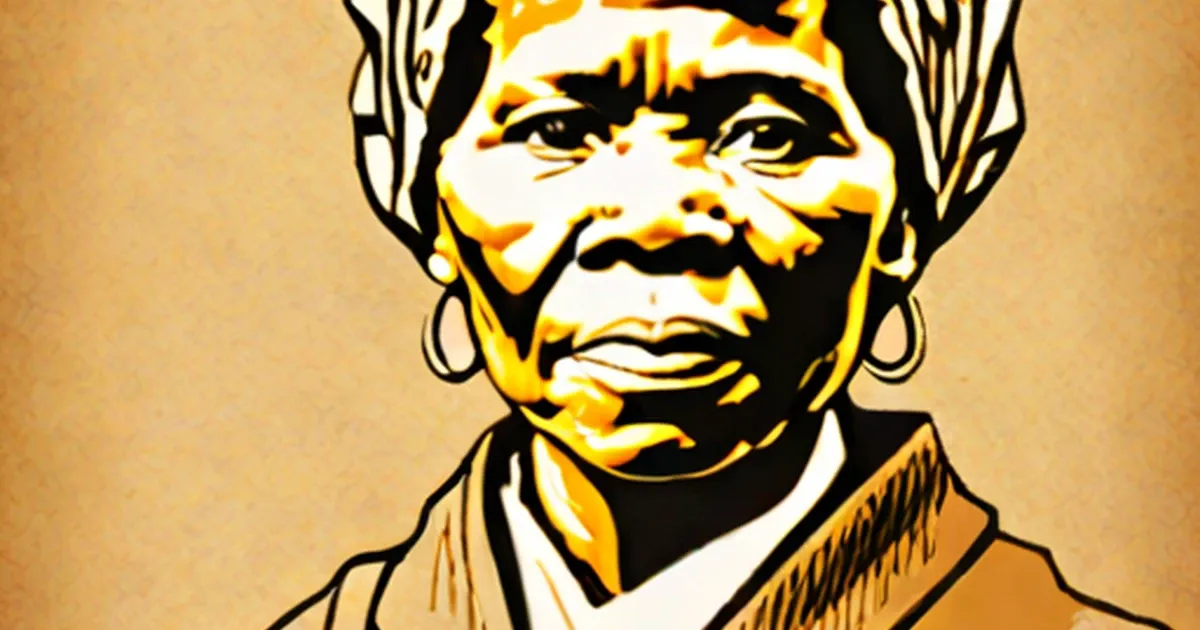
1849 - Harriet Tubman became one of the most popular and celebrated leaders of the "Underground Railroad". She had initially escaped from slavery.
1852- An African-American, Daniel A.P. Murray became an assistant librarian of Congress. He used to collect pamphlets and books by and about African-Americans. Harriet Beecher Stowe’s novel, Uncle Tom’s Cabin was published.
1854- Ashmun Institute, later known as Lincoln University was chartered on January 1, 1854. It is one of the oldest colleges for the Blacks in America. It is located in Oxford, Pennsylvania.
1856 - Booker Taliaferro Washington, a leading African-American spokesman of his times was born on April 5, 1865, in Franklin County, Virginia.
1857 - The Supreme Court of America decides that an African-American could not be given the citizenship of the US. The Supreme Court ruled out the case of Dred Scott, an enslaved African-American.
1861 - American Civil War broke out.
1863 - Abraham Lincoln, the President of America, issued Emancipation Proclamation. This declaration liberated the slaves.
1865-1866 - Freedmen’s Bureau was established to protect the rights of the newly-freed Blacks. In this year Abraham Lincoln was assassinated. Southern states of America passed the Black Codes, restricting the civil rights to the freed black slaves.
1867-1868 - Many Reconstruction Acts were passed to guarantee civil rights to the freed slaves. In 1868, African-Americans were granted the US citizenship.
1869-1870 - America’s first black law school, Howard University, was established. In 1870, the blacks were granted suffrage. Hiram Revel’s becomes the first African-American senator.
1877-1881 - The Federal’s attempt to introduce a series of Reconstruction Acts failed. Thousands of African-Americans migrate to Kansas. This is known as The Black Exodus. Sophia B. Packard and Harriet E. Giles founded Spelman College, the first college for African-American women.
1882-1896 - Robert Finley establishes the colony of Monrovia in Western Africa. He was a founder of the American Colonization Society. This society helps in the relocation of American blacks to Africa. Jim Crow laws were enacted in the Southern states legalizing the segregation between the American blacks and whites.
1905-1931 - W.E.B. DuBois headed the Niagara Movement to fight for the equality of African-American. W.E.B. DuBois and several white intellectuals found the National Association for the Advancement of Colored People, an influential African-American civil rights organization, in 1909, in New York. Marcus Garvey founded a black nationalist organization known as the Universal Negro Improvement in 1914. 1920s and 1930s were known as the Harlem Renaissance Era. This era fostered a new black cultural identity.
1947-1957 - Jackie Robinson, an African-American baseball player, broke the color barrier when he was included by Branch Rickey to play for Brooklyn Dodgers. African-Americans participated in every major US war, including the World War II and they were integrated in the US army. In 1954, racial segregation in schools was declared unconstitutional. On December 21, 1956, buses of Montgomery were desegregated after the African-Americans boycotted the buses there. In 1957, Martin Luther King along with Charles K. Steel and Fred L. Shuttlesworth established the Southern Christian Leadership Conference (SCLC).
1960-1968 - In 1960, the Student Nonviolent Coordinating Committee (SNCC) was founded to ensure civil rights to young blacks. James Meredith enrolled at the University of Mississippi in 1962. He becomes the first African-American to be admitted in this university. In 1963, Martin Luther King was arrested for anti-segregation protests. In 1964, President Johnson signed the Civil Rights Act. The same year, Martin Luther King was awarded the Nobel Prize for Peace. In 1965, the Congress passed the Voting Rights Act, making it easier for the blacks to cast their vote. President Johnson appointed Thurgood Marshall, the first black Justice to the Supreme Court. On April 4, 1968, Martin Luther King Jr. was assassinated in Memphis, Tennessee.
1972-1992 - The US Government puts an end to the notorious Tuskegee Syphilis Experiment that used the African-Americans. In 1992, after many decades racial riots broke out in Los Angeles.
2008- Barack Obama, an African-American is a presidential aspirant.

Use the feedback form below to submit your comments.

Use the form below to email this article to your friends.

- Exploring an Internet Gateway to the Past Where History Matters
- 1960s Civil Rights Movement in America
- Mt. Rushmore History
- July 4th Reflections: A Tattered Dream
- Slavery in the USA
- The Californios, America’s First Spanish Immigrants
- Bad Arolsen Archive May Reveal Much About Third Reich Sponsors
- Facts about the White House
- Pearl Harbor Attack
- The Vulcan Statue
- Groundhog Day History
- A Prisoner’s Parole – His Word of Honor
- Battle of Lexington And Concord
- American Flag: History of US Flag
- History of Native American Indians
- The Land of the Cyclops
- The Wild West of Myth and Reality
- In 1001, When Leif Ericsson Sailed the Ocean Blue
- History Lessons from Canals
- The Absaroke Indians of America
- Corrupt Bargain Election of 1824
- History of the Pledge of Allegiance
- Women's Rights Movement in The United States
- History of the Library of Congress
- Three-Fifths Compromise
- Life in 13 Colonies
- March on Washington Movement (1941-1947)
- History of The 13 Colonies
- History of the American Dream
- Facts about the Thirteen American Colonies
- Slave Narratives
- Battle of Fallen Timbers
- History of the Civil Rights Movement
- Summary of the Cold War
- Liberty Bell Facts