Timeline and History of American Imperialism

The United States of America, since its foundation, has followed an imperialist policy. The following article is a timeline and description of the American imperialism history.
Timeline and History of American Imperialism
The term imperialism refers to political, economic or cultural expansion of one's influence over any other geographical or political territory. Imperialist activities carried out by United Sates of America, are often termed as 'overseas intervention'. The motive behind these interventions is variable. Sometimes the intervention is conducted to establish peace in a specific region or implement a cease fire. More recently, United States has implemented oversea interventions and imperialist policies, in order to wipe out terrorism. The following are some major interventions by United States of America.

1801 to 1815: This was the first overseas war that was fought by United States. President Thomas Jefferson initiated the war to wipe out the pirates of Barbary coast. United States Navy was sent to Tripoli and after some defeats it emerged successful, and the defeated pirates were forced to sign a treaty with US to allow a safe passage for American merchant ships.

Conflicts with Spain: General George Matthews and his troops, backed with permission of President Madison, in 1812 invaded Amelia island that was under the Spanish rule. Matthews also conquered the harbor of Fernandina. In the following year, Spanish Florida and Mobile bay were invaded by General Wilkinson, upon authorization by Congress. The Spanish garrison that was stationed in the region was overrun, and soldiers inside surrendered. In 1814 and 1816, United States again invaded the territory of Spanish empire in Florida. President Monroe ordered an attack on Spanish Florida wipe out or expel smugglers and pirates, that had sought refuge in this region. In 1817, after the purchase of Florida, Sominole Indians were expelled out of the region.

Conflicts with Britain: One of the important wars that was fought by United States was War of 1812. The 1812 war was declared by political group, that was known as 'War Hawks'. The war was waged to check British expansion in North America. During the 1812 war, US troops built a fort on Marguesas islands, to defend four ships that had been captured from the British navy.

Some of the other imperialist invasions by the United States in the 19th century included, occupations or interventions in regions like Puerto Rico (1824), Greece (1827), Falkland Islands (1831), Sumatra (1832 and 1838), Argentina (1833), Peru (1835) etc. The United States Navy or Army was deployed to either wipe out the pirates and smugglers in these regions or to protect the interests of the United States of America.

Mexico issue: The United States annexed the region of Texas in 1845, and thus initiated a war against Mexico to decide upon the border of the region. Abraham Lincoln, who was a congressman at that time strongly recommended a withdraw of troops and opposed the war. The United States, unheeded by the warnings of Lincoln, declared the war on 23rd of April 1846, and won it, with a very heavy price. The United States army lost 13,780 personnel and was recorded to be one of the bloodiest wars in the United States history.

Japan 1853: The rule of Shoguns in Japan and nearby islands, had isolated the trade in entire Pacific. In the year 1853 a fleet led by Commodore Matthew Perry forced open the trade with Japan that had been dwindling for about a century.

In the remaining of 19th century AD, the United States attacked and conquered territories for imperialist purposes. Most of the times, the authorities justified the expansions by commenting that the intervention was initiated to protect interests of the United States of America.

One of the intervention that was not of imperialist nature was put into force in 1857 to arrest slave trader and owner William Waker, who had forced many in the region of Nicaragua. Another intervention was initiated, against Ottoman empire the very next year, to bring the issue of massacre of US citizens under control.

The Spanish American war was also one of the examples of imperial expansion by United Sates. The United States actively participated in both world war I and II, however these operations that were put into force were not of imperialist nature.

Cold War: The intervention of United States in Vietnam from 1950 to 1963 was initiated in order to check the influence of communism in Asia. This intervention can be termed as an imperialist invasion. It was followed by a war in Iran, that lasted from 1953 to 1979. The CIA (intelligence force of USA) interfered in Cuban politics, there-by earning the wrath of Fidel Castro. Among the many interventions of USA and USSR during the cold war, both powers never defied each other openly, but supported two opposite local groups fighting for the domination of a region. Some examples of such war-torn region are Vietnam, Afghanistan, Cuba, Iraq and Iran. Such nations, all over the world have lost huge populations due to aimless violence. In many nations, innocent locals have been severely affected as a result of selfish motives of both nations.

Oil Imperialism: The modern day United States is a highly developed industrial nation. The gulf wars that include wars against Iran and Iraq (1991 to 1998) were distinctly of imperialist nature and have eventually helped United States gain sources of valuable crude oil in the gulf. The September 11 attacks in 2001, gave United States president George Bush an excellent excuse to wage a war against Afghanistan, which was a terrorist hub. The established base in Afghanistan has given United States excellent routes for trade in crude oil and also the very much needed military base to invade the oil-rich Iraq, and defeat it's President Saddam Hussein.

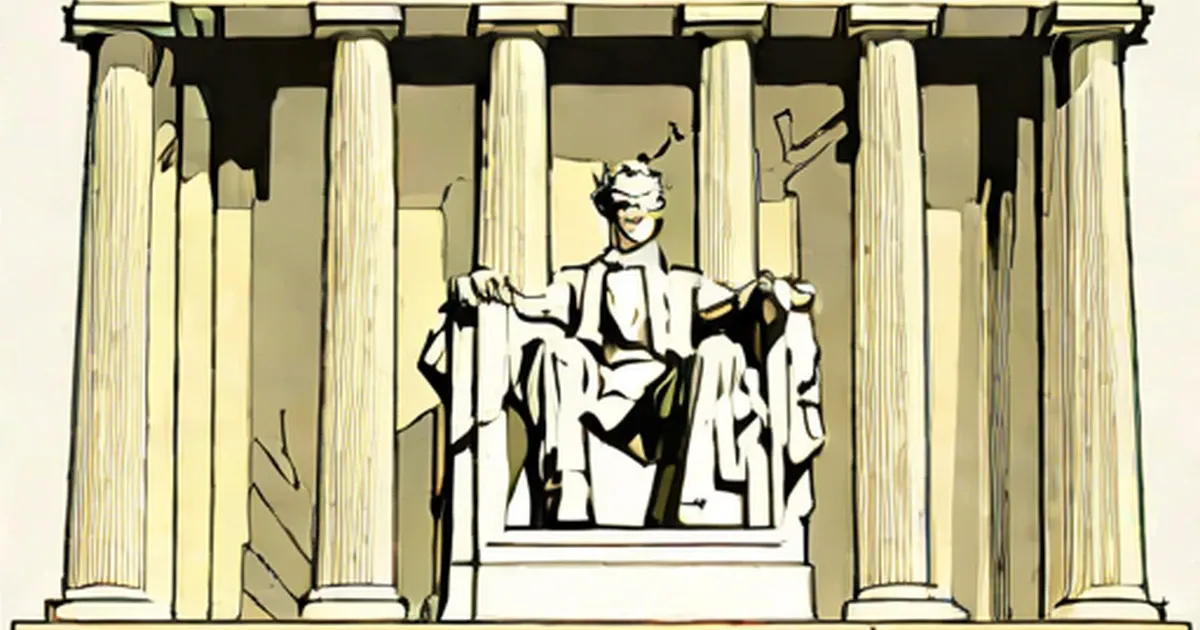
The overseas intervention and American imperialism especially after world war II, have made the regions suffer terribly in economic, demographic and environmental sense. Some of these invasions like the one against Taliban in Afghanistan, were justified and were extremely essential. However, many of these regions are still recovering from aftermaths of the war. The rational values like liberty, freedom and justice that were preached by founding fathers of United States and other leaders like Abraham Lincoln, have been forgotten by man. These wars depict, how uncivilized modern civilization can be.

By Scholasticus K
Published: 6/13/2009
 
Use the feedback form below to submit your comments.
Your Comments:
Your Name:
Use the form below to email this article to your friends.
Recipient Email Address:
 Separate multiple email addresses by ;
Your Name:
Your Email Address: