Theodore Roosevelt’s Square Deal
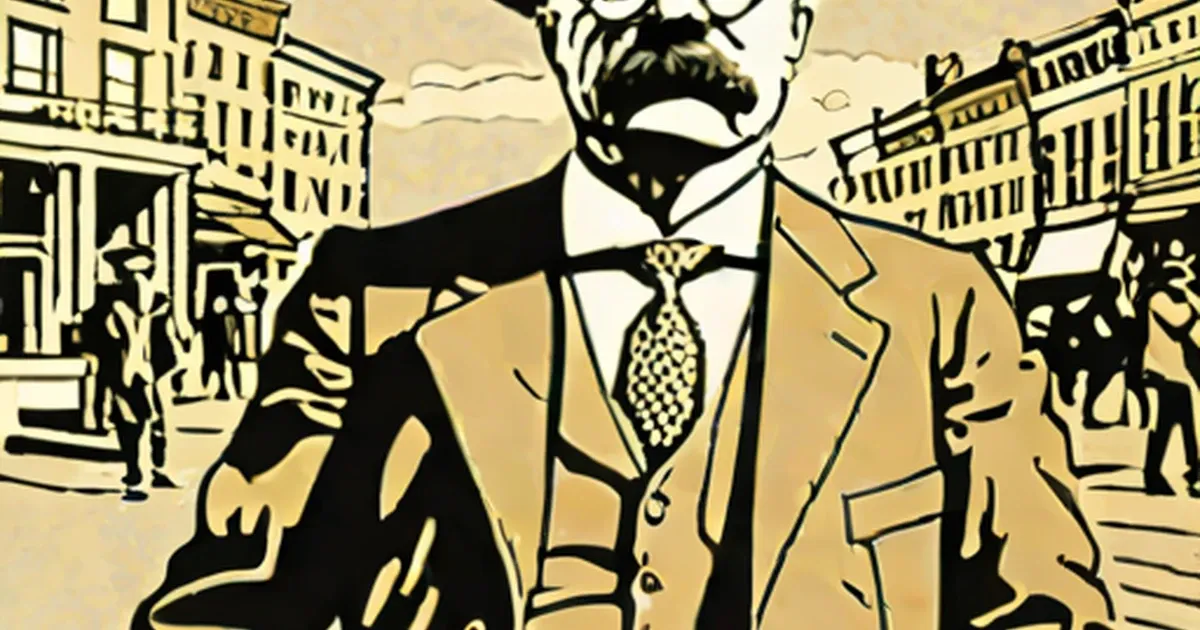
Theodore Roosevelt’s Square Deal was his campaign slogan, which promised justice for everyone. The article sheds light on the concept of unique square deal...
Theodore Roosevelt coined the phrase ‘Square Deal’ to represent a fair bargain explaining all sides of an argument. Theodore Roosevelt became the 26th President of the United States in September 1901, after William McKinley was assassinated. He first mentioned ‘Square Deal’ in a Labor Day speech, on September 7, 1903. His ‘Square Deal’ helped him win the 1904 election against Democrat Alton Parker.
The main idea of ‘Square Deal’ was reducing inequality. The Sherman Antitrust Act was put forward to stop firms that were bad monopolies, while encouraging firms that were good. Monopolies that dominated public services or generally used services and obstructed the free flow pricing mechanism, were considered bad monopolies. The firms that were bad monopolies in those times, included the railroad holding companies. To tackle this issue, Theodore shielded businesses from trade unions. He stopped the misuse of military power to combat protests and strikes, since they were initially used to disperse the striking mobs.
The Elkins Act of 1903 and the Hepburn Act of 1906, made the Interstate Commerce Commission more powerful, by allowing it to control the rail prices. However, this action resulted in diminishing the importance of railroads, compared to trucks and buses. In 1902, when the mine workers called a strike against the Northern Securities Company, a coal company, he suggested that the army would take the places of the mine workers and put the mine workers under pressure. He also suggested that Wall Street should sell off the stocks of the coal companies and put the coal companies under pressure. This pressure on both parties from external forces, caused a reconciliation between the mine workers and the coal companies.
In 1906, the Pure Food and Drug Act and the Meat Inspection Act were passed, thanks to Roosevelt. These laws stipulated that meat be packed under clean conditions and with the required standards. This favored large meat packing houses, while putting small meat packing houses at a disadvantage. Food products also had to compulsorily have labels on containers.
Theodore Roosevelt
was an environmentalist, who wanted to conserve natural areas and historical sites such as monuments. He created the National Conservation Commission to achieve this purpose. As a result of this policy, he clashed with the businesses that wanted to use the minerals, the lumber and the water power in these reserves for their own benefits. The Theodore Roosevelt National Park and the Theodore Roosevelt Island were named in Roosevelt’s honor as a champion of conservation.
On the foreign policy side, Roosevelt affirmed the ‘Roosevelt Corollary’ to the ‘Monroe Doctrine’. Roosevelt planned a revolution in Panama. So the new Panamanian government allowed the US to build the Panama Canal, which later benefited the American shipping industry. The US competed with Europe over their interference in Latin American countries, such as Dominican Republic, Haiti, Nicaragua, Venezuela and Cuba. The US would take action if the Latin American countries made transgressions. After the Russo-Japanese war broke out in 1904, Theodore Roosevelt brokered peace between Russia and Japan and sent sixteen warships to Asian harbors. Roosevelt won the Nobel Peace Prize for arbitrating peace.
Theodore Roosevelt was a reformist. He felt that businesses and laborers had mutual interests. He felt that a person should be judged by his character and not by his status in society. He voiced his opinion that inferior people deserved the same rights as the important ones. He believed that Americans should not be biased against an individual if he is poor, or if he is a manual worker, instead of an intellectual worker. He advocated the thought that law should be applied to all individuals regardless of wealth or class. Roosevelt’s ‘Square Deal’ turned into the ‘New Nationalism’ of the 1912 elections. Some other reformist Presidents were Franklin Roosevelt and Harry Truman. While Franklin Roosevelt envisioned the New Deal, Harry Truman envisioned the Fair Deal.
Theodore Roosevelt’s ‘Square Deal’ handled the problems with businesses and society. It promised a fair deal to all sides of transactions. It was popular with people from all walks of life. It was an effort to protect the weak from the strong, and the strong in his time included monopolists and cold-blooded employers. The big companies used lawyers and advertising campaigns to improve these things, but their plan didn’t work. Roosevelt had many rich friends, but his policy was directed towards poor people. He changed the rules so that everyone could have equal opportunity and everyone is treated the same way. Roosevelt was much concerned about rise in criminal activity and uprisings, and that was the reason he created his ‘Square Deal’. He invested in education and civil rights for black people. His ‘Square Deal’ was popular among conservatives and liberals alike.