Syriacs, "Assyrians" and "Chaldaeans" are all Aramaeans
A few days ago, the Patriarch of the Chaldean Church of Babylon, Mgr. Emmanuel III Delly, admitted that the ethnic identity of all the different names’ Christian groups is Aramaean.
This statement can play a great role in reuniting all the conscious parts of the multi-divided (due to Anglo-French colonial infiltrations and machinations) Aramaean nation; this would augur a completely different future for the entire Middle East.
Before republishing a feature well elaborated by the Aramaeans of Aram Nahrin, I briefly expand on the historical background of the different appellations employed by the various Aramaean ethno-religious groups of the Middle East.
Syrians, Syriacs, ‘Assyrians’, ‘Chaldaeans’ or Aramaeans?
What is the correct national name of the Modern Aramaeans? Why are there Aramaeans, who despite the fact that they speak Aramaic, insist on calling themselves 'Assyrians'? Why other Aramaeans stick to a third name, 'Chaldaeans'? Is it proper to use the name 'Syriac' that usually describes a late form of Aramaic language and scripture (from which Arabic derived) as national name of the Aramaeans? What is the difference between the Syriacs and the Syrians? And what is the relationship of the Syriacs and the Syrians with the modern 'Assyrians' and the Ancient Assyrians? Are the terms Assyria and Syria identical?
Before tackling key issues of the Middle Eastern puzzle, one is constrained to address all these questions. It will take a series of articles to define terms and make clarifications that are necessary to anyone concerned with, involved or just living in the Middle East. We will specify how some terms were kept alive throughout millennia, and how other terms have been recently revitalized by colonial academia seeking political impact. Before all this, it is necessary to remind everyone that it has been very common throughout History for a people, for a 'nation', to be known to most of the surrounding peoples and countries, or in modern times to the rest of the world, through a name attributed to the people / nation in question by another people. This event does not minimize in any dimension the radiation of that people's culture and civilization. It matters not! At least, it looks like that…..
We all know Finland; few heard that in Finnish Finland is called Suomi! We all say 'Greece'; few are aware that in Greek Greece is called Hellas or Hellada (d to be pronounced as th- in 'there')!
We all name the country of the Nile Delta 'Egypt'; but very few are familiar with the fact that the Egyptians call their own country 'Masr'! And whereas many have learned that the word 'Egypt' originates from the Ancient Greek term 'Aigyptos', only specialists have knowledge of the Ancient Egyptian etymology of the Ancient Greek name (from the term Ha Ka Ptah, which means 'the Abode of the 'Soul' of Ptah', an Ancient Egyptian God localized at Memphis). Not a single Modern Egyptian has a clue about the Assyrian – Babylonian origin of the Arabic name 'Masr' of Egypt; yet for thousands of years the terms Musur and Mat Masri were the usual 'international' appellations of Egypt (since Assyrian – Babylonian was the international language from around 2000 down to 400 BCE)! At those days, the Ancient Egyptians called their country 'Kemet', the 'black one', because of the Nile mud colour which is due to the geological specificities of the Abyssinian silt that is transported by the Blue Nile and the Nile's affluent Atbarah all the way down to the Mediterranean!
Basic Dictionary of Aramaean related appellations
Aramaeans
The real name of the people whose History spans over 3200 years. They were first mentioned in the Annals of the Assyrian Emperor Tiglath-pileser I. As Semitic people, the Aramaeans are closer to the Hebrews and the Phoenicians (North-Western Semitic languages) than to the Assyrians and the Babylonians (Eastern Semitic languages).
Assyrians
Along with the Babylonians, they are the descendants of the Accadians, the earliest Semites who settled around Agade (Accad) and prevailed over the Sumerians, forming a large empire under Sarrukin (Sargon I) and Naram Sin around the middle of the 3rd millennium BCE. Contrarily to the Babylonians, the Assyrians had a policy of national - ethnic purity, and did not intermingle with the Aramaeans, whom they pushed away to the West (today's Western Syria) and to the Mesopotamian South (Babylonia). At the moments of its greatest power, under the Sargonids (722 – 609), Assyria controlled almost all the then known world, but the Assyrians were a tiny and ethnically pure minority within their Empire. With the collapse of Assyria (614 – 612 – 609 BCE), Assyrian ceased to be written and spoken, and no Assyrians were found anywhere in the Middle East. According to a new interpretation that gets momentum, they constituted part of the migrations from the Caucasus area to Europe (Cimmerians).
Assyria: the land belonged, as the people and the capital city did, to the Supreme God Assur, usually viewed as the Only God within monotheistic context. Assyria corresponds geographically to modern Northern Iraq, Eastern Syria, and parts of SE Turkey: this was the Assyrian nucleus, the area that was populated by Assyrians from 2150 to 620-610 BCE. When Assyria subdued the Neo-Hittites, the Urartus, the Phoenicians, the Babylonians, the Medes and other peoples in Iran, the Elamites, the Israelites and the Egyptians, Assyria – center was a small, central, part of the Assyrian Empire.
Chaldaeans
Named 'Kaldu' in Assyrian – Babylonian texts, they are one of the Aramaean peoples. They intermingled extensively with the Babylonians, who finally - in later times - got assimilated with them, and were even called 'Chaldaeans' – mistakenly.
Syriacs
The modern scholarly term is formed in order to provide the corresponding term of the Ancient Greek name 'Syros' and in sheer distinction from the Syrians. Within Ancient Greek literary context, 'Syros' is the inhabitant of 'Syria', and this was the usual way for the Greeks to call the Aramaeans.
Contrarily, Syrians are the inhabitants of the modern state of Syria, who speak Arabic in their majority, because of the linguistic arabization that followed the gradual process of islamization.
Syria: the geographic term in Ancient Greek exists as shortening ('apokope') of the term 'Assyria'. It exists in Ancient Greek only after Assyria ceased to exist (609 BCE). It does not correspond to the term 'Assyria' in any sense. 'Syria' relates to the former Assyrian Imperial lands in the West of Mesopotamia up to the Phoenician Mediterranean coast. After being a mere geographical term that did not relate to the Mesopotamian Center – land Assyria, Syria became the Greek name of the Hellenistic kingdom that had its capital at Antioch (Antakya in Turkey). Syria as geographical term gave birth to the term 'Syros' for the native inhabitants of 'Syria' that happened to be the Aramaeans.
Patriarch Emmanuel Delly of the Chaldean Church of Babylon in Iraq affirms the Aramean origin of the Iraqi Christians
http://www.iraqichristians.org/English/Patriarch_Emmanuel_Delly_Aramean_28_10_2008.htm
Patriarch Emmanuel III Delly of the Chaldean Church
In a phone conversation with the crew of the popular Chaldean website "www.ankawa.com, the Patriarch of the Chaldean Church of Babylon, now in Rome for the annual meeting of the Catholic church, Mgr. Emmanuel III Delly, on 27th of October 2008 confirmed in no uncertain terms the Aramean origin for all the Iraqi Christians. He says, "...but I would like to state that we, the Chaldean, Assyrian and Syrian people are one people called Aramean" (See translation below).
The cardinal Mar Emmanuel Delly to our website (Ankawa.com)
http://www.ankawa.com/forum/index.php/topic,233591.msg3421260.html#msg3421260
"I am a man of religion and I am not interfering in politics and we, in the church, don't ask for anything else apart from what our people want and decide on"
In a phone call with our website (Ankawa) the cardinal mar Emanuel Delly stated the following:
Cardinal mar Emanuel III Delly, Patriarch of the Chaldean church in Iraq and the world, thanks everyone who helped and supported our people inside and outside Iraq, in order to spread to love, brotherhood, tolerance and security must prevail in our dear country.
I would like to state that I am a man of church, who is not interferring in politics, and that everything I do is to spread love, peace, brotherhood values and forgiveness.
And I am absolutely against using the church to be exploited and involved in politics. And I ask, from Rome, the place I am currently for treatment, for security and peace be restored in our dear country Iraq
The Lord will reward those people who are working in the government , day and night, for the best of Iraq and for its wealth of all citizens, wherever they were, in Baghdad, Mosul and in all other areas.
Concerning the request of our people we in the church don't ask for anything except our people's rights, but I would like to state that we, the Chaldean, Assyrian and Syrian people are one people known as Aramean people
Let Iraq continue to live with all its ethnic groups, Arabs, Kurds, Arameans, Yazidie' s, Mandeans, and Shabak.
May God bless them
The Patriarch mar Emanuel III Delly,
Rome
West- and East-Arameans
At the early beginning of Christianity, the Aramean nation geographically was divided as East- and West- Arameans. The river the Euphrates in general served as the border. Thus those living east of Euphrates, roughly speaking Iran, were called East- Arameans. And those living at the West of Euphrates were called West- Arameans.
The East- Arameans became also known as "Nestorians". In 1552 a part of the East- Aramean "Nestorians" joined the Roman Catholic Church, after which they were called "Chaldeans" as a geographical reference to the Chaldean Empire of antiquity. Their Church become known as "The Chaldean Church of Babylon" of which currently Mgr. Emmanuel Delly is the Patriarch.
The remaining part of the East- Aramean Nestorians who did not join the Roman Catholic Church, continued to call themselves as "Suryaye" or "Syrians" until 1840 when they got in contact with the Protestants and Anglican missionaries. Under the influence of the Anglican bishop of Canterbury they first became known as "Christians of (geographical) Assyria", and later as "Assyrian Christians", a religious name which they now try to use as a national name. In 1976 the name of the East- Syrian Nestorians Church has been changed into "Apostolic Assyrian Catholic Church".
We welcome the clear statement of Mgr. Emmanuel Delly regarding the origin of our nation which is perfectly in agreement with the testimonies of the brilliant historians of the Syrian Church of Antioch.
We hope that the Catholicos- Patriarch Mar Dinkha of the East-Syrian "Nestorian" Church and Patriarch Mar Addai II of the Ancient Church of the East will soon follow the example of Mgr. Emmanuel Delly and affirm the Aramean origin of all Iraqi Christians and with that to make for ever an end to the national division of the Aramean nation which was caused by colonial intrigues in the Middle-East.
Aramean Christian denominations in Iraq
- West-Aramean Syrian Orthodox
- West-Aramean Syrian Catholics
- West-Aramean Syrian Melkites
- East-Aramean Syrian Nestorian "Chaldeans"
- East-Aramean Syrian Nestorian "Assyrians"
The East- Aramean Syrian Nestorian "Assyrians" are divided among two churches: the former East- Syrian "Nestorian" Church (after 1976 called "Assyrian" Church), whose patriarch is Mar Dinkha and resides in Chicago and The Ancient Church of the East (since 1968), whose patriarch is Mar Addia II and resides in Baghdad.
Note
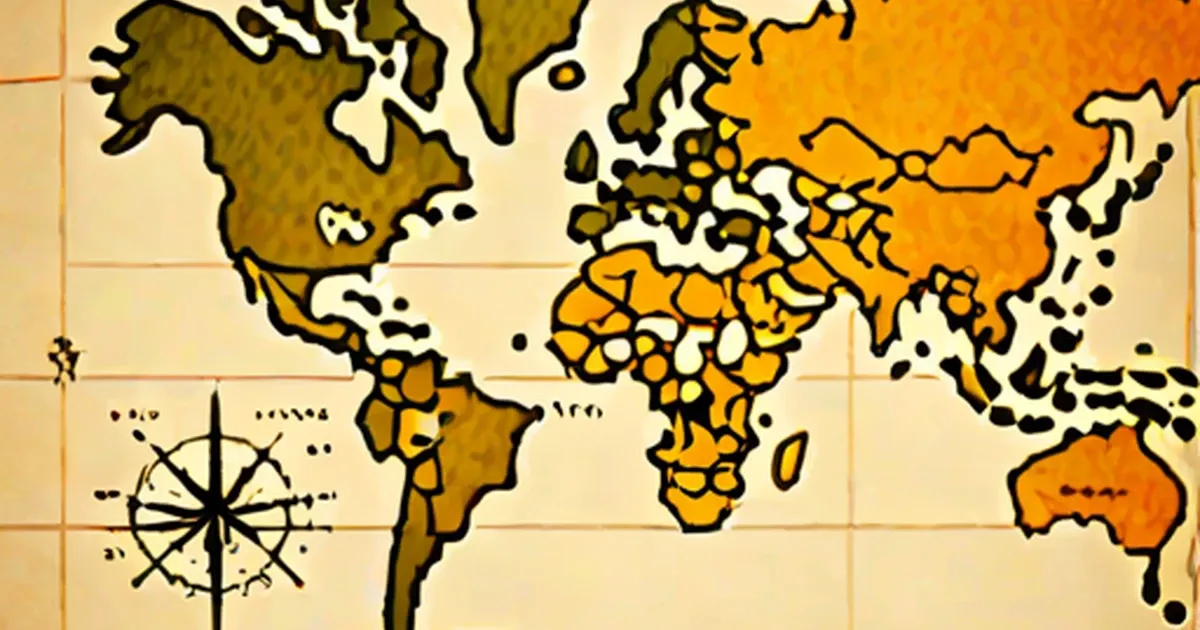
Picture: A map of the Mesopotamia published by the Aram Nahrin organization; Aramaeans cover historically the span of the Asiatic Middle East (SE Turkey, Syria, Lebanon, Israel, Palestine, Iraq, SW Iran, Kuwait, N Saudi Arabia, Qatar and Emirates). In the Antiquity, Armaean communities were to be found in Egypt, the Red Sea coast, Yemen, Western confines of today’s Turkey, Iran, India, Afghanistan and Central Asia up to China.
This statement can play a great role in reuniting all the conscious parts of the multi-divided (due to Anglo-French colonial infiltrations and machinations) Aramaean nation; this would augur a completely different future for the entire Middle East.
Before republishing a feature well elaborated by the Aramaeans of Aram Nahrin, I briefly expand on the historical background of the different appellations employed by the various Aramaean ethno-religious groups of the Middle East.
Syrians, Syriacs, ‘Assyrians’, ‘Chaldaeans’ or Aramaeans?
What is the correct national name of the Modern Aramaeans? Why are there Aramaeans, who despite the fact that they speak Aramaic, insist on calling themselves 'Assyrians'? Why other Aramaeans stick to a third name, 'Chaldaeans'? Is it proper to use the name 'Syriac' that usually describes a late form of Aramaic language and scripture (from which Arabic derived) as national name of the Aramaeans? What is the difference between the Syriacs and the Syrians? And what is the relationship of the Syriacs and the Syrians with the modern 'Assyrians' and the Ancient Assyrians? Are the terms Assyria and Syria identical?
Before tackling key issues of the Middle Eastern puzzle, one is constrained to address all these questions. It will take a series of articles to define terms and make clarifications that are necessary to anyone concerned with, involved or just living in the Middle East. We will specify how some terms were kept alive throughout millennia, and how other terms have been recently revitalized by colonial academia seeking political impact. Before all this, it is necessary to remind everyone that it has been very common throughout History for a people, for a 'nation', to be known to most of the surrounding peoples and countries, or in modern times to the rest of the world, through a name attributed to the people / nation in question by another people. This event does not minimize in any dimension the radiation of that people's culture and civilization. It matters not! At least, it looks like that…..
We all know Finland; few heard that in Finnish Finland is called Suomi! We all say 'Greece'; few are aware that in Greek Greece is called Hellas or Hellada (d to be pronounced as th- in 'there')!
We all name the country of the Nile Delta 'Egypt'; but very few are familiar with the fact that the Egyptians call their own country 'Masr'! And whereas many have learned that the word 'Egypt' originates from the Ancient Greek term 'Aigyptos', only specialists have knowledge of the Ancient Egyptian etymology of the Ancient Greek name (from the term Ha Ka Ptah, which means 'the Abode of the 'Soul' of Ptah', an Ancient Egyptian God localized at Memphis). Not a single Modern Egyptian has a clue about the Assyrian – Babylonian origin of the Arabic name 'Masr' of Egypt; yet for thousands of years the terms Musur and Mat Masri were the usual 'international' appellations of Egypt (since Assyrian – Babylonian was the international language from around 2000 down to 400 BCE)! At those days, the Ancient Egyptians called their country 'Kemet', the 'black one', because of the Nile mud colour which is due to the geological specificities of the Abyssinian silt that is transported by the Blue Nile and the Nile's affluent Atbarah all the way down to the Mediterranean!
Basic Dictionary of Aramaean related appellations
Aramaeans
The real name of the people whose History spans over 3200 years. They were first mentioned in the Annals of the Assyrian Emperor Tiglath-pileser I. As Semitic people, the Aramaeans are closer to the Hebrews and the Phoenicians (North-Western Semitic languages) than to the Assyrians and the Babylonians (Eastern Semitic languages).
Assyrians
Along with the Babylonians, they are the descendants of the Accadians, the earliest Semites who settled around Agade (Accad) and prevailed over the Sumerians, forming a large empire under Sarrukin (Sargon I) and Naram Sin around the middle of the 3rd millennium BCE. Contrarily to the Babylonians, the Assyrians had a policy of national - ethnic purity, and did not intermingle with the Aramaeans, whom they pushed away to the West (today's Western Syria) and to the Mesopotamian South (Babylonia). At the moments of its greatest power, under the Sargonids (722 – 609), Assyria controlled almost all the then known world, but the Assyrians were a tiny and ethnically pure minority within their Empire. With the collapse of Assyria (614 – 612 – 609 BCE), Assyrian ceased to be written and spoken, and no Assyrians were found anywhere in the Middle East. According to a new interpretation that gets momentum, they constituted part of the migrations from the Caucasus area to Europe (Cimmerians).
Assyria: the land belonged, as the people and the capital city did, to the Supreme God Assur, usually viewed as the Only God within monotheistic context. Assyria corresponds geographically to modern Northern Iraq, Eastern Syria, and parts of SE Turkey: this was the Assyrian nucleus, the area that was populated by Assyrians from 2150 to 620-610 BCE. When Assyria subdued the Neo-Hittites, the Urartus, the Phoenicians, the Babylonians, the Medes and other peoples in Iran, the Elamites, the Israelites and the Egyptians, Assyria – center was a small, central, part of the Assyrian Empire.
Chaldaeans
Named 'Kaldu' in Assyrian – Babylonian texts, they are one of the Aramaean peoples. They intermingled extensively with the Babylonians, who finally - in later times - got assimilated with them, and were even called 'Chaldaeans' – mistakenly.
Syriacs
The modern scholarly term is formed in order to provide the corresponding term of the Ancient Greek name 'Syros' and in sheer distinction from the Syrians. Within Ancient Greek literary context, 'Syros' is the inhabitant of 'Syria', and this was the usual way for the Greeks to call the Aramaeans.
Contrarily, Syrians are the inhabitants of the modern state of Syria, who speak Arabic in their majority, because of the linguistic arabization that followed the gradual process of islamization.
Syria: the geographic term in Ancient Greek exists as shortening ('apokope') of the term 'Assyria'. It exists in Ancient Greek only after Assyria ceased to exist (609 BCE). It does not correspond to the term 'Assyria' in any sense. 'Syria' relates to the former Assyrian Imperial lands in the West of Mesopotamia up to the Phoenician Mediterranean coast. After being a mere geographical term that did not relate to the Mesopotamian Center – land Assyria, Syria became the Greek name of the Hellenistic kingdom that had its capital at Antioch (Antakya in Turkey). Syria as geographical term gave birth to the term 'Syros' for the native inhabitants of 'Syria' that happened to be the Aramaeans.
Patriarch Emmanuel Delly of the Chaldean Church of Babylon in Iraq affirms the Aramean origin of the Iraqi Christians
http://www.iraqichristians.org/English/Patriarch_Emmanuel_Delly_Aramean_28_10_2008.htm
Patriarch Emmanuel III Delly of the Chaldean Church
In a phone conversation with the crew of the popular Chaldean website "www.ankawa.com, the Patriarch of the Chaldean Church of Babylon, now in Rome for the annual meeting of the Catholic church, Mgr. Emmanuel III Delly, on 27th of October 2008 confirmed in no uncertain terms the Aramean origin for all the Iraqi Christians. He says, "...but I would like to state that we, the Chaldean, Assyrian and Syrian people are one people called Aramean" (See translation below).
The cardinal Mar Emmanuel Delly to our website (Ankawa.com)
http://www.ankawa.com/forum/index.php/topic,233591.msg3421260.html#msg3421260
"I am a man of religion and I am not interfering in politics and we, in the church, don't ask for anything else apart from what our people want and decide on"
In a phone call with our website (Ankawa) the cardinal mar Emanuel Delly stated the following:
Cardinal mar Emanuel III Delly, Patriarch of the Chaldean church in Iraq and the world, thanks everyone who helped and supported our people inside and outside Iraq, in order to spread to love, brotherhood, tolerance and security must prevail in our dear country.
I would like to state that I am a man of church, who is not interferring in politics, and that everything I do is to spread love, peace, brotherhood values and forgiveness.
And I am absolutely against using the church to be exploited and involved in politics. And I ask, from Rome, the place I am currently for treatment, for security and peace be restored in our dear country Iraq
The Lord will reward those people who are working in the government , day and night, for the best of Iraq and for its wealth of all citizens, wherever they were, in Baghdad, Mosul and in all other areas.
Concerning the request of our people we in the church don't ask for anything except our people's rights, but I would like to state that we, the Chaldean, Assyrian and Syrian people are one people known as Aramean people
Let Iraq continue to live with all its ethnic groups, Arabs, Kurds, Arameans, Yazidie' s, Mandeans, and Shabak.
May God bless them
The Patriarch mar Emanuel III Delly,
Rome
West- and East-Arameans
At the early beginning of Christianity, the Aramean nation geographically was divided as East- and West- Arameans. The river the Euphrates in general served as the border. Thus those living east of Euphrates, roughly speaking Iran, were called East- Arameans. And those living at the West of Euphrates were called West- Arameans.
The East- Arameans became also known as "Nestorians". In 1552 a part of the East- Aramean "Nestorians" joined the Roman Catholic Church, after which they were called "Chaldeans" as a geographical reference to the Chaldean Empire of antiquity. Their Church become known as "The Chaldean Church of Babylon" of which currently Mgr. Emmanuel Delly is the Patriarch.
The remaining part of the East- Aramean Nestorians who did not join the Roman Catholic Church, continued to call themselves as "Suryaye" or "Syrians" until 1840 when they got in contact with the Protestants and Anglican missionaries. Under the influence of the Anglican bishop of Canterbury they first became known as "Christians of (geographical) Assyria", and later as "Assyrian Christians", a religious name which they now try to use as a national name. In 1976 the name of the East- Syrian Nestorians Church has been changed into "Apostolic Assyrian Catholic Church".
We welcome the clear statement of Mgr. Emmanuel Delly regarding the origin of our nation which is perfectly in agreement with the testimonies of the brilliant historians of the Syrian Church of Antioch.
We hope that the Catholicos- Patriarch Mar Dinkha of the East-Syrian "Nestorian" Church and Patriarch Mar Addai II of the Ancient Church of the East will soon follow the example of Mgr. Emmanuel Delly and affirm the Aramean origin of all Iraqi Christians and with that to make for ever an end to the national division of the Aramean nation which was caused by colonial intrigues in the Middle-East.
Aramean Christian denominations in Iraq
- West-Aramean Syrian Orthodox
- West-Aramean Syrian Catholics
- West-Aramean Syrian Melkites
- East-Aramean Syrian Nestorian "Chaldeans"
- East-Aramean Syrian Nestorian "Assyrians"
The East- Aramean Syrian Nestorian "Assyrians" are divided among two churches: the former East- Syrian "Nestorian" Church (after 1976 called "Assyrian" Church), whose patriarch is Mar Dinkha and resides in Chicago and The Ancient Church of the East (since 1968), whose patriarch is Mar Addia II and resides in Baghdad.
Note
Picture: A map of the Mesopotamia published by the Aram Nahrin organization; Aramaeans cover historically the span of the Asiatic Middle East (SE Turkey, Syria, Lebanon, Israel, Palestine, Iraq, SW Iran, Kuwait, N Saudi Arabia, Qatar and Emirates). In the Antiquity, Armaean communities were to be found in Egypt, the Red Sea coast, Yemen, Western confines of today’s Turkey, Iran, India, Afghanistan and Central Asia up to China.

Use the feedback form below to submit your comments.

Use the form below to email this article to your friends.

- The Ongoing Aramaean Genocide, the Fabricated Pseudo-Assyrian Nation, and Kurdish Terrorists
- What is in a Name? German NGO accepts Aramaean Nation, rejects 'Assyrian' Misnomer!
- Save Aramaean Christianity in Iraq! Letter to Pres. Talabani, Premier Maliki
- Extermination of the Aramaean Nation: Results of an Anglo – French Plan
- Gabriel Sengo opens the Gates of Aramaean Thought, Culture and Wisdom
- Zakay Joseph, Urfa – Urhoy – Edessa, and the Aramaean Intellectuals
- John Messo, Tur Abdin, and the Aramaean Renaissance
- Christian Aramaeans: Top Victim of the US Policy in Mesopotamia (Fake, Colonial Iraq)
- Terrorist ‘Kurds’ – Pawns of Merovingian Freemasonry Determined to Eliminate the Aramaeans
- Persecuted Aramaeans, a Pseudo-Nation of "Assyrians", Kurdish Terrorists, and the Anti-Christ
- Roma People, Kosova, Abkhazia, Aramaeans, Berbers of Kabylia, Sidamas, Afars, and the EU Biases
- Plead for the Unification of Aramaeans - Letter to US and French Presidents, UK Premier
- No Peace in Iraq without the Aramaeans
- Do not Call the Illustrious Nation of Aramaeans by the Misnomer ‘Assyrians’!
- Aram Nahrin: the Aramaeans, the Bible, Christianity, and the West
- UN interest for Aramaeans and Aramaic Language
- Aramaeans: a Seminal Concern for the UN
- Aramaeans vs. Arabs: The fight between Civilization and Barbarism within Islam
- The Aramaeans' rise will transfigure the Middle Eastern Chessboard