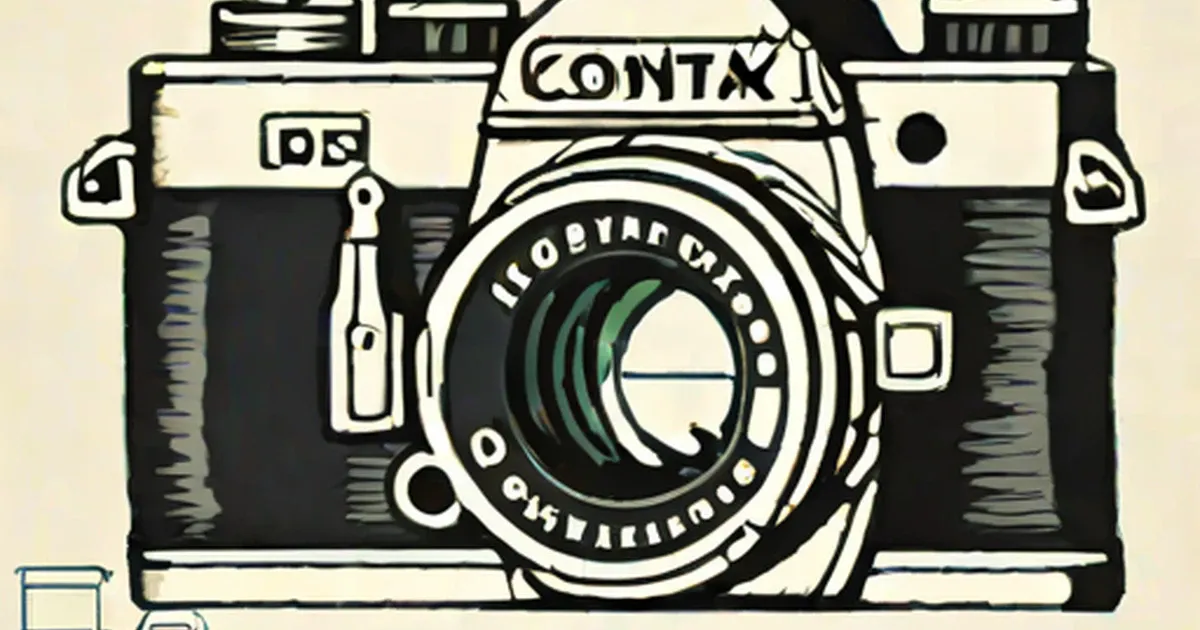
Story of Contax, Mother of SLR Cameras
Learn about how the famous Contax camera brand got started, and how it eventually met its demise.
Contax is a high quality camera brand that is now no longer in production. Contax cameras are noted for their use of the Carl Zeiss lens, which is famous for its high optical quality. Originally Contax cameras were made in Dresden, Germany. However, Contax became a Japanese brand from 1975 to 2005 when Zeiss formed an alliance first several Japanese camera manufacturers, including Pentax, Yashica, and finally Kyocera. On 12 April 2005, Kyocera announced that they are stopping production of the Contax brand because of difficulties in competing with other camera brands.
Contax camera was first produced in Dresden, Germany, by the firm of Carl Zeiss, which was named after one of its founder, the 19th century German optician Carl Zeiss (1816-1888). The name "Contax" was chosen by the employees of the company. The first Contax model, the Contax I, was made between 1932 and 1936.
It uses a die-cast alloy body housing a vertically traveling metal focal-plane shutter made out of interlocking titanium slats. This design allows for a comparatively faster shutter speed (1/1250 second) compared to other cameras of its time (1/500 second). Its main competitor at that time was the Leica brand. Contax lenses, designed by a young designer named Ludwig Bertele, was comparatively superior to Leica models of that time.
It was Contax which spearheaded SLR technology. It worked on developing the single-lens reflex camera beginning during the Second World War under Hubert Nerwin. After the war, production of Contax cameras continued in East Germany, in locations including Dresden and Jena as well as in Kiev in Ukraine. The chief designer after the war was Wilhelm Winzenberg. His development of the SLR resulted in the release of Contax S, where the S stands for "Spiegelreflex" meaning SLR. The "S" does not appear on the camera though.
The Contax S is the mother of all SLR cameras today. Introduced in 1949, the design of Contax S became an industry standard. This includes, among others, its lens-mount, focal-plane shutter and pentaprism. The company that produced it, VEB Zeiss Ikon, in the Soviet-occupied side of Germany, was under pressure from Zeiss Ikon AG, the company on the US-occupied side of Germany, resulting in the Zeiss Ikon and Contax brands being dropped and replaced with the short-lived Pentacon brand which was never well accepted by the public. Eventually, the Pentacon brand was abandoned.
Meanwhile, on the US-occupied side of Germany, three arms of the Zeiss company was established: Carl Zeiss Stiftung (Carl Zeiss Foundation), Carl Zeiss and Zeiss Ikon. Now production of Contax models continued in the West German city of Stuttgart, where it continued until 1962.
The emergence of the Japanese camera makers put enormous pressure on the Zeiss company, which although produced extremely elegant and high quality cameras, which are also extremely expensive. Eventually Zeiss found it necessary to team up with a Japanese partner. At first, it was Asahi, which produces Pentax cameras. The partnership with Asahi resulted in Zeiss designing a lens-mount that became known as Pentax K-mount. Then the two companies went separate ways, and Zeiss found another partner in the form of Yashica. Under Yashica's fold, Contax brought out a new line of SLR cameras starting with the Contax RTS in 1975.
When Kyocera (portmanteau for Kyoto Ceramic Company) bought over Yashica in 1983, it continued to produce cameras under the Yashica and Contax brands. However, Kyocera faced fierce competition from existing camera makers, mounting production costs, and failure to increase its market share for Yashica and Contax. Eventually, Kyocera decided to terminate all its film and digital camera production, affecting the Yashica, Contax and Kyocera brands. The shipment of Contax cameras ended in September 2005. Kyocera continued to provide after-sales service to its customers for a maximum of 10 years for each model.

Timothy Tye writes about photography for Travel Photography Workshop, http://www.travelphotographyworkshop.com
Contax camera was first produced in Dresden, Germany, by the firm of Carl Zeiss, which was named after one of its founder, the 19th century German optician Carl Zeiss (1816-1888). The name "Contax" was chosen by the employees of the company. The first Contax model, the Contax I, was made between 1932 and 1936.
It uses a die-cast alloy body housing a vertically traveling metal focal-plane shutter made out of interlocking titanium slats. This design allows for a comparatively faster shutter speed (1/1250 second) compared to other cameras of its time (1/500 second). Its main competitor at that time was the Leica brand. Contax lenses, designed by a young designer named Ludwig Bertele, was comparatively superior to Leica models of that time.
It was Contax which spearheaded SLR technology. It worked on developing the single-lens reflex camera beginning during the Second World War under Hubert Nerwin. After the war, production of Contax cameras continued in East Germany, in locations including Dresden and Jena as well as in Kiev in Ukraine. The chief designer after the war was Wilhelm Winzenberg. His development of the SLR resulted in the release of Contax S, where the S stands for "Spiegelreflex" meaning SLR. The "S" does not appear on the camera though.
The Contax S is the mother of all SLR cameras today. Introduced in 1949, the design of Contax S became an industry standard. This includes, among others, its lens-mount, focal-plane shutter and pentaprism. The company that produced it, VEB Zeiss Ikon, in the Soviet-occupied side of Germany, was under pressure from Zeiss Ikon AG, the company on the US-occupied side of Germany, resulting in the Zeiss Ikon and Contax brands being dropped and replaced with the short-lived Pentacon brand which was never well accepted by the public. Eventually, the Pentacon brand was abandoned.
Meanwhile, on the US-occupied side of Germany, three arms of the Zeiss company was established: Carl Zeiss Stiftung (Carl Zeiss Foundation), Carl Zeiss and Zeiss Ikon. Now production of Contax models continued in the West German city of Stuttgart, where it continued until 1962.
The emergence of the Japanese camera makers put enormous pressure on the Zeiss company, which although produced extremely elegant and high quality cameras, which are also extremely expensive. Eventually Zeiss found it necessary to team up with a Japanese partner. At first, it was Asahi, which produces Pentax cameras. The partnership with Asahi resulted in Zeiss designing a lens-mount that became known as Pentax K-mount. Then the two companies went separate ways, and Zeiss found another partner in the form of Yashica. Under Yashica's fold, Contax brought out a new line of SLR cameras starting with the Contax RTS in 1975.
When Kyocera (portmanteau for Kyoto Ceramic Company) bought over Yashica in 1983, it continued to produce cameras under the Yashica and Contax brands. However, Kyocera faced fierce competition from existing camera makers, mounting production costs, and failure to increase its market share for Yashica and Contax. Eventually, Kyocera decided to terminate all its film and digital camera production, affecting the Yashica, Contax and Kyocera brands. The shipment of Contax cameras ended in September 2005. Kyocera continued to provide after-sales service to its customers for a maximum of 10 years for each model.

Timothy Tye writes about photography for Travel Photography Workshop, http://www.travelphotographyworkshop.com

Use the feedback form below to submit your comments.

Use the form below to email this article to your friends.

- How Digital SLR Camera Ratings Can Assist You?
- Buying a Single Use Camera - Before You Buy a Disposable Digital Camera
- Digital camera metering
- Beginning Photography Tips For Buying Affordable Digital Cameras
- Why you should consider JVC Mini Digital Camera
- Digital Camera Buyers Guide
- Digital camera interpolation explained
- Digital Camera Comparison - How to Buy the Best Digital Camera
- Choosing the Best Digital Camera to Buy
- Digital Cameras, iPhones, and Other Interfaces
- Finding the Perfect Digital Camera for You
- Digital Camera - Digitize Your Memories
- Vivitar-V8320: The Astounding Digital Camera
- It Pays to Think Big With Digital Camera Sensors
- The Technology Behind Digital Cameras
- How About Choosing Kodak Digital Cameras?
- Benefits Of Using A Digital Camera
- Why Should You Switch Over To A Digital Camera?
- Digital Camera Basic Information
- Looking for The Best Price Digital Camera Could Be A Daunting Task