Radio Telescope
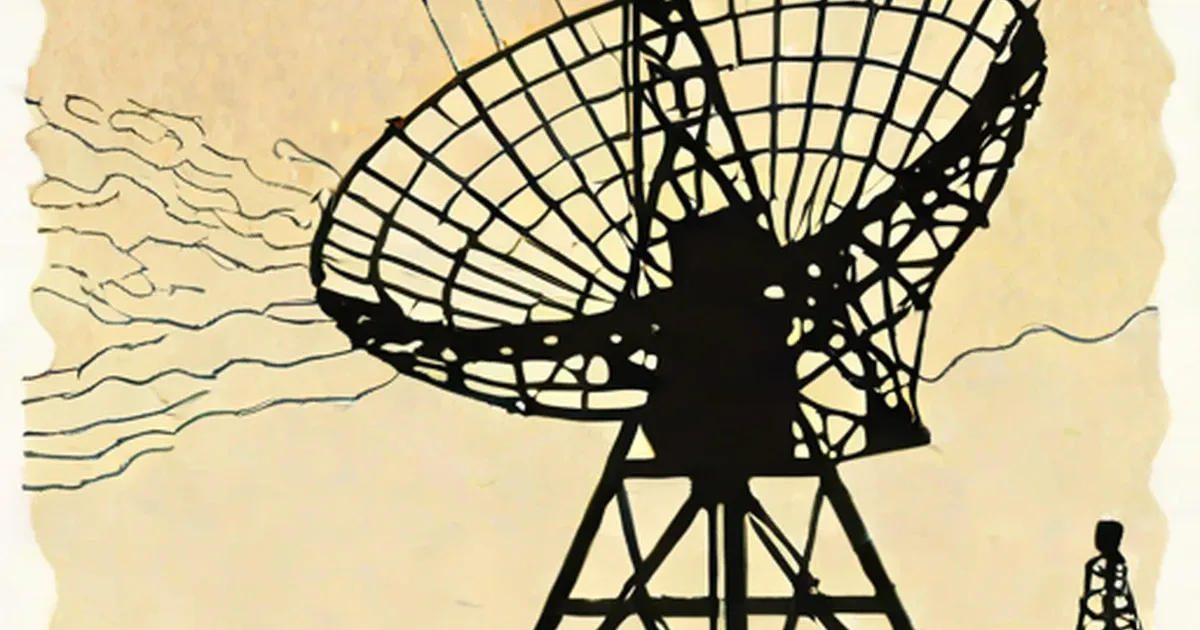
The different types of radio telescopes and the examples therein are mentioned. Some of these are specially dedicated to astronomy.
A radio telescope is a type of directional radio antenna. These are generally large parabolic antenna used singularly or in an array. This is used in radio astronomy for tracking and collecting data from satellites and space probes. They function in the radio frequency portion of the electromagnetic spectrum. Here they can detect and gather data on radio sources. The radio observatories are positioned quite away from major centers of population to avoid electromagnetic interference from radar, TV, radio and other EMI emitting devices.
Types of radio telescopes
The types of antennas used as radio telescopes alter in design, configuration and size. For wavelengths of 30 meters to 3 meters these are usually directional antenna arrays. As the wavelength related to these antennas are long, the reflector surfaces are made from coarse wire mesh. For short wavelengths, dish type radio telescopes are made. The angular resolution of a dish style antenna changes as per the diameter of the dish and proportionally to the wavelength of the electromagnetic radiation being observed. Radio telescopes pertaining to wavelengths of 3 meters to 30 cm are more than 100 meters in diameter. Those operating at wavelengths more than 30 cm are in size from 3 to 90 meters in diameter. The biggest individual radio telescope is the RATAN-600 with 576 meter diameter of circular antenna. Another is at Pushchino Radio Astronomy Observatory, Russia for the low frequency observations. In Europe, a 100 meters diameter antenna in Effelsberg, Germany is the largest one.
Examples
Submillimeter-wave telescopes:
- Mt. Fuji 1.2 m submillimeter-wave telescope
- Antarctic Submillimeter Telescope and Remote Observatory 1.7 m submillimeter telescope
- Koln Observatory for Submillimeter astronomy 3 m submillimeter telescope
- Submillimeter telescope observatory 10 m submillimeter telescope
- Caltech submillimeter observatory 10.4 submillimeter telescope
- James Clerk Maxwell telescope 15 m submillimeter telescope
Millimeter-wave telescopes:
- Very small telescope University of Tokyo — NRO 60 cm
- NANTEN, Nagoya University 4 m
- Natinal Radio astronomy observatory 12 m
- Five college radio astronomy observatory 14 m
- Delingha observatory 14 m, Purple mountain observatory
- Taeduk radio astronomy observatory 14 m
- Yebes 14 m, Calar Alto observatory, National astronomical observatory of Spain
- Swedish-ESO submillimeter telescope 15 m
- Onsala 20 m, Onsala space observatory at Chalmers University of Technology
- Institute of radio astronomy in millimeter 30 m
- Nobeyama radio astronomy 45 m
Centimeter and Meter-wave telescopes:
- Mopra 22 m, CSIRO
- Dwingeloo 25 m, NFRA
- Dominion radio astrophysical observatory 26 m
- MIT Haystack radio observatory 37 m
- Green bank 43 m (140 foot telescope) NRAO
- Parkes observatory 64 m CSIRO
- Jodrell bank 76 m
- Effelsberg 100 m
- Arecibo 305 m
Cylindrical Palaboloyds telescopes:
- Ooty radio telescope, 530 m X 30 m aperture, NCRA
- Molonglo observatory synthesis telescope MOST, 778 m X 12 m aperture X 2 elements
- Northern cross, 600 m X 600 m aperture, IRA
- RATAN 600, a 576 m circle of 595 elements
Radio telescope and astronomy
A new concept radio telescope dedicated to galactic astronomy and searching extraterrestrial intelligence is located close to the town of Hat Creek. The first 42 of the planned 350 radio dishes of the Allen Telescope Array have begun gathering data from the far reaches of the universe. This telescope can provide a better understanding of intelligent civilizations beyond Earth and of exploding stars, the massive black holes at the cores of distant galaxies and astronomical objects.
Haystack radio telescope
This is a fully steerable and remotely accessible radio telescope that operates at millimeter wavelengths for the purpose of astronomical research and education. It is a 37 meter telescope. This is being upgraded at MIT Lincoln Laboratory to work as a radar at 95 Ghz. This tremendously increases the capabilities of radio astronomy and opens the 85-115 Ghz frequency range for users.
Westford radio telescope
This was built in 1961 to support Project West Ford. It is a 18.3 meter (60 foot) radome-enclosed type. Initially, it was used as an x-band radar to test the limits of communication technologies. From 1981, the main use is supporting geodetic VLBI operations. The Westford Antenna acts as a test bed for NASA in the development of new equipment and techniques to support the worldwide geodetic VLBI program.