Mayan History and Civilization
The Mayans had a colorful history and rich civilization. The Mayan Calendar and the writing systems are held in high esteem even today. The Mayan culture still exists in parts of Belize and Guatemala.
"[O]ur knowledge of ancient Maya thought must represent only a tiny fraction of the whole picture, for of the thousands of books in which the full extent of their learning and ritual was recorded, only four have survived to modern times (as though all that posterity knew of ourselves were to be based upon three prayer books and Pilgrim's Progress)." — Michael Coe (prominent archaeologist, Yale University)
Mayan history narrates the rich story of the inhabitants who lived in southern Mexico and northern Central America around 3,000 years ago. One of the prominent civilizations of Mesoamerica, it was established around 2600 BC in the Yucatan; at its height in the 3rd century A.D. the empire covered southern Mexico, Guatemala, El Salvador, northern Belize and the western region of Honduras. Historians believe the forefathers of the Mayans crossed the Bering Strait around 20,000 years ago as nomadic hunters, evidence of which has been found in Mexico from the archaic period.
History of Mayan Civilization
Mayan history is divided into three periods:
Pre-Classic Period (1500 BC – 300 AD)
The Mayan civilization was established with the rise of the Olmecs, who had settled on the Gulf Coast and were the inventors of the Mesoamerican calendar and hieroglyphic writing. Little is known about the Olmecs, and it remains a mystery whether the Mayans were true descendants of them.
Classic Period (300 AD – 900 AD)
During the Classic period the Mayans developed a complex, hierarchical society organized by profession, headed by a king. Major cities of this period included Quirigua, Chiapas, Palenque and Yaxchilan, and settlements spread through central Mexico and Belize. The art and architecture of the civilization reached its zenith here, its glory displayed in the carvings, murals and stucco reliefs at Copan and Palenque.
Post-Classic Period (1000 AD – 1500 AD)
In the Post-Classic period the Maya migrated to the Yucatan peninsula. The culture and accomplishments were less impressive than in the Classic period; significant cities included Chichen Itza, Uxmal and Mayapan. The Mayans abandoned Chichen Itza, resettled a century later, were invaded by the Toltecs, and abandoned it again around 1300 AD. The Spanish attacked Mayan settlements around 1520 AD, leading to the decline of the once glorious civilization.
Mayan Culture and Customs
Mayan culture was tightly bound with deep-rooted beliefs and rituals. After death, ordinary people were buried in graves beneath their houses, while the rich were buried in tombs along with possessions such as clothing and jewelry. Ancestors were worshipped like gods, as the Mayans believed the dead rejoined the gods. Human sacrifice was highly prevalent — offering human blood was seen as a way of seeking the gods' blessings — and people also practiced self-torture to gain strength and please the gods. Festivities and dances marked joyous occasions.
Family and Daily Life
The Mayans had a very strong family support system, with everyone from infants to great-grandparents living together in one house. Elders were treated with great respect, and adult men were the breadwinners, gathering food through hunting, fishing and farming, while women made clothes, raised children and prepared food. Men wore a strip of cloth around the hips and through the legs, while women wore long, loose dresses to the ankle; owing to the hot climate these were made of hand-woven cotton, and the rich also wore jewelry and decorative shells.
Games
Not many games were played, but ball games were very popular: using only their shoulders, players on opposite ends of a court tried to throw the ball through a ring mounted vertically on the side walls. Winners were awarded jewelry and prizes, while losers were tied and rolled down the stairs of large plaza structures.
Calendar and Pyramids
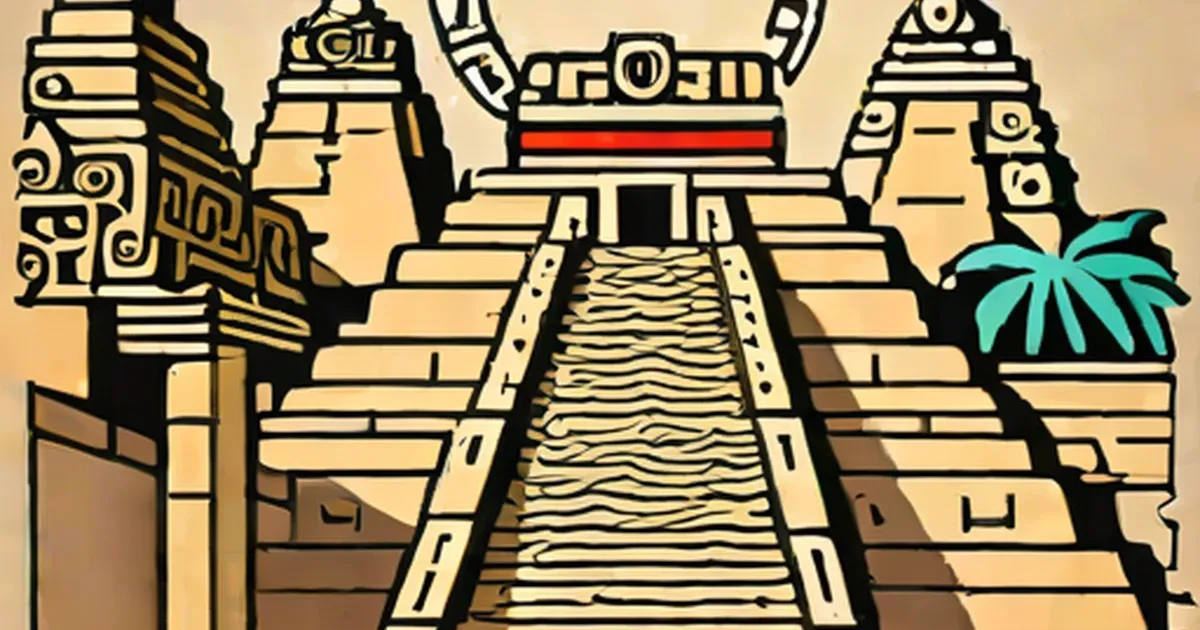
One of the most famous Mayan facts is the calendar, which raised the much-hyped question of whether the world would end in 2012 — a controversial topic on which the Mayans, known to keep several calendars to predict events, offered no certain answer. The Mayans discovered the number zero and used a base-20 numbering system. Their pyramids are as admired as those of the Egyptians; the largest, at Uxmal in the Yucatan, is known as the "Pyramid of the Magician," aligned with the planets known at the time and used as a place of teaching and discussion for astronomers, mathematicians, scholars and priests.
The Spanish invaders destroyed many Mayan books — only three, and a few pages of a fourth, survive. The civilization declined when Spain colonized Mexico, Guatemala and the neighboring regions, yet even today a small Mayan population lives in the rural parts of Guatemala and Belize, still speaking the Mayan language and following Mayan culture and tradition.