London: the Principal Responsible for the Somali Piracy Epiphenomenon
The 36th Ecoterra press release makes available the latest news and comments, analyses and republications about the piracy around Horn of Africa. I therefore republish it integrally.
Ecoterra Intl. – SMCM (Somali Marine & Coastal Monitor) - XXXVI
Ecoterra International – Updates & Statements, Review & Clearing-house
A Voice from the Truth- & Justice-Seekers, who sit between all chairs, because they are not part of organized white-collar or no-collar-crime in Somalia or overseas, and who neither benefit from global naval militarization, from the illegal fishing and dumping in Somali waters or the piracy of merchant vessels, nor from the booming insurance business or the exorbitant ransom-, risk-management- or security industry, while neither the protection of the sea, the development of fishing communities nor the humanitarian assistance to abducted seafarers and their families is receiving the required adequate attention, care and funding.
"During times of universal deceit, telling the truth becomes a revolutionary act". George Orwell
2009-05-12 23h53:25 UTC
EA Illegal Fishing and Dumping Hotline: +254-714-747090 (confidentiality guaranteed) - email: somalia@ecoterra.net
EA Seafarers Assistance Programme Emergency Helpline: SMS to +254-738-497979 or call +254-733-633-733
"The pirates must not be allowed to destroy our dream!"
Capt. Florent Lemaçon - F/Y Tanit - killed by attack of French commandos - 10. April 2009
Non A La Guerre - Yes To Peace
(Inscription on the sail of F/Y TANIT shot down on day one of the French assault)
Clearing-house
Breaking:
The Pirates of London
Somali pirates guided by London intelligence team, says report
A document obtained by Spanish radio station says 'well-placed informers' in constant contact by satellite telephone, reports the British newspaper Guardian copying the original reporting by Mariela Rubio for Cadena SER:
The Somali pirates attacking shipping in the Gulf of Aden and Indian Ocean are directed to their targets by a "consultant" team in London, according to a European military intelligence document obtained by a Spanish radio station.
The document, obtained by Cadena SER radio, says the team and the pirates remain in contact by satellite telephone.
It says that pirate groups have "well-placed informers" in London who are in regular contact with control centres in Somalia where decisions on which vessels to attack are made. These London-based "consultants" help the pirates select targets, providing information on the ships' cargoes and courses.
In at least one case the pirates have remained in contact with their London informants from the hijacked ship, according to one targeted shipping company.
The pirates' information network extends to Yemen, Dubai and the Suez canal.
The intelligence report is understood to have been issued to European navies.
"The information that merchant ships sailing through the area volunteer to various international organisations is ending up in the pirates' hands", Cadena SER reported the report as saying.
This enables the more organised pirate groups to study their targets in advance, even spending several days training teams for specific hijacks. Senior pirates then join the vessel once it has been sailed close to Somalia.
Captains of attacked ships have found that pirates know everything from the layout of the vessel to its ports of call. Vessels targeted as a result of this kind of intelligence included the Greek cargo ship Titan, the Turkish merchant ship Karagol and the Spanish trawler Felipe Ruano.
In each case, says the document, the pirates had full knowledge of the cargo, nationality and course of the vessel.
The national flag of a ship is also taken into account when choosing a target, with British vessels being increasingly avoided, according to the report. It was not clear whether this was because pirates did not want to draw the attention of British police to their information sources in London.
European countries have set up Operation Atalanta to co-ordinate their military efforts in the area.
The journalist who filed the story at Cadena Ser told AFP it was based on a military report from a European country that she would not name.
She said the report had been handed to military commanders of other European countries taking part in the European anti-piracy operation Atalanta. A spokesman for Atalanta in Brussels could not confirm this.
But sure enough the British newspaper The Guardian also combats that report immediately by saying Somali pirates can locate ships without need for London mole
Nick Mathiason explains there that a subscription to Lloyd's List, a contact in Suez or snoops at re-fuelling depots in UAE all help pinpoint vessel's position.
You would hardly need to be the most devious criminal mind to work out where a tanker laden with valuable cargo may be positioned at any given moment.
If reports from Spain are true and Somali pirates had a London shipping contact supplying them with precise information to target which tankers to hijack, they may have cultivated an insider at a London shipbrokers. That is because, every Monday, London brokers compile a list detailing the exact positions of all tankers sailing in the world. The time-consuming task involves phoning every ship owner and is carried out so that brokers can work out when ships become free.
Some, however, dispute the claim that brokers are in league with pirates. One shipping source suggested London brokers were "too busy and too well paid" to get involved with Somali pirates.
A simple subscription to Lloyd's List, the leading shipping transport newspaper and website, would supply a welter of information as to a tanker's location.
There are also easier ways to assess which ship to capture. If you wanted a valuable cargo the easiest thing to do would be to have a contact in Fujairah, one of the seven emirates in the UAE on the Persian Gulf, where oil-laden ships refuel, according to shipping contacts.
Alternatively, a mole in a Suez canal shipping office would have access to which ships pass through the canal. Ships book their passage through the canal ahead of time to ensure they are not delayed. A Suez insider would be able to gain information about where tankers are heading.
London is a world centre for shipping. Many international shipping groups have their headquarters there, including the International Maritime Organisation.
The Baltic Exchange, the established and self-regulated global marketplace for shipbrokers, provides an online exchange for ships and cargo, real-time freight derivative trading and freight market data.
And with the hint that the Lloyd's Marine Intelligence Unit provides instant data to the shipping market from any location in the world, the Guardian closes this new wrinkle in the evolving phenomenon of Somali piracy, which came from a European military intelligence report leaked to a Spanish radio station yesterday.
Graeme Gibbon-Brooks, of Dryad Maritime Intelligence, however, said that it's more probable that pirates receive a list of targets from informers rather than a single target due to the ocean's vastness. He also noted that the pirates' sophistication has increased as funding from outside criminal groups have subsidized their actions.
And there he comes now closer to what many analysts say: As long as the win-win-situation creating networks of London lawyers, key-people in the insurance industry, certain ship-owners and risk-management companies as well as their networks in and around the piracy-hotspots of this world are not stopped to even encourage sea-shifta in Somalia or other pirates elsewhere to demand higher and higher ransom payments in order to fill their own pockets with unethically high legal fees, exorbitant bills for negotiation teams and risk-management companies or with all the kickbacks paid left right and centre and as long the military-industrial complex, which benefits big time from the piracy complex as well as the navies themselves, which have an unequivocal chance to expand, have not reached the saturation point (is there any?) the sad games will never end - unless the last uncorrupted politicians together with their voters and all the taxpayers, who have to pay for all this, finally stand up and say enough is enough and end all this. As long as there is demand for piracy - piracy will never stop.
News from sea-jackings, abductions or newly attacked ships --------
MV MARATHON, the Dutch vessel sea-jacked last Thursday was still pinned down yesterday by a Spanish frigate around 28 nm offshore from Laaskoray, awaiting the arrival of a Dutch warship. A local boat from the shore tried to bring supplies to the vessel, but was intercepted by a commando-boat from the Spanish warship and turned back. Now, reportedly, the Dutch navy has arrived and the Marathon is around 12 miles offshore with the naval vessels just 5 miles off the Marathon. Together with an Italian frigate there are now three warships around the new pirate-hub of Ga'an near Laaskoray.
The 2nd engineer on T/B MASINDARA 7, has been treated by a local medic from Hafun. The sailor reportedly was shot in the leg in a recent shoot-out among the two pirate groups which hold now the ship near Ras Hafun.
The 11 Filipino crew of hijacked MV TITAN quietly arrived in Manila Sunday night, the Department of Foreign Affairs said on Monday. Speaking in a press conference, Foreign Undersecretary Esteban Conejos Jr. said the crew were welcomed by personnel from the DFA and the Overseas Workers Welfare Administration (OWWA) at the Ninoy Aquino International Airport. Conejos said the families of the seafarers requested that there be no media coverage on their arrival to keep their privacy. MV Titan was hijacked on March 25 this year off the waters of Somalia and were released by the Somali pirates on April 15. Since the start of the month, a total of 52 Filipino seafarers have arrived in the Philippines after their vessels were captured and freed by pirates off the coast of Somalia. First to arrive last May 2 were the crew of MV SALDANHA and Philippine-flagged MT STOLT STRENGTH. At present, there are seven vessels with 81 Filipino seamen on board still in the hands of Somali pirates.
Conejos said the government, together with the manning agencies and shipping companies of the captured vessels, continued to work for the safe release and repatriation of the Filipino seafarers.
With the latest captures and releases now still at least 17 foreign vessels (18 with an unnamed sole Barge which drifted ashore, possibly 20 with two further yachts) with a total of not less than 242 crew members accounted for (of which 81 are confirmed to be Filipinos are held in Somali waters and are monitored on our actual case-list, while several other cases of ships, which were observed off the coast of Somalia and have been reported or had reportedly disappeared without trace or information, are still being followed. Over 134 incidences (including attempted attacks, averted attacks and successful sea-jackings) have been recorded for 2008 with 49 fully documented, factual sea-jacking cases (for Somalia, incl. presently held ones) and the mistaken sinking of one vessel by a naval force. For 2009 the account stands at 79 averted or abandoned attacks with 36 sea-jackings on the Somali/Yemeni pirate side as well as at least two wrongful attacks (incl. friendly fire) on the side of the naval forces. Mystery pirate mother-vessels Athena/Arena and Burum Ocean as well as not fully documented cases of absconded vessels are not listed in the sea-jack count until clarification. Several other vessels with unclear fate (also not in the actual count), who were reported missing over the last ten years in this area, are still kept on our watch-list, though in some cases it is presumed that they sunk due to bad weather or being unfit to sail. In the last four years, 22 missing ships have been traced back with different names, flags and superstructures.
Directly piracy related reports
Why do pirates become pirates?
by Ali Bulaç
Johann Hari, a columnist for The Independent, has for some time been providing us with interesting details about the pirates who have recently and unexpectedly become a major agenda item for the international community. As Hari says, not all of the pirates who have captured various vessels are marine bandits committing ordinary crimes. The majority of them are involved in this piracy for a just cause.
"In the 'golden age of piracy' -- from 1650 to 1730 -- the idea of the pirate as the senseless, savage Bluebeard that lingers today was created by the British government in a great propaganda heave", Hari says.
Actually, if we listen to historian Marcus Rediker, we also have to revise our perspectives concerning the villainous pirates as they are generally described by historians. In the past, the poor and unfortunate of London would "end up in a floating wooden hell", says Rediker. "You worked all hours on a cramped, half-starved ship, and if you slacked off, the all-powerful captain would whip you with the Cat O' Nine Tails. If you slacked often, you could be thrown overboard. And at the end of months or years of this you were often cheated of your wages. Pirates were the first people to rebel against this world. They mutinied and created a different way of working on the seas. Once they had a ship, the pirates elected their captains, and made all their decisions collectively, without torture. They shared their bounty". Rediker says this sharing was "one of the most egalitarian plans for the disposition of resources to be found anywhere in the 18th century".
Returning to Somalia, we must go back to 1991 in order to better understand modern pirates. In 1991the government of Somalia collapsed. The collapse was followed by chaos. With the collapse of the government, 9 million people started to teeter on the brink of starvation. There were internal conflicts on one side and starvation on the other.
At the time, forces in the Western world saw this as a great opportunity to steal the country's food supply and dump its nuclear waste in Somalia's seas. At first Somalis suffered strange rashes, nausea and malformed babies. Then, after the 2005 tsunami, hundreds of the dumped and leaking barrels of nuclear waste washed up on the shore. People began to suffer from radiation sickness, and more than 300 died. Ahmedou Ould-Abdallah, the UN envoy to Somalia, told Hari: "Somebody is dumping nuclear material here. There is also lead and heavy metals such as cadmium and mercury -- you name it". Much of it can be traced back to European hospitals and factories, which seem to be passing it on to the Italian mafia to "dispose" of cheaply.
There is more. Hari writes that at the same time, having destroyed their own fish stocks by overexploitation, European ships moved on to Somalia. More than $300 million worth of tuna, shrimp, and lobster are being stolen every year by illegal trawlers while the local fishermen are starving. It was in this context that the "pirates" emerged, with Somali fishermen taking speedboats to try to dissuade the dumpers and trawlers, or at least levy a "tax" on them. They call themselves the Volunteer Coastguard of Somalia -- and ordinary Somalis agree. The independent Somali news site WardheerNews found that 70 percent strongly supported the piracy as a form of national defense, says Hari.
Hari concludes his article by writing: "The story of the 2009 war on piracy was best summarized by another pirate, who lived and died in the fourth century BC. He was captured and brought to Alexander the Great, who demanded to know 'what he meant by keeping possession of the sea'. The pirate smiled, and responded, 'What you mean by seizing the whole earth; but because I do it with a petty ship, I am called a robber, while you, who do it with a great fleet, are called emperor'. Once again, our great imperial fleets sail -- but who is the robber"?
The pirates have a bad image, but the US, Chinese, British and now Turkish vessels, which are chasing the pirates, are pursuing an utterly palliative solution. More must be done to address the causes of piracy. Having written two articles about Somali piracy, I would like to reiterate that this issue should be discussed at great length.
Anti-piracy measures
Is there a naval blockade of Puntland in the making? Local sources from Bosaaso in Puntland, the breakaway semi-autonomous region in north-east Somalia, have received many reports that around 12 to 15 naval vessels are lined up around the Horn of Africa from Mayd on the Gulf of Aden to Garacad on the shores of the Indian Ocean. People are fearing that a naval blockade of Puntland has set in at the beginning of the tuna season not only to curb the attacks of sea-shiftas and their hi-jacking of merchant vessels but also to allow unchallenged access for international fishing fleets, which regularly come into the Somali 200nm Exclusive Economic Zone (EEZ) - protected by UNCLOS - to fish illegally.
The U.S. Coast Guard will require U.S.-flagged ships sailing around the Horn of Africa to post guards and ship owners to submit anti-piracy security plans for approval, a Coast Guard official said on Tuesday. The new requirements, which respond to a surge of piracy off the coast of Somalia, allow ship owners to decide whether to use armed or unarmed guards, Coast Guard Rear Admiral James Watson told shipping industry representatives at a maritime security meeting in Fort Lauderdale, Florida. The revised Maritime Security Directive, highly anticipated by the shipping industry, was signed on Monday by Coast Guard Commandant Thad Allen, reports Reuters. "We expect to see additional security on U.S.-flagged vessels that transit these waters", said Watson, the Coast Guard's director of prevention policy. "It can involve the use of firearms", he said, but added, "We are looking for things that work but that don't make the situation worse".
The requirement to post guards applies only to ships sailing off the Horn of Africa, but the owners of all U.S.-flagged ships must submit security plans to the Coast Guard within two weeks, Watson said. "They're going to tell us what they propose", and then the Coast Guard will give thumbs up or thumbs down, Watson said. He said the directive does not dictate how many guards must be posted on each vessel, or what type of training they must have. He said the Coast Guard would work with ship owners whose plans are deemed inadequate to fend off pirate attacks. "We're not interested in putting ships out of business", he said. Arming cargo ships has been a sensitive issue because some countries will not allow armed vessels to enter their ports. Additionally, arming the ships can raise liability issues and increase insurance costs.
Some ship owners fear it could cause misunderstandings to escalate into gunfights, noting for example that fishermen off Yemen sometimes fire their automatic rifles into the air to warn other vessels away from their nets. U.S.-flagged ships that carry military cargo already are armed, Watson said. The U.S. State Department is working with countries in pirate-plagued regions to learn what weapons laws apply in their ports in order to clarify the issue for U.S. mariners. It may also try to negotiate agreements allowing armed U.S. ships to enter those countries' ports, said Donna Hopkins, of the State Department's political and military planning and policy division. Asked if that meant the United States would allow armed foreign vessels in its ports, Hopkins said, "Diplomacy is based on the principle of reciprocity ... that certainly is going to be part of the debate". Watson said the new directive would not be publicly released in its entirety because it contained sensitive security information. But at the urging of shipping officials at the conference, he said a scrubbed version might be released to help shipping companies learn good security measures from each other. "It's the actual security that's on a particular vessel that we want to keep close-held", Watson said.
A Gordian Knot which cannot be cut by the sword
by Nicolas von Kospoth
Can the origins of piracy at the Horn of Africa be solved with battleships?
It is more than the traditional picture of a clash of civilizations and it cannot easily be compared to earlier scenarios, be it of the 17th century or the more recent incidents in the Strait of Malacca. The effects of globalisation and the ruptured history of an African state make is a unique situation: Even though piracy still is only a symptom of greater evils, in this case it has a different character and can therefore not be fought as it has been in the past.
The multinational Combined Task Force 150 (CTF-150) has been underway in the Horn of Africa since 2002 to ensure stability in the region and support Operation Iraqi Freedom (OIF) and Operation Enduring Freedom - Horn of Africa (OEF-HOA), the latter part of activities referred to as Maritime Security Operations (MSO).
Yet, since early 2006 its focus has almost entirely shifted to the prevention and elimination of piracy. By now the mission unites vessels of Canada, Denmark, France, Germany, Pakistan, the United Kingdom and the United States in this common cause. Also, Combined Task Force 151 as well as an international command are exclusively involved in fighting piracy (see list below). But what have been the results so far?
Where to begin?
The shipping lanes off the coast of Somalia have become the most dangerous waters in the world. The chaotic situation of the African state, resulting from the collapse of its government and the following era of crime, radicalism and terrorism, fostered and maintained by warlords and clan militias, cries for spin-off effects such as piracy. In a country in which poverty reigns, and mischief and lawlessness to the point that everyone is at one’s own, who would wonder about such implications?
18 years have passed since the downfall of the former head of state, Siad Barre. Since then, a culture of survival-of-the-fittest has taken power within this population. An illicit arms trade, fostered by clan militias and radical groups such as "Al Shabaab" or "Hisb Al Islam", made it possible that even the simplest fisherman can be armed to the teeth. Never-ending, violent interior conflicts between parties obsessed with power have made Somalia a bonanza, yet only for the few ruthless players who pulls the strings.
How are a small number of warships going to tackle such a wasp’s nest? The few swimming satellites orbiting the Horn of Africa in order to protect merchant ships are overstrained by the vastness of their operational area and the swiftness of the pirate actions. More than fifty captured pirates have been transferred to prison in Mombassa, Kenya, while a dozen are being held in pre-trial custody in the US, France and Spain. But the support of fresh, young men is inexhaustible and the attacks on merchant ships – more or less successful – won’t stop.
The so-called pirates’ nests in the Somali harbours of Harardere, Hobyo, Eyl or Bossasso are flourishing: Impressive mansions are being built with expensive off-road vehicles parked at the front porch. A downright service industry has established itself around the down-and-dirty core business. Some of the young men armed with Kalashnikovs even consider banditry as a sort of poetic justice.
As published in an exclusive interview in defpro.com with a Somali pirate in February (see: http://www.defpro.com/daily/details/244/), the pirates see themselves as Somalia’s coast guard or navy fighting for the right of undisturbed fishing in Somali waters. And beyond that, they do not even seem to be frightened of the flexing of modern Navies’ muscles. "This has absolutely not scared us. We know they have well armed forces on the ships and they stay in the waters off Somalia protecting ships from what they call pirates", stated the interview’s pirate, "as I told you, I am not a pirate, we are the special guards of the Somali coast. Until there is an effective government, I will perform my duty for my people and my country". Some may see it as less elevated and have simply found a more lucrative job than fishing.
Scratching the surface
Roughly more than two dozen ships from NATO, the EU operation "Atalanta", frigates and destroyers from Russia, China, India and South Korea try to oversee a maritime area larger than the Mediterranean, reaching from the Gulf of Aden to the Seychelles in the West and down South to the coast of Tanzania.
While the Navies report of the successful defence of individual attacks and of the capture of pirates, the International Maritime Bureau presents a much different perspective: Compared to last year, the number of pirate attacks has increased tenfold. Generally, the attackers use one or two swift speed boats, supported by a larger mother ship and attack ships with automatic rifles and rocket propelled grenade (RPG) launchers. Often, the battleships’ only possibility to catch up is to send a helicopter, in order to stop the speed boats and then to approach at their much slower speed. In a few cases, suspect boats can be identified by maritime surveillance aircraft such as the P-3C Orion. Yet, it usually takes a lot of time, until a warship can intercept the suspected boat. By the time they arrive, either the boat is gone or the arms and other suspicious objects have been thrown overboard.
The international community’s struggle only scratches the surface. Keeping a few speed boats from attacking merchant vessels won’t solve the problem. But what is the next step? Sinking mother ships? Bombing pirate nests? Or do you have to go as far as bringing peace and stability to Somalia?
The Kenyan, Andrew Mwangura, programme coordinator for the Seafarers' Assistance Programme, is convinced that influential clan militias support and organise the attacks. "The men pulling the strings are big fish. They operate from Europe, America or from the Arabian Peninsula. They have networks with international contacts and are very wealthy people".
Ransom negotiations are being carried out by telephone and sometimes the proverbial suitcases full of money change hands in the lobbies of hotels in European capitals. According to experts, approximately $ 100 million have been pressed by syndicates during past years. Piracy has become a regional economic factor.
The suspicion that this may be used or perhaps even initiated by larger terrorist organisations is manifest. Intelligence services have identified this threat over many years. The CIA’s evaluation on this matter is very clear: terror groups have launched a crucial seafront against western nations. The terrorists want to cut off vital trade connections. But even this knowledge and distant operations in Iraq and Afghanistan against terror networks will not eliminate the breeding ground of piracy.
Now, one of the bearers of hope is the moderate Islamist, Sheik Sharif Ahmed, Somalia’s President since the beginning of the year. Ironically, he had been considered to be part of the Al-Qaida network by the US and was temporarily arrested by US troops. In April 2009 the UN agreed to support the country’s new government with $ 200 million, seeing the problem’s roots in the anarchy and insecurity on shore, rather than at sea.
List of operations and participating nations:
* "Atalanta" (EU):
Spain, Germany, France, Greece, Italy
(6 frigates, 2 support vessels, Orion P-3A and P-3C, Breguet-Atlantique)
* "Allied Protector" (NATO, from SNMG1):
Portugal, Canada, the Netherlands, Spain, US (associated under national command)
(5 frigates)
* "Combined Task Force 150" (Operation Enduring Freedom, anti-terror):
France, US, United Kingdom, Pakistan
(1 command ship, 3 frigates, 2 support vessels)
* "Combined Task Force 151" (anti-piracy):
US, Turkey, Singapore, South Korea (associated)
(1 destroyer, 1 frigate, 1 cruiser, 3 support vessels)
* Operation under international command (incl. support of the Coast Guard of the Seychelles):
India, China, Malaysia, Japan, Russia, France
(3 destroyers, 3 frigates, 1 patrol boat, 5 support vessels; France’s contribution unknown)
(N.B.: None of these five groups is truly or fully coordinated, nobody co-ordinates these five groups and none of them reports properly to the UN and to the Somali government as required e.g. by UN Security Council Resolution 1851)
Flexible, Inclusive Approach Needed To Fight Piracy. A flexible and inclusive approach towards solving the piracy situation in the Gulf of Aden and off the coast of Somalia is needed until a more lasting solution can be found on shore, a Singapore minister said today. Deputy Prime Minister and Defence Minister Teo Chee Hean said that while naval action to deter and disrupt the pirates was critical to restoring immediate order and confidence in this important maritime artery, the situation in the Gulf of Aden was much more complex. "Issues such as the prosecution of pirates-under-capture and coordination of naval resources continue to limit the effectiveness of these efforts", he said when opening the 7th International Maritime Defence Exhibition (IMDEX) Asia 2009 at the Singapore Expo. The situation in the Gulf of Aden was a clear illustration of how insecurity in one part of the world had global ramifications, Teo said, adding that the nature and scale of disruption to the security of the sea lines of communication there demanded an international response.
The minister noted that there were various naval groupings operating off Somalia, from the European Union and NATO (North Atlantic Treaty Organisation), the United States-led Combined Task Force 151, as well as ships from various other navies operating independently. Singapore has sent the RSS Persistence, a tank landing ship outfitted with two Super Puma helicopters, for a three-month tour to the Gulf of Aden to conduct sector patrols to deter Somali pirate attacks. Teo also said that the situation in the Gulf of Aden demonstrated again that contemporary security challenges could no longer be solved by a single country or a small exclusive group of countries acting on its own. "The response to the situation in the Gulf of Aden requires a broader range of actors and stakeholders to be co-opted and engaged. Only then will we collectively have the capacity, resources, reach, ideas and expertise to deal with the problem", he said.
After the opening ceremony, Teo visited some of the foreign warships taking part in the warships display at Changi Naval Base. This year, 18 visiting warships from 13 countries have come to take part in the display, which is being hosted by the Republic of Singapore Navy (RSN) from today to Thursday. A total of 140 exhibitors, 41 navies and coast guards, as well as over 5,000 delegates are present at the exhibition. The RSN will also be hosting the inaugural Maritime Information-Sharing Exercise (MARISX) in which 16 countries, including Canada, Chile, France, India, Indonesia, Japan, Korea, Malaysia, New Zealand, Thailand and the United States, will practise the information-sharing process and to validate the linkages between their operation centres at the new Information Fusion Centre located in the Changi Command and Control Centre. There will be 39 international liaison officers participating. Officers of the Regional Cooperation Agreement on Combating Piracy and Armed Robbery Against Ships, will also take part. Teo also praised the United Nations Convention on the Law of the Sea (UNCLOS), the 1982 agreement that struck a balance between coastal states desiring "user states" with legitimate interests in sea access, and those who "wanted to ensure that the high seas rights" already in place would not be reduced. "The balance struck in UNCLOS is a critical one for all stakeholders who desire peace and stability at sea", Teo said. "Without UNCLOS, contests over rights between states, and between coastal states and other states over use of the sea, have the potential to flare up into confrontation and conflict. It is thus in the interest of both user states and coastal states to respect and preserve that careful balance struck in UNCLOS".
German Social-Democrats (SPD) reject amendment for military's anti-piracy ops
A battle has erupted in Germany’s governing coalition over Chancellor Angela Merkel’s suggestion to amend the constitution in order to aid the navy’s mission against piracy on the high seas, thelocal.de reports. Both Merkel and her conservative Interior Minister Wolfgang Schäuble have recently called for the change to improve the ability of elite German police force the GSG-9 to work with the country’s military (Bundeswehr) in order to free captives of pirates operating off the coast of Somalia. But Merkel’s junior coalition partner the centre-left Social Democrats (SPD) don’t consider a constitutional amendment necessary. "It is completely unproblematic according to state and international law that the German armed forces fight the pirates and free hostages", Dieter Wiefelspütz, the SPD’s parliamentary security policy spokesman, told daily newspaper Handelsblatt on Monday. "I don’t know why we need to change the Basic Law". Wiefelspütz said further that the SPD will not allow any changes to the constitution in the run-up to the election this September.
The debate stems from the abandoned rescue of the hijacked container ship HANSA STAVANGER earlier this month, which included a partially German crew. After being stationed on the USS Boxer, the GSG-9 was recalled after the mission was deemed too risky. Schäuble told Bild newspaper on Sunday that Germany’s ability to respond to such situations abroad was hampered by the fact German law only provided for the police to undertake hostage rescues and not the military. "But that’s really a job for the Bundeswehr", he said and added "For that though we’ll have to change the legal foundation with a constitutional amendment". Germany still doesn't have a constitution, though the Basic Law, given under Allied Forces supervision to the country after WWII, says that the German People should give themselves a constitution after a reunification. The "Wiedervereinigung" happened on 3. Oktober 1990, but still the Germans seem to be stuck with their old Basic Law, whose key sentences like "there shall never again be launched war from German soil" seems to get forgotten - or do the Germans not consider German warships as German "soil"?
Flaws of the Kenyan Legal System demonstrated. 11 alleged pirates, who had been dumped into the hands of the Kenyan Authorities by the government of France - based on a general memorandum of understanding between the European Union and the Republic of Kenya - were arraigned in court yesterday and charged with piracy. The eleven pleaded not guilty. They were, however, not represented by a lawyer and Magistrate Catherine Mwangi (Kenya's "piracy judge") remanded them in prison until the next hearing of the case in two weeks time. Though by law independent, Kenya's Magistrates are seen by the majority of the Kenyan public not as politically and judicially independent judges, but mere legal officers of the judiciary, which operate under governmental instructions and have to toe the line. The 11 Somalis were captured by soldiers from the French warship Nivose near the Seychelles. The saga goes that they had attacked the navy-ship, while others maintain that they had run out of food and water on a 10-m long open fishing boat and went with their two skiffs to request help.
The eleven maintained that the few weapons (two AK47 rifles and one RPG) they were equipped with were for self-protection in these dangerous seas - an argument which seems plausible, since in pirate-gangs all members are equipped with at least one firearm per person. In addition the French naval officers had disposed the rocket propelled grenades the pirates allegedly had with them by dumping them into the sea - another case of destroying evidence, which made the Kenyan Magistrate not happy. But even more serious is the fact that the alleged pirates were not represented by a lawyer. This shows not only the flaws of the Kenyan legal system, which does not automatically provide for a defence-lawyer, if the accused can not afford to hire one, but also the battle for money behind the curtains. Kenya demands now that the costs of these trials are met by those governments, who request Kenya to prosecute the alleged pirates for them, while some EU-governments are of the opinion that Kenya must contribute to the international effort to fight piracy. Since private defence lawyers have now realized that they have no guarantee that any money would come forward they are not keen any longer to defend pirates pro bono. Kenya does not provide what is called an obligatory defence lawyer called "pauper brief" for cases where there is no charge for a capital offence with the mandatory death sentence. This somehow creates a legal novum in Kenya, since usually armed robbery with violence already carries a mandatory death penalty in Kenya. Such, however, has been ruled out by the EU-memorandum, since otherwise the EU could not hand over pirates to Kenya due to the EU regulations. More and more legal tussles will ensue and also the appeal case of the first 10 pirates, who were handed to Kenya by the U.S. of America and sentenced will come up.
Spain announced it would hand over 14 Somali pirates to Kenyan authorities. Foreign Minister Miguel Angel Moratinos said the group were being handed over under an agreement between Kenya and the European Union. A Spanish navy warship captured seven of the pirates in international waters in the Indian Ocean last Wednesday after their boat capsized when they were allegedly trying to board a Panamanian-flagged vessel. The same warship captured another seven suspects on Thursday as they appeared to be attempting to board a Maltese-flagged merchant ship. Spanish daily El Pais said yesterday that the military had even informed the 14 that they would be dropped off in a zone "considered safe" off the Somali coast, but that for "security" reasons they remained aboard.
Russian courts may prosecute Somali pirates for attacks on Russian ships, a senior legal official was quoted as saying in a newspaper, reports Reuters. The comments from Russia's deputy prosecutor general follow efforts by Russia and other countries to find a legal mechanism to prosecute pirates operating off the East African coast, who have become increasingly bold over the past year. "The transfer of such individuals into the hands of the Somalis is pointless", Deputy Prosecutor General Alexander Zvyagintsev said in an interview published in the Rossiiskaya Gazeta newspaper. Zvyagintsev was quoted as saying that under international maritime law, any country which has captured pirates can launch its own prosecution. Since Somalia had not been a functioning state for almost 20 years, there was no point expecting them to face prosecution there, he said. "The general prosecutor's office has worked out the possibility of starting criminal proceedings in Russian law against individuals who conducted an act of piracy", the state RIA news agency quoted Zvyagintsev as saying. On May 4, Russian President Dmitry Medvedev suggested the creation of a special international court to prosecute pirates operating off East Africa. Last month Russia captured a pirate vessel with 29 people on board after it tried to seize a Liberian-flagged ship with a Russian crew. The attacks have worsened despite the presence of naval forces from more than a dozen states, including Russia, and task forces under NATO, EU and U.S. command.
The U.S. Coast Guard will require U.S.-flagged ships sailing around the Horn of Africa to post armed guards and ship owners to submit anti-piracy security plans for approval, a Coast Guard official said on Tuesday. The new requirements, which respond to a surge of piracy off the coast of Somalia, allow ship owners to decide whether to use armed or unarmed guards, Coast Guard Rear Admiral James Watson told shipping industry representatives at a maritime security meeting in Fort Lauderdale, Florida. The revised Maritime Security Directive, highly anticipated by the shipping industry, was signed on Monday by Coast Guard Commandant Thad Allen, reports Reuters. "We expect to see additional security on U.S.-flagged vessels that transit these waters", said Watson, the Coast Guard's director of prevention policy. "It can involve the use of firearms" he said, but added "We are looking for things that work but that don't make the situation worse". The requirement to post guards applies only to ships sailing off the Horn of Africa, but the owners of all U.S.-flagged ships must submit security plans to the Coast Guard within two weeks, Watson said. "They're going to tell us what they propose", and then the Coast Guard will give thumbs up or thumbs down, Watson said. He said the directive does not dictate how many guards must be posted on each vessel, or what type of training they must have.
He said the Coast Guard would work with ship owners whose plans are deemed inadequate to fend off pirate attacks. "We're not interested in putting ships out of business", he said. Arming cargo ships has been a sensitive issue because some countries will not allow armed vessels to enter their ports. Additionally, arming the ships can raise liability issues and increase insurance costs. Some ship owners fear it could cause misunderstandings to escalate into gunfights, noting for example that fishermen off Yemen sometimes fire their automatic rifles into the air to warn other vessels away from their nets. U.S.-flagged ships that carry military cargo already are armed, Watson said. The U.S. State Department is working with countries in pirate-plagued regions to learn what weapons laws apply in their ports in order to clarify the issue for U.S. mariners. It may also try to negotiate agreements allowing armed U.S. ships to enter those countries' ports, said Donna Hopkins, of the State Department's political and military planning and policy division. Asked if that meant the United States would allow armed foreign vessels in its ports, Hopkins said, "Diplomacy is based on the principle of reciprocity ... that certainly is going to be part of the debate".
No real peace yet
Somalia, goddess Tyche, Ahmedou Ould Abdallah and Sheikh Sharif
by Dr. Muhammad Shamsaddin Megalommatis
AMISOM is the main reason for the fierce fighting in the Somali capital over the weekend. Professional liars, impersonating diplomats, and criminal gangsters, impersonating AMISOM authorities, have the tendency to deny this reality, but the only truth is that the new phase of the Somali fratricidal war is only due to one main issue, namely the presence of the loathsome foreign soldiers who serve tyrannical regimes of Africa that are all viciously Anti-Somali.
A brief sample of the incredible lies said by AMISOM authorities is the following, due to Major Barigye Bahoku, spokesman for the AMISOM:
"There have been some skirmishes in Mogadishu, especially in the northern suburbs and parts of Mogadishu for about couple days ago. And the information we have does indicate that the forces of government on the one side and the forces opposed to the peace process on the other side and the clan militias who can fall on either side, are the ones who have been involved in these skirmishes". (http://www.mareeg.com/fidsan.php?sid=11968&tirsan=3)
This is a filthy lie; those who fight against the totally unrepresentative TFG appointed president and government do desire peace in Somalia. They are not opposed to a "peace process" but they don´t want foreigners to impose any sort of pseudo-process on Somalia. And they are very rightful in this.
Peace Will Never Be Imposed on Somalia From Abroad
Peace was never imposed on a country from abroad. This would be the peace of the defeat. This "peace" was administered to Germany after the end of WW II by the occupying forces. But in the case of Germany, there was a war of the allied forces against the Nazi regime of the country.
Who is fighting against Somalia today so that a "peace" be imposed from abroad?
This is the question one should ask the irrelevant and criminal liar, Major Barigye Bahoku, who represents a force of foreign occupation that intends in secretive way to impose a loathsome regime on the Somali Nation – only because this befits the criminal colonial interests of England, France and America that have long targeted Somalia´s existence.
This is the shameful international farce that has been devised against Somalia by the evil forces that are lurking in the darkness in order to further escalate the Horn of Africa crisis:
1. First, they forced the previous TFG president to resign and "go home". Abdillahi Yousef was a loathsome person viewed by all the Somalis as a traitor and puppet of the English colonials and the Anti-Somali Abyssinian racists. But he did not have the intention to resign; he did so, obeying to his secretive masters´ orders, because he owed to them everything. Without having been initiated to the Apostate Freemasonic Lodge in London – where he learnt well how cheap life can be and how one must not refrain from every evil act that would promote personal interest and profit – Abdillahi Yousef would not have made his shameful and dishonorable career of traitor, puppet, gangster and Mafia lord.
2. Second, they selected a gullible and naive sheikh who imagined possible for the colonial diplomats of England and France to be trusted, and for their words and promises to be believed and materialized. This gullible and naive sheikh therefore believed the words of the "good Muslim" Ahmedou Ould Abdallah, the Special Representative for the UN Security Council.
One may wish to ask why Sheikh Sharif believed the words and promises of Ahmedou Ould Abdallah. The answer is simple: because the Mauritanian diplomat did his ingenious best to show personal interest in, and commitment to, the Cause of Somalia. In fact, he has none. He even does not have an interest in the affairs of his own country that, small, impotent and marginal as it is would never have the means to promote Ahmedou Ould Abdallah to the UN Security Council. It is even a mistake to take this person as a Mauritanian; his origin certainly hinges on the huge but almost uninhabited West African country (3 million people for more than 1 million km2). But Ahmedou Ould Abdallah, who studied for many long years in Paris and was then initiated in the Apostate Freemasonic Lodge (in order to be effectively used for the needs of the French colonial policy and the Freemasonic schemes that are hidden behind it), knows very well that all his power and all his possibilities are limited within the circle of French colonial diplomacy and the international Freemasonry. His Mauritanian identity is meaningless to him.
Ignoring such realities concerning your interlocutor can have detrimental results. In fact, Sheikh Sharif, the ignorant and gullible guy, who thought possible for Ahmedou Ould Abdallah to tell the truth – even once –, does not even know for what purposes the Mauritanian diplomat, who is implementing French Freemasonic policies, "helps" him. Everything that Ahmedou Ould Abdallah told him is a lie. What is even more characteristic of typical circumstances like this is that perhaps even Ahmedou Ould Abdallah does not know the real purposes of the work that he was ordered by the French Freemasons to implement in Somalia – most probably he only knows a part of it. This is a customary trait of hierarchical societies´ involvement in politics.
3. Third, to properly implement the puppet´s promotion to a President of Nothing (well, I am sorry, President of the TFG !), Ahmedou Ould Abdallah, with the help of illegally used / channeled money, "bought" the TFG presidency for his ignorant and gullible designee who saw goddess Tyche (in Latin: Fortuna) smiling to him and to his country. Sheikh Sharif would have never imagined the success to be so easy! Instead of penitently crossing the streets of Asmara and the squares of Djibouti, he would now be back to Mogadishu, as "president" elect! Who could have ever imagined that?
4. Fourth, what space of flexibility and what margin of maneuver are left to the gullible sheikh who is now the president of some militias and ruthless gangsters, who a few months ago could even assassinate Sheikh Sharif, only to please the fancy of the previous TFG "president"? Nothing. Well, when you are left without margin of maneuver in politics, you either are puppet or dead. But of course, the naive and hopeful sheikh didn’t have time to thoroughly study Machiavelli. Perhaps he may even find Machiavelli as immoral and wicked. For once, I would agree with him. The problem is that Machiavelli is the embodiment of Ahmedou Ould Abdallah´s part of mind that was never revealed to Sheikh Sharif – the patchwork of conquest that all the evil people hidden behind Ahmedou Ould Abdallah have made theirs, plunging the world into ceaseless conflicts and wars.
5. Fifth, as Sheikh Sharif has no margin of manoeuvre, he relies on foreign soldiers (those of AMISOM and the African Union – another body controlled by the international Freemasonry through different channels) in order to achieve predominance over his fellow countrymen. This is merely said high treason. How greatly moral for a … sheikh to do so!
Who could imagine the Shah of Iran, using European and American soldiers against the Islamic revolutionaries?
What would the Pakistanis say if President Zardari asked Indian soldiers to fight against Pakistan´s Taliban? This is precisely what Sheikh Sharif is doing now, as he is opposing the only real process of peace.
This is a provocation, some would say.
This provocation is now named in Somalia "Sheikh Sharif".
It is up to the Somalis to eliminate the provocation.
A real process of peace in Somalia would involve the following:
1. Removal of AMISOM soldiers
2. General Assembly of all Somali tribes´ representatives
3. Formation of a provisory government to open the path for Constitutional Elections, with the participation of representatives of all Somali socioeconomic entities and political - ideological currents
4. Coordination with the UN and the Islamic Conference Organization for an international force that would eliminate the secessionist pseudo-governments of Somaliland and Puntland
5. Coordination with the UN, NATO, Russia, China, and India on the termination of the Somali piracy epiphenomenon which is the most grave ambush in the path of Somalia´s pacification, which was devised by the English secret services.
6. Constitutional Elections, adoption of a Bi-cameral Constitution, and election of a Government
Hawiye clan elders
Hawiye clan elders have called Tuesday for the warring sides in Mogadishu to reach immediate cease fire. The spokesman of Hawiye Clan Elders Ahmed Derie Ali, has called for the insurgents and the government to stop the fighting and end their differences through dialogue to save the lives of the innocent civilians in the capital. He also called for al-Shabab, Hisbul Islam and the government to accept the calls from the Somali clerics who demanded the immediate cessation of the fighting in Mogadishu. On the other hand, Sheik Hussein Ali Fidow one of al-Shabab leaders warned against the people to call foreigners what he called "Muslim fighters from the world who reinforced to Somalia during the Ethiopian occupation". He also condemned the Somali clerics and said they were partial about the current issues in Somalia and they were supporting the Somali government.
The African Union (AU) said Tuesday it would continue to follow closely the situation in Somalia. In a statement, AU Commission Chairperson Jean Ping said his body is maintaining close liaison with the country's Transitional Federal Government (TFG) and partners. He once again strongly condemned the ongoing fighting in Somalia's capital Mogadishu following attacks by anti-peace elements on the TFG. The latest fighting which has killed more than 100 people began on Thursday and escalated over the weekend between pro-government forces and Islamist groups. A local human right group, the Elman Peace and Human Rights Organisation, said the fighting between hard line Islamist rebels from the Al-Shabaab rebel group and pro-government forces have also wounded 330 people.
"The US government has condemned the latest escalation of violence and attacks on the Somali Transitional Federal Government by armed militias in the country’s capital Mogadishu. Mogadishu became a battle field late Saturday when armed Islamist militias attacked government forces to take control of the remaining part of the capital. The US called on the warring parties to end hostilities and spare the country of renewed clashes, further urging them to support the Djibouti peace process and find accommodation in the new government. We further call on all governments in the region to support the people of Somalia by aiding the Djibouti process and to cease all support to spoilers attempting to undermine the peace process and the Transitional Federal Government", the US government statement said.
Spike in Somali violence condemned by U.N. A recent surge in violence in Somalia allegedly backed by foreigners drew criticism Tuesday from the U.N. envoy for the country. According to a news release, Ahmedou Ould-Abdallah, U.N. special representative for Somalia, on Tuesday called the spike in violence that has resulted in "possibly hundreds of people killed" an attempt to destabilize the Horn of Africa country, the United Nations reported. The violence, which has included armed attacks and explosives, has also resulted in the death of a Somalian lawmaker and attempted assassination of government Cabinet member. Ould-Abdallah called for an immediate cease-fire. "There is now a legitimate, internationally recognized government in Mogadishu, which should be supported", Ould-Abdallah said in a statement. "Instead, irresponsible elements backed by foreigners have attacked Mogadishu in an attempt to seize power by force. … (The people of Somalia) have clearly shown they are sick and tired of the conflict, yet once again they are subjected to violence which has killed and displaced innocent men, women and children".
A health official says at least 14 people, including women and children, have been killed in renewed fighting overnight in Somalia's capital, as fierce weekend battles have continued into the new week. Rufai Mohamed says the ambulance services he leads in Mogadishu collected the bodies of mostly civilians. Hospital officials say they have admitted at least 45 wounded people from the fighting. Battles between Islamic insurgents and pro-government forces began Monday afternoon and continued through the night. The fighting has died down early Tuesday, but sporadic gunfire can be heard in parts of the city.
Somalia's worst drought in a decade is pushing growing numbers of children into near-famine conditions and deepening the humanitarian crisis caused by political violence, the United Nations warned Tuesday. Some 3.2 million Somalis are among an estimated 19 million people in the Horn of Africa in urgent need of life-saving food assistance, top U.N. aid officials said. Drought and high local food prices have also left 12 million people in Ethiopia and another 3.5 million in Kenya short of food supplies, they said. "We're now facing a drought in Somalia that is worse than people have seen for at least a decade", Mark Bowden, U.N. humanitarian coordinator for the country facing its fourth straight year of drought, told a news briefing in Geneva. "Roughly 45 percent of the (Somali) population is suffering from moderate malnutrition". In parts of central and southern Somalia, 24 percent of children under five suffer from acute malnutrition, he told the briefing. Bowden, speaking later to Reuters, said that rate amounted to some children living in "near-famine conditions". He said that while Somalis were not currently dying of starvation, as seen there in the early 1990s, their cattle were dying from a lack of water. "We've got more people across the board suffering and a loss of livelihoods", he said.
Fighting
Some 1.1 million people in Somalia have been driven from their homes, including thousands who have fled intensified fighting since the weekend in the capital Mogadishu between Islamist militants and the government, according to Bowden. The target for a U.N. appeal for Somalia this year has been increased to $984 million, but is only one-third funded by donors to date. "The main message is that the appeal certainly needs to be met more rapidly in terms of being able to respond to what is a deepening crisis in Somalia", Bowden said. John Holmes, the U.N.'s emergency humanitarian coordinator, said dwindling remittances from abroad were compounding problems faced by populations "chronically living on the margin of survival" in all three countries. "This is not the easiest international economic context in which to be asking donors for extra resources, but we believe the seriousness of the situation does warrant that", Holmes said of the Horn of Africa. In Ethiopia, rains were patchy, sparking fears that the harvest will be very poor, he said. However, the Ethiopian government's strategic grain reserves were in a better position than this time last year.
Impacting reports from the global village
Same Firms Shipping Aid and Arms, Report Says
Thalif Deen
United Nations, May 12 (IPS) - The military conflicts raging across Africa, Asia and Latin America have been significantly influenced by the heavy flow of illicit small arms, cocaine and rich minerals.
But, ironically, some of the air cargo companies involved in these profitable - and politically destabilising - smuggling operations are also delivering humanitarian aid and supporting peacekeeping operations, according to a new report released Tuesday by the Stockholm International Peace Research Institute (SIPRI).
In some cases, these companies are delivering both aid and weapons to the same conflict zones, including in countries such as Sudan, Somalia, Liberia, Colombia, the Democratic Republic of Congo and Guinea-Bissau.
The 70-page detailed report reveals that 90 percent of the air cargo companies identified in arms trafficking-related reports have also been used by major U.N. agencies, the European Union (EU), members of the North Atlantic Treaty Organisation (NATO), defence contractors and some of the world's leading non-governmental organisations (NGOs) to transport humanitarian aid, peacekeepers and peacekeeping equipment.
The report, titled 'Air Transport and Destabilizing Commodity Flows,' points out that some U.N. missions have continued to contract aviation services from companies that have been named in Security Council reports for wholly illicit arms movement and have been recommended by the United Nations for a complete aviation ban.
Co-authored by Hugh Griffiths and Mark Bromley, the study cites several such cases, including the U.N. peacekeeping mission in Sudan which has continued to use Badr Airlines even after the Security Council recommended an aviation ban for violating a U.N. arms embargo.
The U.N. children's agency UNICEF and the International Medical Corps have been cited for using the services of Juba Air Cargo after the operator had been documented by the United Nations as violating its arms embargo.
The clients listed by Juba Air Cargo also include the U.N. Development Programme (UNDP), the U.N. Office of Project Services (UNOPS), the Food and Agriculture Organisation (FAO), the International Committee of the Red Cross, Concern Worldwide, Action Centre la Faim and the Swedish Free Mission.
Additionally, Ababeel Aviation holds contracts with U.N. agencies such as the World Health Organisation (WHO) even though the operator has been accused of violating U.N. arms embargoes.
Asked what role the United Nations could play in preventing such anomalies, Griffiths told IPS: "The U.N. is not very good at policing its backyard. There is a need for an independent institute to do this effectively".
He also said the United Nations should cooperate with the EU in order to solve the problem and also attend an upcoming expert meeting in Brussels on May 14.
The SIPRI report shows how air cargo carriers involved in humanitarian aid and peacekeeping operations have also transported a range of other conflict-sensitive goods such as cocaine, diamonds, coltan and other precious minerals.
Bromley, a co-author of the report, told IPS the United Nations has an important role to play, but the EU has a unified stance on this matter and has explicitly recognised the problems of air cargo carriers transporting arms in their framework control strategy against the illicit smuggling of small arms and light weapons (SALW).
"The U.N. framework SALW control document (2001) and the Programme of Action does not make any reference to transport and does not recognize air cargo carriers as a problem", he added.
Asked for a response from the United Nations, U.N. Associate Spokesman Farhan Haq told IPS that none of the air operators cited in the SIPRI report are registered as "bona fide" air carriers by the U.N. Department of Field Support (DFS).
"That means they're not listed flight vendors by the U.N. Secretariat", Haq said.
And thus, they cannot, and have not been commercially contracted by DFS for long-term charter in peacekeeping operations, he added.
In terms of how DFS goes about contracting flight vendors, Haq explained that the department has a Quality Assurance Programme, which involves potential flight vendors having to go through a pre-qualification process for registration as flight vendors, followed by an on-site inspection of the prospective air operator.
"These are done to ensure that any air carriers under U.N. sanctions are not considered for registration/operations with the United Nations", he said. As part of the ongoing process of enhancing safety, quality and the security of U.N. aviation operations, both DFS and the Department of Peacekeeping Operations (along with the World Food Programme and the International Civil Aviation Organisation in advisory roles), have established an Aviation Technical Advisory Group (ATAG) comprised of aviation experts from DFS, WFP and ICAO.
The ATAG's main objective is to develop U.N. Common Aviation Standards for humanitarian and peacekeeping air transport operations and ensure that risks are mitigated in DFS aviation operations, and any exposure to potential liabilities is reduced, Haq said.
The report presents a range of inexpensive options which could be adopted to tackle the problems.
U.N. agencies, governments, defence contractors and NGOs could make humanitarian aid and peacekeeping contracts conditional by requiring air cargo carriers to adhere to an ethical transportation code of conduct.
The EU could also utilise its existing air safety regulations to put companies involved in arms trafficking or destabilising commodity flows out of business.
Additionally, the EU could provide specialised training for its civilian and military peacekeepers to better identify suspect air cargo carriers operating in Africa and Eastern Europe.
A coordinated response by the EU and the humanitarian aid community could require companies to chose between transporting arms or aid to conflict zones while air safety enforcement could put hardcore arms dealers out of business, said Bromley.
"Our research shows that companies named in arms trafficking-related reports have poor safety records. Safety regulations represent their Achilles heel, and can do to them what tax evasion charges did to Al Capone", he said.
Madagascar's new army-backed government has criticised the international community's refusal to recognise it and singled out the U.S. ambassador for a stinging attack. Months of political instability on the world's fourth largest island have devastated its $390 million-a-year tourism sector and caused concern among foreign investors exploring potentially vast oil and mineral reserves. Prime Minister Roindefo Monja said that the African Union and European Union, both of which have refused to recognise Andry Rajoelina's interim government, had been hasty in branding March's overthrow of former president Marc Ravalomanana a coup. "You are our technical and financial partners but before saying there had been a coup, before taking decisions, you should have listened to our version of events", he said late on Sunday. Rajoelina, a former disc jockey and Africa's youngest incumbent president, seized power after dissident troops backed his challenge to Ravalomanana's leadership.
Several donors including the United States and Norway, have suspended non-emergency assistance while the International Monetary Fund told Reuters last Friday that it too had frozen aid over the country's political crisis. Madagascar is one of the world's poorest countries and foreign donors make up 70 percent of the Indian Ocean island's budget. Analysts say the government faces a steep challenge ensuring public sector and military salaries are paid as tax receipts decline. Monja reserved his strongest words for America in a thinly veiled personal attack on the U.S. envoy, Niels Marquardt. "It surprises me that before the crisis he (Marquardt) said Americans were going to quit Madagascar. Three months later he is still there. Nobody is forcing him to stay", Monja said.
Marquardt, a leading critic has dismissed working with Rajoelina. He suggested trade agreements between the two countries would be compromised if there is no presidential poll before the end of 2009. "Those who are not happy can leave. The Malagasy people are sovereign", Monja said.
US President Barack Obama has issued a stern warning to President Kibaki and Prime Minister Raila Odinga of Kenya to lower the political tension and ensure none of them goes against the spirit of the National Accord as crafted by former UN chief Kofi Annan. In a strongly worded statement relayed through new US Assistant Secretary of State for African Affairs Johnnie Carson, President Obama raised concern over the stability of the Grand Coalition following recent bickering and competition for important positions in Government. "The US is ready to take necessary steps should the coalition fail to implement the Annan agreement", said Mr. Carson. Without mincing words, he said: "We came here to warn a friend about our concerns. We feel the country’s stability is paramount to the region. The US is a strong partner and is ready to exercise some degree of muscle. But we will see in the coming weeks what Kenyans can do for themselve". Carson made the remarks at US Ambassador Michael Ranneberger’s Nairobi residence yesterday, where he was with African Nations Security Council Senior Director Michelle Gavin. On her part, Ms Gavin said: "Obama has a deep fondness for this country for he recognises its potential for the Horn of Africa’s stability". She added that the White House was concerned about the progress of reforms and urged Kenyan leaders to show their commitment and implement Agenda Four.
New capacity
Carson, a former US ambassador to Kenya, is on his first trip outside Washington in his new capacity as US Assistant Secretary of State for African Affairs, and Kenya is a second stop after South Africa where he attended the swearing in of Mr. Jacob Zuma as president. Since the signing of the peace accord, the coalition Government has been rocked by corruption and infighting between PNU and ODM. He said political tension could be a prelude to worse violence than was experienced after the 2007 General Election. "Political tension must not be allowed to turn into a crisis since it is not in the interest of the Kenyan people, the Horn of Africa and the world at large", Carson said. He warned that Kenya risks being drawn to civil war unless leaders agree to work together, adding that prevention was critical as political tension could bubble over and turn into violence as witnessed in Somalia. He said he had met President Kibaki, Raila, Deputy PM and Finance Minister Uhuru Kenyatta and conveyed President Obama’s message — that reforms must go ahead and the Annan agreement implemented to the letter. Carson said: "We were received very warmly by PNU and ODM leaders and discussions were candid and forthright. We talked about corruption, reforms in the police force and the Judiciary, and violated civil liberties for Kenyans".
Failed to agree
He added: "All the officials we talked to gave strong indications that they were determined to make sure the reforms go through". The Obama administration’s high profile emissary comes days after Speaker Kenneth Marende made a historic ruling after political parties in the coalition failed to agree on who should be the Leader of Government Business in the House. During an earlier meeting with the PM at his Treasury office, Carson and Gavin expressed "deep concerns" about the management of the Grand Coalition Government. Carson is said to have expressed Washington’s concerns about the implementation of the National Accord. However, Raila assured the officials that the coalition was putting in place institutions that would deliver in constitutional, police and judicial reforms in about a year.
Raila said in the next three months, the taskforce on police reforms would table its proposals, and they would be implemented immediately. Raila said the Government plans to return the Special Tribunal Bill to the House in the next two months to determine whether post-election violence suspects will be tried locally or at The Hague. Enormous concerns
But Carson told Raila that there are "enormous concerns" in Washington that the coalition appeared lethargic and that the accord was not being implemented fully, adding that even the partial implementation of the Accord was too slow. "Washington’s fear is that failure to implement the Accord could undermine political stability", Carson said. He said the US was also concerned about extra-judicial killings and impunity.
He asked the Government to implement critical reforms that would ensure the country does not experience violence. Saying Raila has a long history of fighting for democracy and going to jail for his beliefs, Carson asked him to stand up for Kenyans. "This cannot be the democracy you fought for when people are killed by the State. It cannot be what you went to detention for. All the things you fought for are being thrown into jeopardy by State operatives who order execution of citizens", Carson is said to have told the PM. He said Washington would take stern action against people seen to be standing on the way to justice for Kenyans and those frustrating the implementation of the Accord. Gavin said she discussed Kenya with President Barrack last Friday, adding that he is "very concerned about the situation in Kenya". The two officials said Obama is keen on reforms that would address past injustices they believe were the causes of election violence. Raila, in response, said work to address past injustices had begun.
"Not many people knew that there existed another Kenya. The peace that we were known for was largely a facade, built on sand. Tension always lingered underneath because a lot of past injustices had not been addressed", the PM said.
The United States has been elected to a seat on the UN Human Rights Council for the first time. The council had been shunned by the Bush administration, which accused it of admitting states with poor rights records and having an anti-Israel bias. But the Obama administration has reversed its predecessor's policy of boycotting the Geneva-based body. The US was one of 18 countries elected to the 47-seat council in a vote by the UN General Assembly. After the vote, the US Ambassador to the UN, Susan Rice, told the BBC America was not blind to the council's flaws. "Obviously there will always be some countries whose respect and record on human rights is sub-par", she said. "We have not been perfect ourselves but we intend to lead based on the strong principled vision that the American people have about respecting human rights [and] supporting democracy". Ms Rice added that the US looked forward to the review of the council's workings due in 2011.
'Era of engagement'
The US was elected unopposed with 90% of the vote because countries agree in advance which of them will stand for election, the BBC's Laura Trevelyan reports from New York. It is these uncompetitive elections, say critics, which allow repressive countries to get on the council and then use it to block scrutiny of their behaviour. The Obama administration announced in March that it would be seeking to join the Human Rights Council as part of a broader strategy to create a "new era of engagement" with the rest of the world. Previously, the US government had accused the council of being hijacked by countries with a strong bias against Israel, and had criticised it for its failure to condemn perceived human rights violations by the Sudanese government in Darfur. A number of countries whose human rights records have been criticised by the US - including Cuba, Saudi Arabia, China and Russia - are also represented on the council. The council was set up in 2006 to replace the UN Commission on Human Rights, which had also been dogged by accusations of anti-Israeli prejudice.
Islamic terrorist group halted in Ukraine, Russia Today reported. The Security Service of Ukraine (SBU) has prevented an attempt by foreign citizens to form a branch of Hizb ut-Tahrir, an international terrorist group, on Ukrainian soil. According to the spokeswoman for the SBU, Marina Ostapenko, documents were obtained proving that "a criminal group secretively tried to create a very hierarchical terrorist structure with clear division of functions". She said among the group members there were nine people who had been specially trained for sabotage in various Middle East camps. For their future illegal activities, they managed to "engage Ukrainian citizens who adopted Islam", Ostapenko said. Bridget Austin, a high-ranking NATO official, will be advisor to Valentin Nalivaichenko, the head of Ukraine’s national security service. The expert, who had a career with the British secret services, will help the Ukrainian organization with issues of public control, reports the Ukrainian News information agency. Nalivaichenko announced the news at a conference dedicated to human rights and democratic values in security organizations. He didn’t explain why the position wasn’t offered to a human rights activist, rather than a security veteran. The news didn’t come unexpectedly though.
The idea of opening an office with this job description was voiced a year ago, points out the lenta.ru news website. Back then, Ukrainian security wanted "a competent NATO expert" to take it over. Meanwhile officials say Ukraine’s security service has arrested a group suspected of trying to sell a container of radioactive material and that there was enough of the substance to create a dirty bomb, which could have posed a serious threat to the entire region. The deal for the material going down in Ukraine’s Ternopol was alleged to be some $10 million. The country’s security service the SBU caught them trying to sell almost four kilograms of highly dangerous radioactive material. "The members of this group were actively looking for ways of selling the radioactive material. The substance has been passed to the Emergency Control Ministry. There is plutonium 239 in the container, say experts", reported Valentin Nalivaichenko, the Chairman of the Security Service of Ukraine.
Press Contacts:
ECOP-marine
East-Africa
+254-714-747090
marine[at]ecop.info
www.ecop.info
ECOTERRA Intl.
Nairobi Node
africanode[at]ecoterra.net
+254-733-633-733
EA Seafarers Assistance Programme
SAP Media Officers
+254-722-613858
+254-733-385868
sap[at]ecoterra.net
End of Ecoterra Press Release
Note
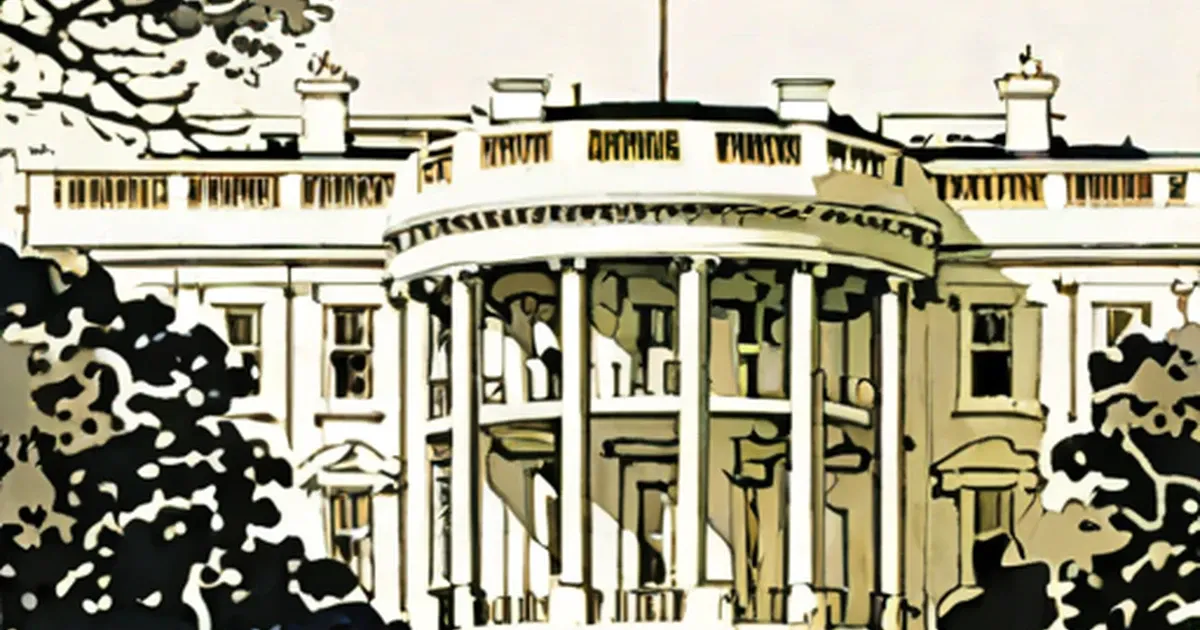
Picture: For all those ready to fight and uproot the Somali piracy epiphenomenon: the decision making center for the aforementioned affair is here: Whitehall – London
From: http://en.wikipedia.org/wiki/File:Whitehall,_London.jpg
Ecoterra Intl. – SMCM (Somali Marine & Coastal Monitor) - XXXVI
Ecoterra International – Updates & Statements, Review & Clearing-house
A Voice from the Truth- & Justice-Seekers, who sit between all chairs, because they are not part of organized white-collar or no-collar-crime in Somalia or overseas, and who neither benefit from global naval militarization, from the illegal fishing and dumping in Somali waters or the piracy of merchant vessels, nor from the booming insurance business or the exorbitant ransom-, risk-management- or security industry, while neither the protection of the sea, the development of fishing communities nor the humanitarian assistance to abducted seafarers and their families is receiving the required adequate attention, care and funding.
"During times of universal deceit, telling the truth becomes a revolutionary act". George Orwell
2009-05-12 23h53:25 UTC
EA Illegal Fishing and Dumping Hotline: +254-714-747090 (confidentiality guaranteed) - email: somalia@ecoterra.net
EA Seafarers Assistance Programme Emergency Helpline: SMS to +254-738-497979 or call +254-733-633-733
"The pirates must not be allowed to destroy our dream!"
Capt. Florent Lemaçon - F/Y Tanit - killed by attack of French commandos - 10. April 2009
Non A La Guerre - Yes To Peace
(Inscription on the sail of F/Y TANIT shot down on day one of the French assault)
Clearing-house
Breaking:
The Pirates of London
Somali pirates guided by London intelligence team, says report
A document obtained by Spanish radio station says 'well-placed informers' in constant contact by satellite telephone, reports the British newspaper Guardian copying the original reporting by Mariela Rubio for Cadena SER:
The Somali pirates attacking shipping in the Gulf of Aden and Indian Ocean are directed to their targets by a "consultant" team in London, according to a European military intelligence document obtained by a Spanish radio station.
The document, obtained by Cadena SER radio, says the team and the pirates remain in contact by satellite telephone.
It says that pirate groups have "well-placed informers" in London who are in regular contact with control centres in Somalia where decisions on which vessels to attack are made. These London-based "consultants" help the pirates select targets, providing information on the ships' cargoes and courses.
In at least one case the pirates have remained in contact with their London informants from the hijacked ship, according to one targeted shipping company.
The pirates' information network extends to Yemen, Dubai and the Suez canal.
The intelligence report is understood to have been issued to European navies.
"The information that merchant ships sailing through the area volunteer to various international organisations is ending up in the pirates' hands", Cadena SER reported the report as saying.
This enables the more organised pirate groups to study their targets in advance, even spending several days training teams for specific hijacks. Senior pirates then join the vessel once it has been sailed close to Somalia.
Captains of attacked ships have found that pirates know everything from the layout of the vessel to its ports of call. Vessels targeted as a result of this kind of intelligence included the Greek cargo ship Titan, the Turkish merchant ship Karagol and the Spanish trawler Felipe Ruano.
In each case, says the document, the pirates had full knowledge of the cargo, nationality and course of the vessel.
The national flag of a ship is also taken into account when choosing a target, with British vessels being increasingly avoided, according to the report. It was not clear whether this was because pirates did not want to draw the attention of British police to their information sources in London.
European countries have set up Operation Atalanta to co-ordinate their military efforts in the area.
The journalist who filed the story at Cadena Ser told AFP it was based on a military report from a European country that she would not name.
She said the report had been handed to military commanders of other European countries taking part in the European anti-piracy operation Atalanta. A spokesman for Atalanta in Brussels could not confirm this.
But sure enough the British newspaper The Guardian also combats that report immediately by saying Somali pirates can locate ships without need for London mole
Nick Mathiason explains there that a subscription to Lloyd's List, a contact in Suez or snoops at re-fuelling depots in UAE all help pinpoint vessel's position.
You would hardly need to be the most devious criminal mind to work out where a tanker laden with valuable cargo may be positioned at any given moment.
If reports from Spain are true and Somali pirates had a London shipping contact supplying them with precise information to target which tankers to hijack, they may have cultivated an insider at a London shipbrokers. That is because, every Monday, London brokers compile a list detailing the exact positions of all tankers sailing in the world. The time-consuming task involves phoning every ship owner and is carried out so that brokers can work out when ships become free.
Some, however, dispute the claim that brokers are in league with pirates. One shipping source suggested London brokers were "too busy and too well paid" to get involved with Somali pirates.
A simple subscription to Lloyd's List, the leading shipping transport newspaper and website, would supply a welter of information as to a tanker's location.
There are also easier ways to assess which ship to capture. If you wanted a valuable cargo the easiest thing to do would be to have a contact in Fujairah, one of the seven emirates in the UAE on the Persian Gulf, where oil-laden ships refuel, according to shipping contacts.
Alternatively, a mole in a Suez canal shipping office would have access to which ships pass through the canal. Ships book their passage through the canal ahead of time to ensure they are not delayed. A Suez insider would be able to gain information about where tankers are heading.
London is a world centre for shipping. Many international shipping groups have their headquarters there, including the International Maritime Organisation.
The Baltic Exchange, the established and self-regulated global marketplace for shipbrokers, provides an online exchange for ships and cargo, real-time freight derivative trading and freight market data.
And with the hint that the Lloyd's Marine Intelligence Unit provides instant data to the shipping market from any location in the world, the Guardian closes this new wrinkle in the evolving phenomenon of Somali piracy, which came from a European military intelligence report leaked to a Spanish radio station yesterday.
Graeme Gibbon-Brooks, of Dryad Maritime Intelligence, however, said that it's more probable that pirates receive a list of targets from informers rather than a single target due to the ocean's vastness. He also noted that the pirates' sophistication has increased as funding from outside criminal groups have subsidized their actions.
And there he comes now closer to what many analysts say: As long as the win-win-situation creating networks of London lawyers, key-people in the insurance industry, certain ship-owners and risk-management companies as well as their networks in and around the piracy-hotspots of this world are not stopped to even encourage sea-shifta in Somalia or other pirates elsewhere to demand higher and higher ransom payments in order to fill their own pockets with unethically high legal fees, exorbitant bills for negotiation teams and risk-management companies or with all the kickbacks paid left right and centre and as long the military-industrial complex, which benefits big time from the piracy complex as well as the navies themselves, which have an unequivocal chance to expand, have not reached the saturation point (is there any?) the sad games will never end - unless the last uncorrupted politicians together with their voters and all the taxpayers, who have to pay for all this, finally stand up and say enough is enough and end all this. As long as there is demand for piracy - piracy will never stop.
News from sea-jackings, abductions or newly attacked ships --------
MV MARATHON, the Dutch vessel sea-jacked last Thursday was still pinned down yesterday by a Spanish frigate around 28 nm offshore from Laaskoray, awaiting the arrival of a Dutch warship. A local boat from the shore tried to bring supplies to the vessel, but was intercepted by a commando-boat from the Spanish warship and turned back. Now, reportedly, the Dutch navy has arrived and the Marathon is around 12 miles offshore with the naval vessels just 5 miles off the Marathon. Together with an Italian frigate there are now three warships around the new pirate-hub of Ga'an near Laaskoray.
The 2nd engineer on T/B MASINDARA 7, has been treated by a local medic from Hafun. The sailor reportedly was shot in the leg in a recent shoot-out among the two pirate groups which hold now the ship near Ras Hafun.
The 11 Filipino crew of hijacked MV TITAN quietly arrived in Manila Sunday night, the Department of Foreign Affairs said on Monday. Speaking in a press conference, Foreign Undersecretary Esteban Conejos Jr. said the crew were welcomed by personnel from the DFA and the Overseas Workers Welfare Administration (OWWA) at the Ninoy Aquino International Airport. Conejos said the families of the seafarers requested that there be no media coverage on their arrival to keep their privacy. MV Titan was hijacked on March 25 this year off the waters of Somalia and were released by the Somali pirates on April 15. Since the start of the month, a total of 52 Filipino seafarers have arrived in the Philippines after their vessels were captured and freed by pirates off the coast of Somalia. First to arrive last May 2 were the crew of MV SALDANHA and Philippine-flagged MT STOLT STRENGTH. At present, there are seven vessels with 81 Filipino seamen on board still in the hands of Somali pirates.
Conejos said the government, together with the manning agencies and shipping companies of the captured vessels, continued to work for the safe release and repatriation of the Filipino seafarers.
With the latest captures and releases now still at least 17 foreign vessels (18 with an unnamed sole Barge which drifted ashore, possibly 20 with two further yachts) with a total of not less than 242 crew members accounted for (of which 81 are confirmed to be Filipinos are held in Somali waters and are monitored on our actual case-list, while several other cases of ships, which were observed off the coast of Somalia and have been reported or had reportedly disappeared without trace or information, are still being followed. Over 134 incidences (including attempted attacks, averted attacks and successful sea-jackings) have been recorded for 2008 with 49 fully documented, factual sea-jacking cases (for Somalia, incl. presently held ones) and the mistaken sinking of one vessel by a naval force. For 2009 the account stands at 79 averted or abandoned attacks with 36 sea-jackings on the Somali/Yemeni pirate side as well as at least two wrongful attacks (incl. friendly fire) on the side of the naval forces. Mystery pirate mother-vessels Athena/Arena and Burum Ocean as well as not fully documented cases of absconded vessels are not listed in the sea-jack count until clarification. Several other vessels with unclear fate (also not in the actual count), who were reported missing over the last ten years in this area, are still kept on our watch-list, though in some cases it is presumed that they sunk due to bad weather or being unfit to sail. In the last four years, 22 missing ships have been traced back with different names, flags and superstructures.
Directly piracy related reports
Why do pirates become pirates?
by Ali Bulaç
Johann Hari, a columnist for The Independent, has for some time been providing us with interesting details about the pirates who have recently and unexpectedly become a major agenda item for the international community. As Hari says, not all of the pirates who have captured various vessels are marine bandits committing ordinary crimes. The majority of them are involved in this piracy for a just cause.
"In the 'golden age of piracy' -- from 1650 to 1730 -- the idea of the pirate as the senseless, savage Bluebeard that lingers today was created by the British government in a great propaganda heave", Hari says.
Actually, if we listen to historian Marcus Rediker, we also have to revise our perspectives concerning the villainous pirates as they are generally described by historians. In the past, the poor and unfortunate of London would "end up in a floating wooden hell", says Rediker. "You worked all hours on a cramped, half-starved ship, and if you slacked off, the all-powerful captain would whip you with the Cat O' Nine Tails. If you slacked often, you could be thrown overboard. And at the end of months or years of this you were often cheated of your wages. Pirates were the first people to rebel against this world. They mutinied and created a different way of working on the seas. Once they had a ship, the pirates elected their captains, and made all their decisions collectively, without torture. They shared their bounty". Rediker says this sharing was "one of the most egalitarian plans for the disposition of resources to be found anywhere in the 18th century".
Returning to Somalia, we must go back to 1991 in order to better understand modern pirates. In 1991the government of Somalia collapsed. The collapse was followed by chaos. With the collapse of the government, 9 million people started to teeter on the brink of starvation. There were internal conflicts on one side and starvation on the other.
At the time, forces in the Western world saw this as a great opportunity to steal the country's food supply and dump its nuclear waste in Somalia's seas. At first Somalis suffered strange rashes, nausea and malformed babies. Then, after the 2005 tsunami, hundreds of the dumped and leaking barrels of nuclear waste washed up on the shore. People began to suffer from radiation sickness, and more than 300 died. Ahmedou Ould-Abdallah, the UN envoy to Somalia, told Hari: "Somebody is dumping nuclear material here. There is also lead and heavy metals such as cadmium and mercury -- you name it". Much of it can be traced back to European hospitals and factories, which seem to be passing it on to the Italian mafia to "dispose" of cheaply.
There is more. Hari writes that at the same time, having destroyed their own fish stocks by overexploitation, European ships moved on to Somalia. More than $300 million worth of tuna, shrimp, and lobster are being stolen every year by illegal trawlers while the local fishermen are starving. It was in this context that the "pirates" emerged, with Somali fishermen taking speedboats to try to dissuade the dumpers and trawlers, or at least levy a "tax" on them. They call themselves the Volunteer Coastguard of Somalia -- and ordinary Somalis agree. The independent Somali news site WardheerNews found that 70 percent strongly supported the piracy as a form of national defense, says Hari.
Hari concludes his article by writing: "The story of the 2009 war on piracy was best summarized by another pirate, who lived and died in the fourth century BC. He was captured and brought to Alexander the Great, who demanded to know 'what he meant by keeping possession of the sea'. The pirate smiled, and responded, 'What you mean by seizing the whole earth; but because I do it with a petty ship, I am called a robber, while you, who do it with a great fleet, are called emperor'. Once again, our great imperial fleets sail -- but who is the robber"?
The pirates have a bad image, but the US, Chinese, British and now Turkish vessels, which are chasing the pirates, are pursuing an utterly palliative solution. More must be done to address the causes of piracy. Having written two articles about Somali piracy, I would like to reiterate that this issue should be discussed at great length.
Anti-piracy measures
Is there a naval blockade of Puntland in the making? Local sources from Bosaaso in Puntland, the breakaway semi-autonomous region in north-east Somalia, have received many reports that around 12 to 15 naval vessels are lined up around the Horn of Africa from Mayd on the Gulf of Aden to Garacad on the shores of the Indian Ocean. People are fearing that a naval blockade of Puntland has set in at the beginning of the tuna season not only to curb the attacks of sea-shiftas and their hi-jacking of merchant vessels but also to allow unchallenged access for international fishing fleets, which regularly come into the Somali 200nm Exclusive Economic Zone (EEZ) - protected by UNCLOS - to fish illegally.
The U.S. Coast Guard will require U.S.-flagged ships sailing around the Horn of Africa to post guards and ship owners to submit anti-piracy security plans for approval, a Coast Guard official said on Tuesday. The new requirements, which respond to a surge of piracy off the coast of Somalia, allow ship owners to decide whether to use armed or unarmed guards, Coast Guard Rear Admiral James Watson told shipping industry representatives at a maritime security meeting in Fort Lauderdale, Florida. The revised Maritime Security Directive, highly anticipated by the shipping industry, was signed on Monday by Coast Guard Commandant Thad Allen, reports Reuters. "We expect to see additional security on U.S.-flagged vessels that transit these waters", said Watson, the Coast Guard's director of prevention policy. "It can involve the use of firearms", he said, but added, "We are looking for things that work but that don't make the situation worse".
The requirement to post guards applies only to ships sailing off the Horn of Africa, but the owners of all U.S.-flagged ships must submit security plans to the Coast Guard within two weeks, Watson said. "They're going to tell us what they propose", and then the Coast Guard will give thumbs up or thumbs down, Watson said. He said the directive does not dictate how many guards must be posted on each vessel, or what type of training they must have. He said the Coast Guard would work with ship owners whose plans are deemed inadequate to fend off pirate attacks. "We're not interested in putting ships out of business", he said. Arming cargo ships has been a sensitive issue because some countries will not allow armed vessels to enter their ports. Additionally, arming the ships can raise liability issues and increase insurance costs.
Some ship owners fear it could cause misunderstandings to escalate into gunfights, noting for example that fishermen off Yemen sometimes fire their automatic rifles into the air to warn other vessels away from their nets. U.S.-flagged ships that carry military cargo already are armed, Watson said. The U.S. State Department is working with countries in pirate-plagued regions to learn what weapons laws apply in their ports in order to clarify the issue for U.S. mariners. It may also try to negotiate agreements allowing armed U.S. ships to enter those countries' ports, said Donna Hopkins, of the State Department's political and military planning and policy division. Asked if that meant the United States would allow armed foreign vessels in its ports, Hopkins said, "Diplomacy is based on the principle of reciprocity ... that certainly is going to be part of the debate". Watson said the new directive would not be publicly released in its entirety because it contained sensitive security information. But at the urging of shipping officials at the conference, he said a scrubbed version might be released to help shipping companies learn good security measures from each other. "It's the actual security that's on a particular vessel that we want to keep close-held", Watson said.
A Gordian Knot which cannot be cut by the sword
by Nicolas von Kospoth
Can the origins of piracy at the Horn of Africa be solved with battleships?
It is more than the traditional picture of a clash of civilizations and it cannot easily be compared to earlier scenarios, be it of the 17th century or the more recent incidents in the Strait of Malacca. The effects of globalisation and the ruptured history of an African state make is a unique situation: Even though piracy still is only a symptom of greater evils, in this case it has a different character and can therefore not be fought as it has been in the past.
The multinational Combined Task Force 150 (CTF-150) has been underway in the Horn of Africa since 2002 to ensure stability in the region and support Operation Iraqi Freedom (OIF) and Operation Enduring Freedom - Horn of Africa (OEF-HOA), the latter part of activities referred to as Maritime Security Operations (MSO).
Yet, since early 2006 its focus has almost entirely shifted to the prevention and elimination of piracy. By now the mission unites vessels of Canada, Denmark, France, Germany, Pakistan, the United Kingdom and the United States in this common cause. Also, Combined Task Force 151 as well as an international command are exclusively involved in fighting piracy (see list below). But what have been the results so far?
Where to begin?
The shipping lanes off the coast of Somalia have become the most dangerous waters in the world. The chaotic situation of the African state, resulting from the collapse of its government and the following era of crime, radicalism and terrorism, fostered and maintained by warlords and clan militias, cries for spin-off effects such as piracy. In a country in which poverty reigns, and mischief and lawlessness to the point that everyone is at one’s own, who would wonder about such implications?
18 years have passed since the downfall of the former head of state, Siad Barre. Since then, a culture of survival-of-the-fittest has taken power within this population. An illicit arms trade, fostered by clan militias and radical groups such as "Al Shabaab" or "Hisb Al Islam", made it possible that even the simplest fisherman can be armed to the teeth. Never-ending, violent interior conflicts between parties obsessed with power have made Somalia a bonanza, yet only for the few ruthless players who pulls the strings.
How are a small number of warships going to tackle such a wasp’s nest? The few swimming satellites orbiting the Horn of Africa in order to protect merchant ships are overstrained by the vastness of their operational area and the swiftness of the pirate actions. More than fifty captured pirates have been transferred to prison in Mombassa, Kenya, while a dozen are being held in pre-trial custody in the US, France and Spain. But the support of fresh, young men is inexhaustible and the attacks on merchant ships – more or less successful – won’t stop.
The so-called pirates’ nests in the Somali harbours of Harardere, Hobyo, Eyl or Bossasso are flourishing: Impressive mansions are being built with expensive off-road vehicles parked at the front porch. A downright service industry has established itself around the down-and-dirty core business. Some of the young men armed with Kalashnikovs even consider banditry as a sort of poetic justice.
As published in an exclusive interview in defpro.com with a Somali pirate in February (see: http://www.defpro.com/daily/details/244/), the pirates see themselves as Somalia’s coast guard or navy fighting for the right of undisturbed fishing in Somali waters. And beyond that, they do not even seem to be frightened of the flexing of modern Navies’ muscles. "This has absolutely not scared us. We know they have well armed forces on the ships and they stay in the waters off Somalia protecting ships from what they call pirates", stated the interview’s pirate, "as I told you, I am not a pirate, we are the special guards of the Somali coast. Until there is an effective government, I will perform my duty for my people and my country". Some may see it as less elevated and have simply found a more lucrative job than fishing.
Scratching the surface
Roughly more than two dozen ships from NATO, the EU operation "Atalanta", frigates and destroyers from Russia, China, India and South Korea try to oversee a maritime area larger than the Mediterranean, reaching from the Gulf of Aden to the Seychelles in the West and down South to the coast of Tanzania.
While the Navies report of the successful defence of individual attacks and of the capture of pirates, the International Maritime Bureau presents a much different perspective: Compared to last year, the number of pirate attacks has increased tenfold. Generally, the attackers use one or two swift speed boats, supported by a larger mother ship and attack ships with automatic rifles and rocket propelled grenade (RPG) launchers. Often, the battleships’ only possibility to catch up is to send a helicopter, in order to stop the speed boats and then to approach at their much slower speed. In a few cases, suspect boats can be identified by maritime surveillance aircraft such as the P-3C Orion. Yet, it usually takes a lot of time, until a warship can intercept the suspected boat. By the time they arrive, either the boat is gone or the arms and other suspicious objects have been thrown overboard.
The international community’s struggle only scratches the surface. Keeping a few speed boats from attacking merchant vessels won’t solve the problem. But what is the next step? Sinking mother ships? Bombing pirate nests? Or do you have to go as far as bringing peace and stability to Somalia?
The Kenyan, Andrew Mwangura, programme coordinator for the Seafarers' Assistance Programme, is convinced that influential clan militias support and organise the attacks. "The men pulling the strings are big fish. They operate from Europe, America or from the Arabian Peninsula. They have networks with international contacts and are very wealthy people".
Ransom negotiations are being carried out by telephone and sometimes the proverbial suitcases full of money change hands in the lobbies of hotels in European capitals. According to experts, approximately $ 100 million have been pressed by syndicates during past years. Piracy has become a regional economic factor.
The suspicion that this may be used or perhaps even initiated by larger terrorist organisations is manifest. Intelligence services have identified this threat over many years. The CIA’s evaluation on this matter is very clear: terror groups have launched a crucial seafront against western nations. The terrorists want to cut off vital trade connections. But even this knowledge and distant operations in Iraq and Afghanistan against terror networks will not eliminate the breeding ground of piracy.
Now, one of the bearers of hope is the moderate Islamist, Sheik Sharif Ahmed, Somalia’s President since the beginning of the year. Ironically, he had been considered to be part of the Al-Qaida network by the US and was temporarily arrested by US troops. In April 2009 the UN agreed to support the country’s new government with $ 200 million, seeing the problem’s roots in the anarchy and insecurity on shore, rather than at sea.
List of operations and participating nations:
* "Atalanta" (EU):
Spain, Germany, France, Greece, Italy
(6 frigates, 2 support vessels, Orion P-3A and P-3C, Breguet-Atlantique)
* "Allied Protector" (NATO, from SNMG1):
Portugal, Canada, the Netherlands, Spain, US (associated under national command)
(5 frigates)
* "Combined Task Force 150" (Operation Enduring Freedom, anti-terror):
France, US, United Kingdom, Pakistan
(1 command ship, 3 frigates, 2 support vessels)
* "Combined Task Force 151" (anti-piracy):
US, Turkey, Singapore, South Korea (associated)
(1 destroyer, 1 frigate, 1 cruiser, 3 support vessels)
* Operation under international command (incl. support of the Coast Guard of the Seychelles):
India, China, Malaysia, Japan, Russia, France
(3 destroyers, 3 frigates, 1 patrol boat, 5 support vessels; France’s contribution unknown)
(N.B.: None of these five groups is truly or fully coordinated, nobody co-ordinates these five groups and none of them reports properly to the UN and to the Somali government as required e.g. by UN Security Council Resolution 1851)
Flexible, Inclusive Approach Needed To Fight Piracy. A flexible and inclusive approach towards solving the piracy situation in the Gulf of Aden and off the coast of Somalia is needed until a more lasting solution can be found on shore, a Singapore minister said today. Deputy Prime Minister and Defence Minister Teo Chee Hean said that while naval action to deter and disrupt the pirates was critical to restoring immediate order and confidence in this important maritime artery, the situation in the Gulf of Aden was much more complex. "Issues such as the prosecution of pirates-under-capture and coordination of naval resources continue to limit the effectiveness of these efforts", he said when opening the 7th International Maritime Defence Exhibition (IMDEX) Asia 2009 at the Singapore Expo. The situation in the Gulf of Aden was a clear illustration of how insecurity in one part of the world had global ramifications, Teo said, adding that the nature and scale of disruption to the security of the sea lines of communication there demanded an international response.
The minister noted that there were various naval groupings operating off Somalia, from the European Union and NATO (North Atlantic Treaty Organisation), the United States-led Combined Task Force 151, as well as ships from various other navies operating independently. Singapore has sent the RSS Persistence, a tank landing ship outfitted with two Super Puma helicopters, for a three-month tour to the Gulf of Aden to conduct sector patrols to deter Somali pirate attacks. Teo also said that the situation in the Gulf of Aden demonstrated again that contemporary security challenges could no longer be solved by a single country or a small exclusive group of countries acting on its own. "The response to the situation in the Gulf of Aden requires a broader range of actors and stakeholders to be co-opted and engaged. Only then will we collectively have the capacity, resources, reach, ideas and expertise to deal with the problem", he said.
After the opening ceremony, Teo visited some of the foreign warships taking part in the warships display at Changi Naval Base. This year, 18 visiting warships from 13 countries have come to take part in the display, which is being hosted by the Republic of Singapore Navy (RSN) from today to Thursday. A total of 140 exhibitors, 41 navies and coast guards, as well as over 5,000 delegates are present at the exhibition. The RSN will also be hosting the inaugural Maritime Information-Sharing Exercise (MARISX) in which 16 countries, including Canada, Chile, France, India, Indonesia, Japan, Korea, Malaysia, New Zealand, Thailand and the United States, will practise the information-sharing process and to validate the linkages between their operation centres at the new Information Fusion Centre located in the Changi Command and Control Centre. There will be 39 international liaison officers participating. Officers of the Regional Cooperation Agreement on Combating Piracy and Armed Robbery Against Ships, will also take part. Teo also praised the United Nations Convention on the Law of the Sea (UNCLOS), the 1982 agreement that struck a balance between coastal states desiring "user states" with legitimate interests in sea access, and those who "wanted to ensure that the high seas rights" already in place would not be reduced. "The balance struck in UNCLOS is a critical one for all stakeholders who desire peace and stability at sea", Teo said. "Without UNCLOS, contests over rights between states, and between coastal states and other states over use of the sea, have the potential to flare up into confrontation and conflict. It is thus in the interest of both user states and coastal states to respect and preserve that careful balance struck in UNCLOS".
German Social-Democrats (SPD) reject amendment for military's anti-piracy ops
A battle has erupted in Germany’s governing coalition over Chancellor Angela Merkel’s suggestion to amend the constitution in order to aid the navy’s mission against piracy on the high seas, thelocal.de reports. Both Merkel and her conservative Interior Minister Wolfgang Schäuble have recently called for the change to improve the ability of elite German police force the GSG-9 to work with the country’s military (Bundeswehr) in order to free captives of pirates operating off the coast of Somalia. But Merkel’s junior coalition partner the centre-left Social Democrats (SPD) don’t consider a constitutional amendment necessary. "It is completely unproblematic according to state and international law that the German armed forces fight the pirates and free hostages", Dieter Wiefelspütz, the SPD’s parliamentary security policy spokesman, told daily newspaper Handelsblatt on Monday. "I don’t know why we need to change the Basic Law". Wiefelspütz said further that the SPD will not allow any changes to the constitution in the run-up to the election this September.
The debate stems from the abandoned rescue of the hijacked container ship HANSA STAVANGER earlier this month, which included a partially German crew. After being stationed on the USS Boxer, the GSG-9 was recalled after the mission was deemed too risky. Schäuble told Bild newspaper on Sunday that Germany’s ability to respond to such situations abroad was hampered by the fact German law only provided for the police to undertake hostage rescues and not the military. "But that’s really a job for the Bundeswehr", he said and added "For that though we’ll have to change the legal foundation with a constitutional amendment". Germany still doesn't have a constitution, though the Basic Law, given under Allied Forces supervision to the country after WWII, says that the German People should give themselves a constitution after a reunification. The "Wiedervereinigung" happened on 3. Oktober 1990, but still the Germans seem to be stuck with their old Basic Law, whose key sentences like "there shall never again be launched war from German soil" seems to get forgotten - or do the Germans not consider German warships as German "soil"?
Flaws of the Kenyan Legal System demonstrated. 11 alleged pirates, who had been dumped into the hands of the Kenyan Authorities by the government of France - based on a general memorandum of understanding between the European Union and the Republic of Kenya - were arraigned in court yesterday and charged with piracy. The eleven pleaded not guilty. They were, however, not represented by a lawyer and Magistrate Catherine Mwangi (Kenya's "piracy judge") remanded them in prison until the next hearing of the case in two weeks time. Though by law independent, Kenya's Magistrates are seen by the majority of the Kenyan public not as politically and judicially independent judges, but mere legal officers of the judiciary, which operate under governmental instructions and have to toe the line. The 11 Somalis were captured by soldiers from the French warship Nivose near the Seychelles. The saga goes that they had attacked the navy-ship, while others maintain that they had run out of food and water on a 10-m long open fishing boat and went with their two skiffs to request help.
The eleven maintained that the few weapons (two AK47 rifles and one RPG) they were equipped with were for self-protection in these dangerous seas - an argument which seems plausible, since in pirate-gangs all members are equipped with at least one firearm per person. In addition the French naval officers had disposed the rocket propelled grenades the pirates allegedly had with them by dumping them into the sea - another case of destroying evidence, which made the Kenyan Magistrate not happy. But even more serious is the fact that the alleged pirates were not represented by a lawyer. This shows not only the flaws of the Kenyan legal system, which does not automatically provide for a defence-lawyer, if the accused can not afford to hire one, but also the battle for money behind the curtains. Kenya demands now that the costs of these trials are met by those governments, who request Kenya to prosecute the alleged pirates for them, while some EU-governments are of the opinion that Kenya must contribute to the international effort to fight piracy. Since private defence lawyers have now realized that they have no guarantee that any money would come forward they are not keen any longer to defend pirates pro bono. Kenya does not provide what is called an obligatory defence lawyer called "pauper brief" for cases where there is no charge for a capital offence with the mandatory death sentence. This somehow creates a legal novum in Kenya, since usually armed robbery with violence already carries a mandatory death penalty in Kenya. Such, however, has been ruled out by the EU-memorandum, since otherwise the EU could not hand over pirates to Kenya due to the EU regulations. More and more legal tussles will ensue and also the appeal case of the first 10 pirates, who were handed to Kenya by the U.S. of America and sentenced will come up.
Spain announced it would hand over 14 Somali pirates to Kenyan authorities. Foreign Minister Miguel Angel Moratinos said the group were being handed over under an agreement between Kenya and the European Union. A Spanish navy warship captured seven of the pirates in international waters in the Indian Ocean last Wednesday after their boat capsized when they were allegedly trying to board a Panamanian-flagged vessel. The same warship captured another seven suspects on Thursday as they appeared to be attempting to board a Maltese-flagged merchant ship. Spanish daily El Pais said yesterday that the military had even informed the 14 that they would be dropped off in a zone "considered safe" off the Somali coast, but that for "security" reasons they remained aboard.
Russian courts may prosecute Somali pirates for attacks on Russian ships, a senior legal official was quoted as saying in a newspaper, reports Reuters. The comments from Russia's deputy prosecutor general follow efforts by Russia and other countries to find a legal mechanism to prosecute pirates operating off the East African coast, who have become increasingly bold over the past year. "The transfer of such individuals into the hands of the Somalis is pointless", Deputy Prosecutor General Alexander Zvyagintsev said in an interview published in the Rossiiskaya Gazeta newspaper. Zvyagintsev was quoted as saying that under international maritime law, any country which has captured pirates can launch its own prosecution. Since Somalia had not been a functioning state for almost 20 years, there was no point expecting them to face prosecution there, he said. "The general prosecutor's office has worked out the possibility of starting criminal proceedings in Russian law against individuals who conducted an act of piracy", the state RIA news agency quoted Zvyagintsev as saying. On May 4, Russian President Dmitry Medvedev suggested the creation of a special international court to prosecute pirates operating off East Africa. Last month Russia captured a pirate vessel with 29 people on board after it tried to seize a Liberian-flagged ship with a Russian crew. The attacks have worsened despite the presence of naval forces from more than a dozen states, including Russia, and task forces under NATO, EU and U.S. command.
The U.S. Coast Guard will require U.S.-flagged ships sailing around the Horn of Africa to post armed guards and ship owners to submit anti-piracy security plans for approval, a Coast Guard official said on Tuesday. The new requirements, which respond to a surge of piracy off the coast of Somalia, allow ship owners to decide whether to use armed or unarmed guards, Coast Guard Rear Admiral James Watson told shipping industry representatives at a maritime security meeting in Fort Lauderdale, Florida. The revised Maritime Security Directive, highly anticipated by the shipping industry, was signed on Monday by Coast Guard Commandant Thad Allen, reports Reuters. "We expect to see additional security on U.S.-flagged vessels that transit these waters", said Watson, the Coast Guard's director of prevention policy. "It can involve the use of firearms" he said, but added "We are looking for things that work but that don't make the situation worse". The requirement to post guards applies only to ships sailing off the Horn of Africa, but the owners of all U.S.-flagged ships must submit security plans to the Coast Guard within two weeks, Watson said. "They're going to tell us what they propose", and then the Coast Guard will give thumbs up or thumbs down, Watson said. He said the directive does not dictate how many guards must be posted on each vessel, or what type of training they must have.
He said the Coast Guard would work with ship owners whose plans are deemed inadequate to fend off pirate attacks. "We're not interested in putting ships out of business", he said. Arming cargo ships has been a sensitive issue because some countries will not allow armed vessels to enter their ports. Additionally, arming the ships can raise liability issues and increase insurance costs. Some ship owners fear it could cause misunderstandings to escalate into gunfights, noting for example that fishermen off Yemen sometimes fire their automatic rifles into the air to warn other vessels away from their nets. U.S.-flagged ships that carry military cargo already are armed, Watson said. The U.S. State Department is working with countries in pirate-plagued regions to learn what weapons laws apply in their ports in order to clarify the issue for U.S. mariners. It may also try to negotiate agreements allowing armed U.S. ships to enter those countries' ports, said Donna Hopkins, of the State Department's political and military planning and policy division. Asked if that meant the United States would allow armed foreign vessels in its ports, Hopkins said, "Diplomacy is based on the principle of reciprocity ... that certainly is going to be part of the debate".
No real peace yet
Somalia, goddess Tyche, Ahmedou Ould Abdallah and Sheikh Sharif
by Dr. Muhammad Shamsaddin Megalommatis
AMISOM is the main reason for the fierce fighting in the Somali capital over the weekend. Professional liars, impersonating diplomats, and criminal gangsters, impersonating AMISOM authorities, have the tendency to deny this reality, but the only truth is that the new phase of the Somali fratricidal war is only due to one main issue, namely the presence of the loathsome foreign soldiers who serve tyrannical regimes of Africa that are all viciously Anti-Somali.
A brief sample of the incredible lies said by AMISOM authorities is the following, due to Major Barigye Bahoku, spokesman for the AMISOM:
"There have been some skirmishes in Mogadishu, especially in the northern suburbs and parts of Mogadishu for about couple days ago. And the information we have does indicate that the forces of government on the one side and the forces opposed to the peace process on the other side and the clan militias who can fall on either side, are the ones who have been involved in these skirmishes". (http://www.mareeg.com/fidsan.php?sid=11968&tirsan=3)
This is a filthy lie; those who fight against the totally unrepresentative TFG appointed president and government do desire peace in Somalia. They are not opposed to a "peace process" but they don´t want foreigners to impose any sort of pseudo-process on Somalia. And they are very rightful in this.
Peace Will Never Be Imposed on Somalia From Abroad
Peace was never imposed on a country from abroad. This would be the peace of the defeat. This "peace" was administered to Germany after the end of WW II by the occupying forces. But in the case of Germany, there was a war of the allied forces against the Nazi regime of the country.
Who is fighting against Somalia today so that a "peace" be imposed from abroad?
This is the question one should ask the irrelevant and criminal liar, Major Barigye Bahoku, who represents a force of foreign occupation that intends in secretive way to impose a loathsome regime on the Somali Nation – only because this befits the criminal colonial interests of England, France and America that have long targeted Somalia´s existence.
This is the shameful international farce that has been devised against Somalia by the evil forces that are lurking in the darkness in order to further escalate the Horn of Africa crisis:
1. First, they forced the previous TFG president to resign and "go home". Abdillahi Yousef was a loathsome person viewed by all the Somalis as a traitor and puppet of the English colonials and the Anti-Somali Abyssinian racists. But he did not have the intention to resign; he did so, obeying to his secretive masters´ orders, because he owed to them everything. Without having been initiated to the Apostate Freemasonic Lodge in London – where he learnt well how cheap life can be and how one must not refrain from every evil act that would promote personal interest and profit – Abdillahi Yousef would not have made his shameful and dishonorable career of traitor, puppet, gangster and Mafia lord.
2. Second, they selected a gullible and naive sheikh who imagined possible for the colonial diplomats of England and France to be trusted, and for their words and promises to be believed and materialized. This gullible and naive sheikh therefore believed the words of the "good Muslim" Ahmedou Ould Abdallah, the Special Representative for the UN Security Council.
One may wish to ask why Sheikh Sharif believed the words and promises of Ahmedou Ould Abdallah. The answer is simple: because the Mauritanian diplomat did his ingenious best to show personal interest in, and commitment to, the Cause of Somalia. In fact, he has none. He even does not have an interest in the affairs of his own country that, small, impotent and marginal as it is would never have the means to promote Ahmedou Ould Abdallah to the UN Security Council. It is even a mistake to take this person as a Mauritanian; his origin certainly hinges on the huge but almost uninhabited West African country (3 million people for more than 1 million km2). But Ahmedou Ould Abdallah, who studied for many long years in Paris and was then initiated in the Apostate Freemasonic Lodge (in order to be effectively used for the needs of the French colonial policy and the Freemasonic schemes that are hidden behind it), knows very well that all his power and all his possibilities are limited within the circle of French colonial diplomacy and the international Freemasonry. His Mauritanian identity is meaningless to him.
Ignoring such realities concerning your interlocutor can have detrimental results. In fact, Sheikh Sharif, the ignorant and gullible guy, who thought possible for Ahmedou Ould Abdallah to tell the truth – even once –, does not even know for what purposes the Mauritanian diplomat, who is implementing French Freemasonic policies, "helps" him. Everything that Ahmedou Ould Abdallah told him is a lie. What is even more characteristic of typical circumstances like this is that perhaps even Ahmedou Ould Abdallah does not know the real purposes of the work that he was ordered by the French Freemasons to implement in Somalia – most probably he only knows a part of it. This is a customary trait of hierarchical societies´ involvement in politics.
3. Third, to properly implement the puppet´s promotion to a President of Nothing (well, I am sorry, President of the TFG !), Ahmedou Ould Abdallah, with the help of illegally used / channeled money, "bought" the TFG presidency for his ignorant and gullible designee who saw goddess Tyche (in Latin: Fortuna) smiling to him and to his country. Sheikh Sharif would have never imagined the success to be so easy! Instead of penitently crossing the streets of Asmara and the squares of Djibouti, he would now be back to Mogadishu, as "president" elect! Who could have ever imagined that?
4. Fourth, what space of flexibility and what margin of maneuver are left to the gullible sheikh who is now the president of some militias and ruthless gangsters, who a few months ago could even assassinate Sheikh Sharif, only to please the fancy of the previous TFG "president"? Nothing. Well, when you are left without margin of maneuver in politics, you either are puppet or dead. But of course, the naive and hopeful sheikh didn’t have time to thoroughly study Machiavelli. Perhaps he may even find Machiavelli as immoral and wicked. For once, I would agree with him. The problem is that Machiavelli is the embodiment of Ahmedou Ould Abdallah´s part of mind that was never revealed to Sheikh Sharif – the patchwork of conquest that all the evil people hidden behind Ahmedou Ould Abdallah have made theirs, plunging the world into ceaseless conflicts and wars.
5. Fifth, as Sheikh Sharif has no margin of manoeuvre, he relies on foreign soldiers (those of AMISOM and the African Union – another body controlled by the international Freemasonry through different channels) in order to achieve predominance over his fellow countrymen. This is merely said high treason. How greatly moral for a … sheikh to do so!
Who could imagine the Shah of Iran, using European and American soldiers against the Islamic revolutionaries?
What would the Pakistanis say if President Zardari asked Indian soldiers to fight against Pakistan´s Taliban? This is precisely what Sheikh Sharif is doing now, as he is opposing the only real process of peace.
This is a provocation, some would say.
This provocation is now named in Somalia "Sheikh Sharif".
It is up to the Somalis to eliminate the provocation.
A real process of peace in Somalia would involve the following:
1. Removal of AMISOM soldiers
2. General Assembly of all Somali tribes´ representatives
3. Formation of a provisory government to open the path for Constitutional Elections, with the participation of representatives of all Somali socioeconomic entities and political - ideological currents
4. Coordination with the UN and the Islamic Conference Organization for an international force that would eliminate the secessionist pseudo-governments of Somaliland and Puntland
5. Coordination with the UN, NATO, Russia, China, and India on the termination of the Somali piracy epiphenomenon which is the most grave ambush in the path of Somalia´s pacification, which was devised by the English secret services.
6. Constitutional Elections, adoption of a Bi-cameral Constitution, and election of a Government
Hawiye clan elders
Hawiye clan elders have called Tuesday for the warring sides in Mogadishu to reach immediate cease fire. The spokesman of Hawiye Clan Elders Ahmed Derie Ali, has called for the insurgents and the government to stop the fighting and end their differences through dialogue to save the lives of the innocent civilians in the capital. He also called for al-Shabab, Hisbul Islam and the government to accept the calls from the Somali clerics who demanded the immediate cessation of the fighting in Mogadishu. On the other hand, Sheik Hussein Ali Fidow one of al-Shabab leaders warned against the people to call foreigners what he called "Muslim fighters from the world who reinforced to Somalia during the Ethiopian occupation". He also condemned the Somali clerics and said they were partial about the current issues in Somalia and they were supporting the Somali government.
The African Union (AU) said Tuesday it would continue to follow closely the situation in Somalia. In a statement, AU Commission Chairperson Jean Ping said his body is maintaining close liaison with the country's Transitional Federal Government (TFG) and partners. He once again strongly condemned the ongoing fighting in Somalia's capital Mogadishu following attacks by anti-peace elements on the TFG. The latest fighting which has killed more than 100 people began on Thursday and escalated over the weekend between pro-government forces and Islamist groups. A local human right group, the Elman Peace and Human Rights Organisation, said the fighting between hard line Islamist rebels from the Al-Shabaab rebel group and pro-government forces have also wounded 330 people.
"The US government has condemned the latest escalation of violence and attacks on the Somali Transitional Federal Government by armed militias in the country’s capital Mogadishu. Mogadishu became a battle field late Saturday when armed Islamist militias attacked government forces to take control of the remaining part of the capital. The US called on the warring parties to end hostilities and spare the country of renewed clashes, further urging them to support the Djibouti peace process and find accommodation in the new government. We further call on all governments in the region to support the people of Somalia by aiding the Djibouti process and to cease all support to spoilers attempting to undermine the peace process and the Transitional Federal Government", the US government statement said.
Spike in Somali violence condemned by U.N. A recent surge in violence in Somalia allegedly backed by foreigners drew criticism Tuesday from the U.N. envoy for the country. According to a news release, Ahmedou Ould-Abdallah, U.N. special representative for Somalia, on Tuesday called the spike in violence that has resulted in "possibly hundreds of people killed" an attempt to destabilize the Horn of Africa country, the United Nations reported. The violence, which has included armed attacks and explosives, has also resulted in the death of a Somalian lawmaker and attempted assassination of government Cabinet member. Ould-Abdallah called for an immediate cease-fire. "There is now a legitimate, internationally recognized government in Mogadishu, which should be supported", Ould-Abdallah said in a statement. "Instead, irresponsible elements backed by foreigners have attacked Mogadishu in an attempt to seize power by force. … (The people of Somalia) have clearly shown they are sick and tired of the conflict, yet once again they are subjected to violence which has killed and displaced innocent men, women and children".
A health official says at least 14 people, including women and children, have been killed in renewed fighting overnight in Somalia's capital, as fierce weekend battles have continued into the new week. Rufai Mohamed says the ambulance services he leads in Mogadishu collected the bodies of mostly civilians. Hospital officials say they have admitted at least 45 wounded people from the fighting. Battles between Islamic insurgents and pro-government forces began Monday afternoon and continued through the night. The fighting has died down early Tuesday, but sporadic gunfire can be heard in parts of the city.
Somalia's worst drought in a decade is pushing growing numbers of children into near-famine conditions and deepening the humanitarian crisis caused by political violence, the United Nations warned Tuesday. Some 3.2 million Somalis are among an estimated 19 million people in the Horn of Africa in urgent need of life-saving food assistance, top U.N. aid officials said. Drought and high local food prices have also left 12 million people in Ethiopia and another 3.5 million in Kenya short of food supplies, they said. "We're now facing a drought in Somalia that is worse than people have seen for at least a decade", Mark Bowden, U.N. humanitarian coordinator for the country facing its fourth straight year of drought, told a news briefing in Geneva. "Roughly 45 percent of the (Somali) population is suffering from moderate malnutrition". In parts of central and southern Somalia, 24 percent of children under five suffer from acute malnutrition, he told the briefing. Bowden, speaking later to Reuters, said that rate amounted to some children living in "near-famine conditions". He said that while Somalis were not currently dying of starvation, as seen there in the early 1990s, their cattle were dying from a lack of water. "We've got more people across the board suffering and a loss of livelihoods", he said.
Fighting
Some 1.1 million people in Somalia have been driven from their homes, including thousands who have fled intensified fighting since the weekend in the capital Mogadishu between Islamist militants and the government, according to Bowden. The target for a U.N. appeal for Somalia this year has been increased to $984 million, but is only one-third funded by donors to date. "The main message is that the appeal certainly needs to be met more rapidly in terms of being able to respond to what is a deepening crisis in Somalia", Bowden said. John Holmes, the U.N.'s emergency humanitarian coordinator, said dwindling remittances from abroad were compounding problems faced by populations "chronically living on the margin of survival" in all three countries. "This is not the easiest international economic context in which to be asking donors for extra resources, but we believe the seriousness of the situation does warrant that", Holmes said of the Horn of Africa. In Ethiopia, rains were patchy, sparking fears that the harvest will be very poor, he said. However, the Ethiopian government's strategic grain reserves were in a better position than this time last year.
Impacting reports from the global village
Same Firms Shipping Aid and Arms, Report Says
Thalif Deen
United Nations, May 12 (IPS) - The military conflicts raging across Africa, Asia and Latin America have been significantly influenced by the heavy flow of illicit small arms, cocaine and rich minerals.
But, ironically, some of the air cargo companies involved in these profitable - and politically destabilising - smuggling operations are also delivering humanitarian aid and supporting peacekeeping operations, according to a new report released Tuesday by the Stockholm International Peace Research Institute (SIPRI).
In some cases, these companies are delivering both aid and weapons to the same conflict zones, including in countries such as Sudan, Somalia, Liberia, Colombia, the Democratic Republic of Congo and Guinea-Bissau.
The 70-page detailed report reveals that 90 percent of the air cargo companies identified in arms trafficking-related reports have also been used by major U.N. agencies, the European Union (EU), members of the North Atlantic Treaty Organisation (NATO), defence contractors and some of the world's leading non-governmental organisations (NGOs) to transport humanitarian aid, peacekeepers and peacekeeping equipment.
The report, titled 'Air Transport and Destabilizing Commodity Flows,' points out that some U.N. missions have continued to contract aviation services from companies that have been named in Security Council reports for wholly illicit arms movement and have been recommended by the United Nations for a complete aviation ban.
Co-authored by Hugh Griffiths and Mark Bromley, the study cites several such cases, including the U.N. peacekeeping mission in Sudan which has continued to use Badr Airlines even after the Security Council recommended an aviation ban for violating a U.N. arms embargo.
The U.N. children's agency UNICEF and the International Medical Corps have been cited for using the services of Juba Air Cargo after the operator had been documented by the United Nations as violating its arms embargo.
The clients listed by Juba Air Cargo also include the U.N. Development Programme (UNDP), the U.N. Office of Project Services (UNOPS), the Food and Agriculture Organisation (FAO), the International Committee of the Red Cross, Concern Worldwide, Action Centre la Faim and the Swedish Free Mission.
Additionally, Ababeel Aviation holds contracts with U.N. agencies such as the World Health Organisation (WHO) even though the operator has been accused of violating U.N. arms embargoes.
Asked what role the United Nations could play in preventing such anomalies, Griffiths told IPS: "The U.N. is not very good at policing its backyard. There is a need for an independent institute to do this effectively".
He also said the United Nations should cooperate with the EU in order to solve the problem and also attend an upcoming expert meeting in Brussels on May 14.
The SIPRI report shows how air cargo carriers involved in humanitarian aid and peacekeeping operations have also transported a range of other conflict-sensitive goods such as cocaine, diamonds, coltan and other precious minerals.
Bromley, a co-author of the report, told IPS the United Nations has an important role to play, but the EU has a unified stance on this matter and has explicitly recognised the problems of air cargo carriers transporting arms in their framework control strategy against the illicit smuggling of small arms and light weapons (SALW).
"The U.N. framework SALW control document (2001) and the Programme of Action does not make any reference to transport and does not recognize air cargo carriers as a problem", he added.
Asked for a response from the United Nations, U.N. Associate Spokesman Farhan Haq told IPS that none of the air operators cited in the SIPRI report are registered as "bona fide" air carriers by the U.N. Department of Field Support (DFS).
"That means they're not listed flight vendors by the U.N. Secretariat", Haq said.
And thus, they cannot, and have not been commercially contracted by DFS for long-term charter in peacekeeping operations, he added.
In terms of how DFS goes about contracting flight vendors, Haq explained that the department has a Quality Assurance Programme, which involves potential flight vendors having to go through a pre-qualification process for registration as flight vendors, followed by an on-site inspection of the prospective air operator.
"These are done to ensure that any air carriers under U.N. sanctions are not considered for registration/operations with the United Nations", he said. As part of the ongoing process of enhancing safety, quality and the security of U.N. aviation operations, both DFS and the Department of Peacekeeping Operations (along with the World Food Programme and the International Civil Aviation Organisation in advisory roles), have established an Aviation Technical Advisory Group (ATAG) comprised of aviation experts from DFS, WFP and ICAO.
The ATAG's main objective is to develop U.N. Common Aviation Standards for humanitarian and peacekeeping air transport operations and ensure that risks are mitigated in DFS aviation operations, and any exposure to potential liabilities is reduced, Haq said.
The report presents a range of inexpensive options which could be adopted to tackle the problems.
U.N. agencies, governments, defence contractors and NGOs could make humanitarian aid and peacekeeping contracts conditional by requiring air cargo carriers to adhere to an ethical transportation code of conduct.
The EU could also utilise its existing air safety regulations to put companies involved in arms trafficking or destabilising commodity flows out of business.
Additionally, the EU could provide specialised training for its civilian and military peacekeepers to better identify suspect air cargo carriers operating in Africa and Eastern Europe.
A coordinated response by the EU and the humanitarian aid community could require companies to chose between transporting arms or aid to conflict zones while air safety enforcement could put hardcore arms dealers out of business, said Bromley.
"Our research shows that companies named in arms trafficking-related reports have poor safety records. Safety regulations represent their Achilles heel, and can do to them what tax evasion charges did to Al Capone", he said.
Madagascar's new army-backed government has criticised the international community's refusal to recognise it and singled out the U.S. ambassador for a stinging attack. Months of political instability on the world's fourth largest island have devastated its $390 million-a-year tourism sector and caused concern among foreign investors exploring potentially vast oil and mineral reserves. Prime Minister Roindefo Monja said that the African Union and European Union, both of which have refused to recognise Andry Rajoelina's interim government, had been hasty in branding March's overthrow of former president Marc Ravalomanana a coup. "You are our technical and financial partners but before saying there had been a coup, before taking decisions, you should have listened to our version of events", he said late on Sunday. Rajoelina, a former disc jockey and Africa's youngest incumbent president, seized power after dissident troops backed his challenge to Ravalomanana's leadership.
Several donors including the United States and Norway, have suspended non-emergency assistance while the International Monetary Fund told Reuters last Friday that it too had frozen aid over the country's political crisis. Madagascar is one of the world's poorest countries and foreign donors make up 70 percent of the Indian Ocean island's budget. Analysts say the government faces a steep challenge ensuring public sector and military salaries are paid as tax receipts decline. Monja reserved his strongest words for America in a thinly veiled personal attack on the U.S. envoy, Niels Marquardt. "It surprises me that before the crisis he (Marquardt) said Americans were going to quit Madagascar. Three months later he is still there. Nobody is forcing him to stay", Monja said.
Marquardt, a leading critic has dismissed working with Rajoelina. He suggested trade agreements between the two countries would be compromised if there is no presidential poll before the end of 2009. "Those who are not happy can leave. The Malagasy people are sovereign", Monja said.
US President Barack Obama has issued a stern warning to President Kibaki and Prime Minister Raila Odinga of Kenya to lower the political tension and ensure none of them goes against the spirit of the National Accord as crafted by former UN chief Kofi Annan. In a strongly worded statement relayed through new US Assistant Secretary of State for African Affairs Johnnie Carson, President Obama raised concern over the stability of the Grand Coalition following recent bickering and competition for important positions in Government. "The US is ready to take necessary steps should the coalition fail to implement the Annan agreement", said Mr. Carson. Without mincing words, he said: "We came here to warn a friend about our concerns. We feel the country’s stability is paramount to the region. The US is a strong partner and is ready to exercise some degree of muscle. But we will see in the coming weeks what Kenyans can do for themselve". Carson made the remarks at US Ambassador Michael Ranneberger’s Nairobi residence yesterday, where he was with African Nations Security Council Senior Director Michelle Gavin. On her part, Ms Gavin said: "Obama has a deep fondness for this country for he recognises its potential for the Horn of Africa’s stability". She added that the White House was concerned about the progress of reforms and urged Kenyan leaders to show their commitment and implement Agenda Four.
New capacity
Carson, a former US ambassador to Kenya, is on his first trip outside Washington in his new capacity as US Assistant Secretary of State for African Affairs, and Kenya is a second stop after South Africa where he attended the swearing in of Mr. Jacob Zuma as president. Since the signing of the peace accord, the coalition Government has been rocked by corruption and infighting between PNU and ODM. He said political tension could be a prelude to worse violence than was experienced after the 2007 General Election. "Political tension must not be allowed to turn into a crisis since it is not in the interest of the Kenyan people, the Horn of Africa and the world at large", Carson said. He warned that Kenya risks being drawn to civil war unless leaders agree to work together, adding that prevention was critical as political tension could bubble over and turn into violence as witnessed in Somalia. He said he had met President Kibaki, Raila, Deputy PM and Finance Minister Uhuru Kenyatta and conveyed President Obama’s message — that reforms must go ahead and the Annan agreement implemented to the letter. Carson said: "We were received very warmly by PNU and ODM leaders and discussions were candid and forthright. We talked about corruption, reforms in the police force and the Judiciary, and violated civil liberties for Kenyans".
Failed to agree
He added: "All the officials we talked to gave strong indications that they were determined to make sure the reforms go through". The Obama administration’s high profile emissary comes days after Speaker Kenneth Marende made a historic ruling after political parties in the coalition failed to agree on who should be the Leader of Government Business in the House. During an earlier meeting with the PM at his Treasury office, Carson and Gavin expressed "deep concerns" about the management of the Grand Coalition Government. Carson is said to have expressed Washington’s concerns about the implementation of the National Accord. However, Raila assured the officials that the coalition was putting in place institutions that would deliver in constitutional, police and judicial reforms in about a year.
Raila said in the next three months, the taskforce on police reforms would table its proposals, and they would be implemented immediately. Raila said the Government plans to return the Special Tribunal Bill to the House in the next two months to determine whether post-election violence suspects will be tried locally or at The Hague. Enormous concerns
But Carson told Raila that there are "enormous concerns" in Washington that the coalition appeared lethargic and that the accord was not being implemented fully, adding that even the partial implementation of the Accord was too slow. "Washington’s fear is that failure to implement the Accord could undermine political stability", Carson said. He said the US was also concerned about extra-judicial killings and impunity.
He asked the Government to implement critical reforms that would ensure the country does not experience violence. Saying Raila has a long history of fighting for democracy and going to jail for his beliefs, Carson asked him to stand up for Kenyans. "This cannot be the democracy you fought for when people are killed by the State. It cannot be what you went to detention for. All the things you fought for are being thrown into jeopardy by State operatives who order execution of citizens", Carson is said to have told the PM. He said Washington would take stern action against people seen to be standing on the way to justice for Kenyans and those frustrating the implementation of the Accord. Gavin said she discussed Kenya with President Barrack last Friday, adding that he is "very concerned about the situation in Kenya". The two officials said Obama is keen on reforms that would address past injustices they believe were the causes of election violence. Raila, in response, said work to address past injustices had begun.
"Not many people knew that there existed another Kenya. The peace that we were known for was largely a facade, built on sand. Tension always lingered underneath because a lot of past injustices had not been addressed", the PM said.
The United States has been elected to a seat on the UN Human Rights Council for the first time. The council had been shunned by the Bush administration, which accused it of admitting states with poor rights records and having an anti-Israel bias. But the Obama administration has reversed its predecessor's policy of boycotting the Geneva-based body. The US was one of 18 countries elected to the 47-seat council in a vote by the UN General Assembly. After the vote, the US Ambassador to the UN, Susan Rice, told the BBC America was not blind to the council's flaws. "Obviously there will always be some countries whose respect and record on human rights is sub-par", she said. "We have not been perfect ourselves but we intend to lead based on the strong principled vision that the American people have about respecting human rights [and] supporting democracy". Ms Rice added that the US looked forward to the review of the council's workings due in 2011.
'Era of engagement'
The US was elected unopposed with 90% of the vote because countries agree in advance which of them will stand for election, the BBC's Laura Trevelyan reports from New York. It is these uncompetitive elections, say critics, which allow repressive countries to get on the council and then use it to block scrutiny of their behaviour. The Obama administration announced in March that it would be seeking to join the Human Rights Council as part of a broader strategy to create a "new era of engagement" with the rest of the world. Previously, the US government had accused the council of being hijacked by countries with a strong bias against Israel, and had criticised it for its failure to condemn perceived human rights violations by the Sudanese government in Darfur. A number of countries whose human rights records have been criticised by the US - including Cuba, Saudi Arabia, China and Russia - are also represented on the council. The council was set up in 2006 to replace the UN Commission on Human Rights, which had also been dogged by accusations of anti-Israeli prejudice.
Islamic terrorist group halted in Ukraine, Russia Today reported. The Security Service of Ukraine (SBU) has prevented an attempt by foreign citizens to form a branch of Hizb ut-Tahrir, an international terrorist group, on Ukrainian soil. According to the spokeswoman for the SBU, Marina Ostapenko, documents were obtained proving that "a criminal group secretively tried to create a very hierarchical terrorist structure with clear division of functions". She said among the group members there were nine people who had been specially trained for sabotage in various Middle East camps. For their future illegal activities, they managed to "engage Ukrainian citizens who adopted Islam", Ostapenko said. Bridget Austin, a high-ranking NATO official, will be advisor to Valentin Nalivaichenko, the head of Ukraine’s national security service. The expert, who had a career with the British secret services, will help the Ukrainian organization with issues of public control, reports the Ukrainian News information agency. Nalivaichenko announced the news at a conference dedicated to human rights and democratic values in security organizations. He didn’t explain why the position wasn’t offered to a human rights activist, rather than a security veteran. The news didn’t come unexpectedly though.
The idea of opening an office with this job description was voiced a year ago, points out the lenta.ru news website. Back then, Ukrainian security wanted "a competent NATO expert" to take it over. Meanwhile officials say Ukraine’s security service has arrested a group suspected of trying to sell a container of radioactive material and that there was enough of the substance to create a dirty bomb, which could have posed a serious threat to the entire region. The deal for the material going down in Ukraine’s Ternopol was alleged to be some $10 million. The country’s security service the SBU caught them trying to sell almost four kilograms of highly dangerous radioactive material. "The members of this group were actively looking for ways of selling the radioactive material. The substance has been passed to the Emergency Control Ministry. There is plutonium 239 in the container, say experts", reported Valentin Nalivaichenko, the Chairman of the Security Service of Ukraine.
Press Contacts:
ECOP-marine
East-Africa
+254-714-747090
marine[at]ecop.info
www.ecop.info
ECOTERRA Intl.
Nairobi Node
africanode[at]ecoterra.net
+254-733-633-733
EA Seafarers Assistance Programme
SAP Media Officers
+254-722-613858
+254-733-385868
sap[at]ecoterra.net
End of Ecoterra Press Release
Note
Picture: For all those ready to fight and uproot the Somali piracy epiphenomenon: the decision making center for the aforementioned affair is here: Whitehall – London
From: http://en.wikipedia.org/wiki/File:Whitehall,_London.jpg

Use the feedback form below to submit your comments.

Use the form below to email this article to your friends.

- Blockade of Somaliland, Puntland and all Somali Harbours But Mogadishu: the Only Answer to Piracy
- French, English and Kenyan Lies About the So Called Somali Piracy Phenomenon
- Somalia Targeted – From Piracy to NATO Foray and Western Powers’ Prey
- The MSC MELODY of the Somali Piracy – Ecoterra Somali Marine & Coastal Monitor. XXV
- Ecoterra - Somali Marine & Coastal Monitor – Part XI. The MV HANSA STAVANGER Piracy Case
- Ecoterra – Somali Marine & Coastal Monitor - Part VII. MV BOW-ASIR Hijacked and Piracy Revivified
- Ecoterra – Somali Marine & Coastal Monitor - Part VI. The Latest Piracy News from Somalia, Kenya
- Ecoterra – Somali Marine & Coastal Monitor – The Latest Piracy News Off the Somali Coastland
- Somali Piracy After the End of the MV FAINA Crisis. Part V
- Somali Piracy After the End of the MV FAINA Crisis. Part IV
- Somali Piracy After the End of the MV FAINA Crisis. Part III
- Somali Piracy After the End of the MV FAINA Crisis. Parts I & II
- The Somali Piracy Epiphenomenon about to End. X – MV FAINA Crisis: the Epilogue
- The Somali Piracy Epiphenomenon about to End. IX – Sugule Ali: MV FAINA is Free!
- The Somali Piracy Epiphenomenon about to End. VIII – Towards a Happy End for the MV FAINA Hostages
- The Somali Piracy Epiphenomenon about to End. VII – The Advance of the MV FAINA Negotiations
- The Somali Piracy Epiphenomenon about to End. VI–Ukraine’s Role in MV FAINA Negotiations’ Success
- The Somali Piracy Epiphenomenon about to End. V – Successful Negotiations
- The Somali Piracy Epiphenomenon about to End. IV – A Sinking Ship Named Sheikh Sharif
- The Somali Piracy Epiphenomenon about to End. III – Vast Rejection of the New Colonial ‘President’