Interesting Facts About The Solar System
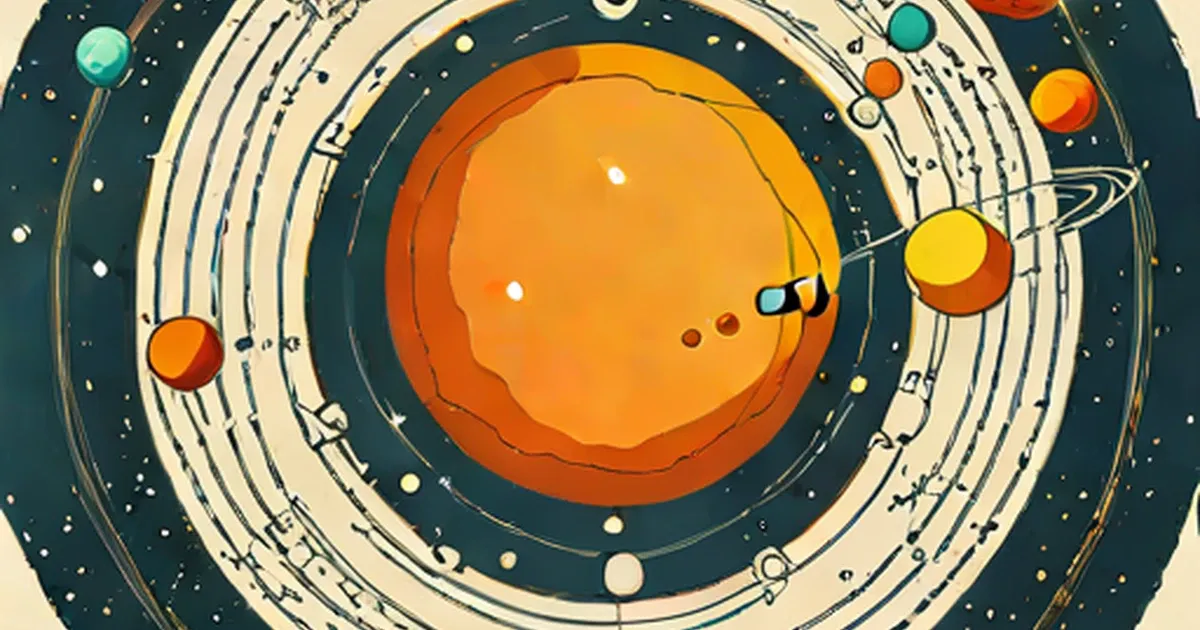
Here are some fascinating facts about the Solar System.
The solar system, which is supposed to be 5 billion years old, is made up of the Sun, in the center, and Mercury, Venus, Earth, and Mars, which are dense, rocky planets that are comparatively small in size, known as terrestrial planets; then the Asteroid Belt; followed by Jupiter, Saturn, Neptune, and Uranus, which are the four so-called gas planets, that are huge in size comparatively, and are not very dense. Then, these are followed by what are known as dwarf planets, a category of solar object that was first thought up in 2006 in order to define other objects revolving around the Sun, which were not quite large enough to be categorized as planets. As of now, there are three known dwarf planets, Ceres, which is located in the asteroid belt, Pluto, which is located beyond Neptune, and lastly, the largest amongst the dwarfs, Eris, which is located beyond Pluto. Given below are some more interesting facts about the Solar System.
Apart from the Sun and the planets, the Solar System also contains the 169 moons of the planets, comets, asteroids, gas, and dust.
The asteroid belt lies between the orbits of Mars and Jupiter. Sometimes called “minor planets”, asteroids are rocky objects that are the remnants of the Solar System when it formed. Over 90,000 asteroids have been found by scientists, ranging in size from just a meter or so in diameter to hundreds of kilometers in width. However, only about 250 of them have widths that are larger than 100 km, most of them tending to be about 1 km wide.
With a width of 940 km, Ceres is the largest known asteroid. Giuseppe Piazzi, and Italian astronomer discovered it in 1801. In fact, Ceres was the first asteroid that was discovered. Over 90 percent of the asteroids examined until now have been found to be made up of stone, while 5.7 percent of them consist of Iron and Nickel. Asteroids are irregularly shaped, while some asteroids even have a moon of their own.
About 99.86 percent of the mass of the Solar System is made up of the Sun, which means that even after putting all the planets together, along with the asteroids, they make up just 0.14 percent of the mass of the Solar System.
Practically all the planets, as well as a number of the moons, have an atmosphere. The atmosphere of the Earth is made up primarily of oxygen and nitrogen. The thick atmosphere of Venus is made up of carbon dioxide, along with small amounts of poisonous gases like sulfur dioxide. The atmosphere of Mars is also made up of carbon dioxide, but it is thin. The atmosphere of the larger gaseous planets, Jupiter, Saturn, Uranus, and Neptune, is made up mostly of helium and hydrogen.
As for Pluto, with its elongated orbit, when it is close to the Sun, its atmosphere is thin, but when it is far way from the Sun, the atmosphere becomes frozen, collapsing on the surface of the planet. This makes Pluto akin to comets.
Starting from the year 1610 up to the year 1977, it was thought that only Saturn had rings. However, it has been discovered since that there are ring systems even around Uranus, Jupiter, and Neptune, although Saturn’s rings are far larger in size. The particles that form these rings range in size from dust specks to boulders, which can be icy and/or rocky.
Often referred to as the “final frontier” of the Solar System, the Kuiper Belt, which is a disc-shaped area made up of icy debris, is located at a distance of 7.5 – 9.3 billion miles, or 12 – 15 billion kilometers, from the Sun. Even the Gerard Kuiper, the astronomer, after whom it has been named, had suggested its existence way back in 1951, it was only in 1992 that a Kuiper Belt object was first detected by astronomers at a distance of 42 AU from the Sun.