Interesting Facts About Japan

Japan is known as the 'Land of the rising sun'. In Japanese Japan is referred to as 'Nippon' or 'Nihon', literally translated means 'sun origin'.
Japan is known for its culture and traditions. There are many interesting facts about Japan that will be discussed in this Buzzle article. Let us begin our journey about the land of the Samurai's with some facts about its geographical location.

Geographical Facts about Japan
Situated in Asia, Japan is the immediate neighbor to China, Russia, North Korea and South Korea. Although, Japan is referred to an island nation, it is an archipelago made up of 6852 islands. The four main, largest and prominent islands are Honshu, Hokkaido, Kyushu and Shikoku. These four islands make up about 97% of the total land mass of the country. Japan is the 60th largest country in the world, slightly bigger than Germany and about 9 times the size of the Netherlands. The total area of Japan is 377,835 km2, of which the total landmass is 374,744 km2. As of 2010, the population of Japan is said to be over 127 million. The climate in Japan is diverse, with tropical in the South of the country and cool temperate in the North. There are three seasons in Japan, namely summer, monsoon and winter. One can expect similar climate in most of the neighboring South Asian countries.

Being extremely earthquake prone Japan has an average of 1500 earthquakes every year. The number of volcanoes in Japan is approximately 200. The land is often also called the land of tsunamis. The biggest and the most devastating the tsunami hit Japan on Friday, 11 March 2011. The magnitude of this earthquake was 9Mw on the Richter scale. The earthquake lasted for 6 minutes. This earthquake is among the five most powerful earthquake to have shaken the earth.

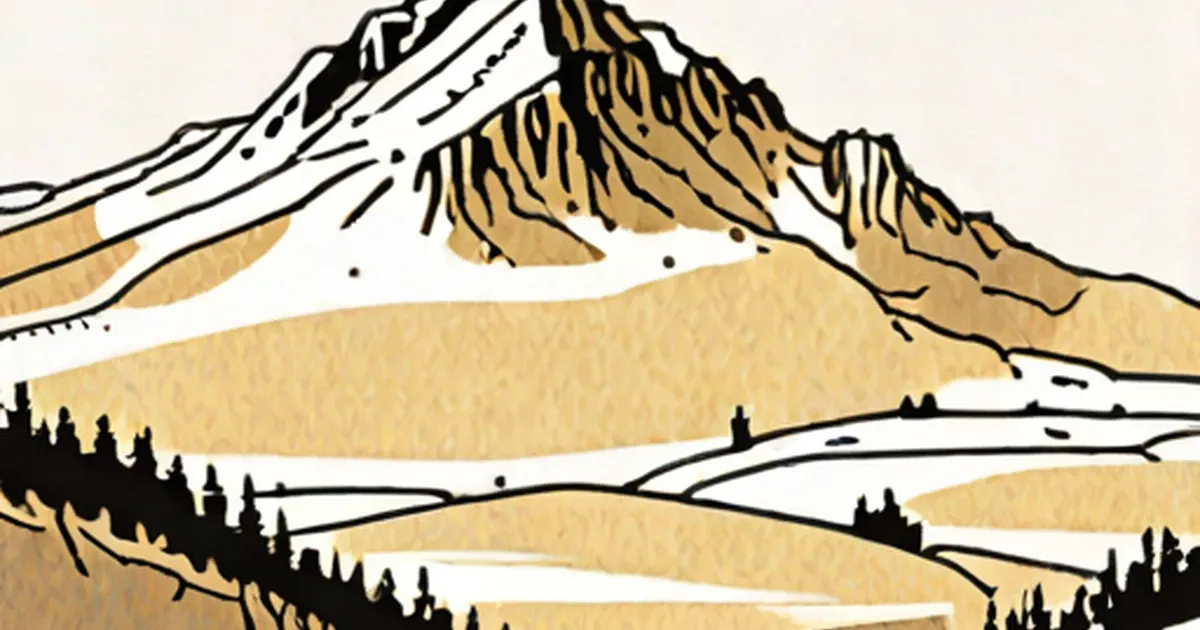
Honshu is the largest island, measuring an area of 87,805 square miles. Almost 80 percent of the Japanese population lives here. The capital of the country is also located on this island. Japan's tallest mountain Mount Fuji (3,776m) is situated here. Although the volcano here has been dormant since 1708, geologists classify it as an active volcano. Tokyo stands on the Kanto plain. The Kanto plain is Japan's largest lowland, spreading across from the Japanese Alps to the Pacific.

Situated in northernmost part of the archipelago, Hokkaido is the second largest of the four islands, covering an area of 30,144 square miles. Consisting mainly of mountains and forests, this island houses just 5% of Japan's total population. The economy here depends almost entirely on fishing, forestry and dairy-farming. Sapporo is the largest city and administrative center of Hokkaido.

Kyushu is situated in the southernmost part of the archipelago and is the third largest of the four islands. It covering an area of 13,760 square miles. About 11% of the Japanese population lives here. This island has a mountainous terrain. The most active volcano of Japan, Mount. Aso is located on this island. The entire island is dotted by a number of hot water springs. The economy of this island is governed by agricultural products, silk, porcelain and heavy industry.

Shikoku is the smallest of the four islands and also the least populated. This island is situated to the south of Honshu and to the east of Kyushu. It is the 50th largest island by area of all the islands in the world. The economy of this island revolves around copper ore processing, agriculture (in the alluvial plains) and fruit cultivation. Yoshino river is the main river of this island and is famous for white-water rafting.

Historical Facts about Japan
One of the facts about Japan is that it is the oldest surviving monarchy, rather the oldest continuous hereditary monarchy in the world. The monarch belongs to the Yamato dynasty and 125 monarchs have ruled Japan since February 11, 660 B.C., including the incumbent Emperor Akihito. He will be succeeded by Crown Prince Naruhito, the eldest son of the Emperor.

Japan's national flag is called the Hinomaru . The flag has a red circle against a white background. This red circle symbolizes the rising sun. The Japanese deity Amaterasu Omikami is a sun goddess. "Nippon", Japan's name in Japanese, means "origin of the sun".

Kimigayo which means "The Emperor's Reign", is Japan's national anthem. The lyrics are from a 5-line, 31-syllable poem written in the tenth century. The music was composed in 1880 by an Imperial Court musician Hiromori Hayashi and later harmonized according to the Gregorian mode.

Political Facts of Japan
Although it has longest surviving monarchy, it is a constitutional monarchy. The Emperor is the ceremonial head of the state and is described in the constitution as "the symbol of the State and of the unity of the people".

There is universal suffrage and every person above the age of 20 years is eligible to vote. The actual power rests in the Parliament, called Diet. Like in the United States, the Japanese Parliament is a bicameral Parliament, made up of House of Representatives and House of Councilors. Unlike in a number of other democracies, the Prime Minister is elected by the members of the Parliament, who is then formally appointed by the Emperor. It is the Prime Minister, who has the power to appoint and dismiss the Ministers.

Japanese Culture Facts
The following list will cover a few quick facts about Japan's culture.

Food Facts
  • It is not uncommon to see rice been served for breakfast, lunch and dinner in Japan. In other words, rice is the staple food of the Japanese.
  • Miso soup is an all time favorite and like rice could be served for breakfast, lunch or dinner. Its main ingredients are a soybean paste dissolved in a seaweed stock.
  • A traditional Japanese breakfast is steamed rice topped with natto, which is made from fermented soy beans.
  • Tea is served practically with all meals.
  • Fruits are forbiddingly expensive in Japan. One may end up paying up to $2 for a single apple or peach.
  • The Japanese love their pizzas topped with mayonnaise, sesame seeds and corn.
  • Japanese use a lot of fish, beef, pork, chicken and variety of seafood in their cooking. Most of their dishes are mildly spiced, flavored with a variety of soy sauces.
  • Sushi is a Japanese delicacy of rice and fish dipped in vinegar, wrapped in seaweed, which has become popular worldwide.
  • The Japanese eat with chopsticks known as hashi.
  • While eating in Japan the chopsticks are never to be put upright into the bowl, as this is the way to offer food to the dead.
  • Slurping while eating is a common practice. Here, you are expected to slurp while having liquids such as soups. If you do not, it is considered that you do not like the food and the host may feel offended.
  • The tatami (mat) is used for sitting on while eating.
Art Facts
  • Haiku is Japanese poetry consisting of only 3 lines.
  • Origami is an ancient Japanese art of paper-folding.
  • Noh, an ancient and very popular type of Japanese theater can last for up to eight hours.
  • One of its kind in the world is the fact, that four different writing styles are used in Japan, namely Hiragana, Katakana, Kanji and Romaji
Interesting Facts
  • Sumo wrestling is the national sport of this country.
  • Japanese always remove their footwear before entering a home. Often houses have an elevation made, which signify that shoes have to be removed.
  • Slippers are worn in the house, but shoes are never worn in the house. However, slippers are also never worn while sitting on the tatami to have meals.
  • Many women wear platform shoes that are 4 to 6 inches high.
  • The Japanese will shop daily for their meat, fish and vegetable requirements, as they like all their food fresh and without preservatives. This is one of the prime reasons that small and medium-sized refrigerators are sold the most in Japan.
  • Life expectancy in Japan is one of the highest in the world. Very few countries like Hong Kong, Singapore, San Marino, Andorra, and Macau have a slightly higher life expectancy than Japan. On an average the Japanese lives 4 years longer than an American.
  • While smoking is allowed practically anywhere in Japan, you are not allowed to smoke in local trains. Long distance trains have got designated smoking zones.
  • Vandalism rates in Japan are among the least in the world.
  • A vending machine for a variety of daily requirements is installed at practically every corner in Japanese cities.
  • Kendo, meaning "the way of the sword', is Japan's oldest form of martial arts.
  • Japanese do not submerge themselves into the bathtub and then lather. They soap outside the tub and rinse it off. Only then do they submerge themselves neck-deep into the hot water to refresh and relax.
  • Japanese drive on the left, and have their steering wheels on the right, exactly opposite of what it is in America.
  • In Japanese villages there is no need to send invitations for a wedding or a funeral. They are considered community events and the entire village will help in preparing the food, and taking care of all the required arrangements.
An interesting Japan fact is that religion does not have a big role to play in the lives of the Japanese. Shinto and Buddhism are the two most practiced religion. About 1% of the population practices Christianity. Finally, the Japanese are extremely courteous people. If you require something, they will go out of their way and try to help you. Therefore, most people like visiting the country and enjoying the hospitality of the land of Sumos and Origami.
By
Last Updated: 12/21/2011
Like This Article? Please Share!
Post Comment | View Comments
Your Comments:
Your Name: