How was the Moon Formed
How was the Moon formed? Since when is our planet's only companion in the cosmos, been giving it company? Read this article to get the whole scoop on formation of the Moon.
Moon is an integral part of our lives. It sets the rhythm of tides, around the world. Besides that it serves as a guiding light after Sun retires for the day (Except on New Moon when it takes a Holiday!). Besides being the inspiration for poets since ancient times, the Moon makes for great company on a lonely night. Have you ever wondered, how was the Moon formed? Since when has he been accompanying our Earth, in her sojourns around the Sun? This article endeavors to answer this question on the basis of research in astronomy and space exploration done till date. I will discuss the 'Giant Impact' theory about the origin of the Moon, which is currently the most accepted one.
If any body were to ask, how was the moon discovered, it would be an absurd question! You just have to look out in the sky and there it is, as always, waxing and waning. However, the question of how was the Moon formed, has baffled people for years. There were an abundant number of hypotheses about how was the moon formed, but there was no way one could check which one was right, until man landed on the Moon!

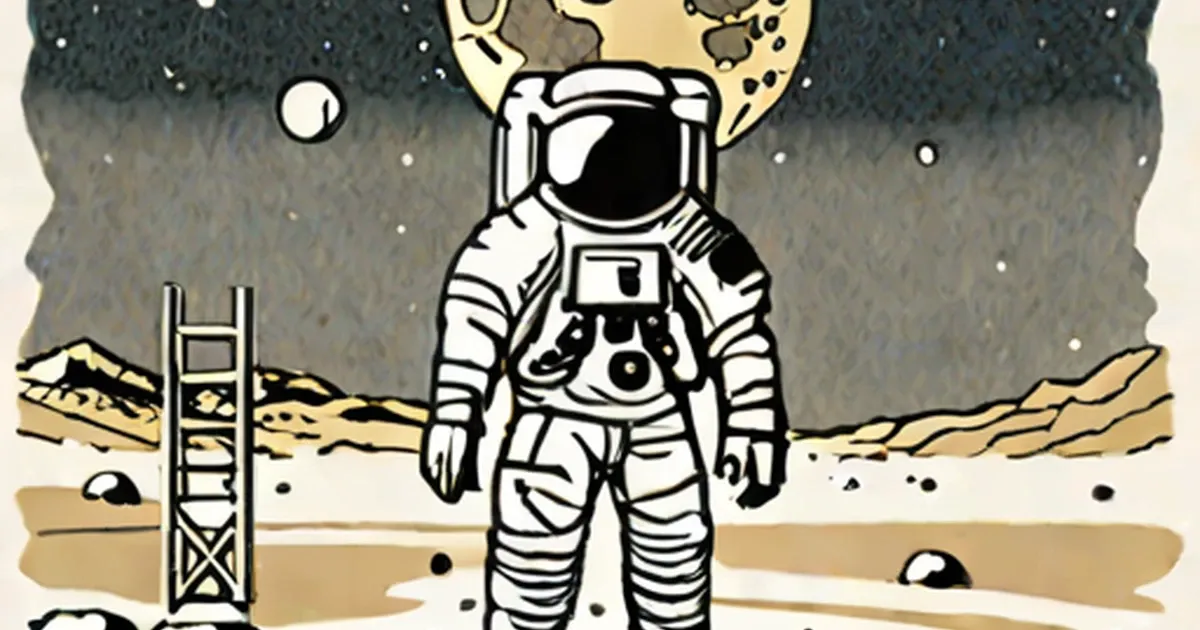
Man on Moon during Nasa's Apollo 11 Mission (Image Credit: NASA)
The Apollo missions that landed on the Moon brought back lunar rock and for the first time, scientists got an idea, about composition of the Moon. To understand the origin of an object like our Moon, you must first understand what is it made of. Then, from the composition and the constitution and its similarities with the composition of Earth, one could decide which of the many hypotheses, regarding how was the moon formed, make sense. The theory that finally won over was the 'Giant Impact' theory, which describes most peculiarities regarding the Moon's origin, quite convincingly.
The Giant Impact Theory
According to this theory, the Moon was created from the debris ejected by an impact of a huge object (of the size of today's Mars) on our planet, about 4.53 billion years ago, when a molten Earth was still cooling down. Hence, formation of Moon is quite intimately connected to how was the Earth created. Let us understand how was the Moon formed from collision of young Earth with this huge Mars sized object (named Theia after the Greek Goddess who gave birth to Moon Goddess Selena, in Greek Mythology).
Theia is Created
As the protoplanetary disk, which orbited the young Sun (called Solar Nebula), condensed under gravity, many planetoids formed in the vicinity of the Sun, which revolved around it. These small planetoids, collided and coalesced together to form planets like Earth later.
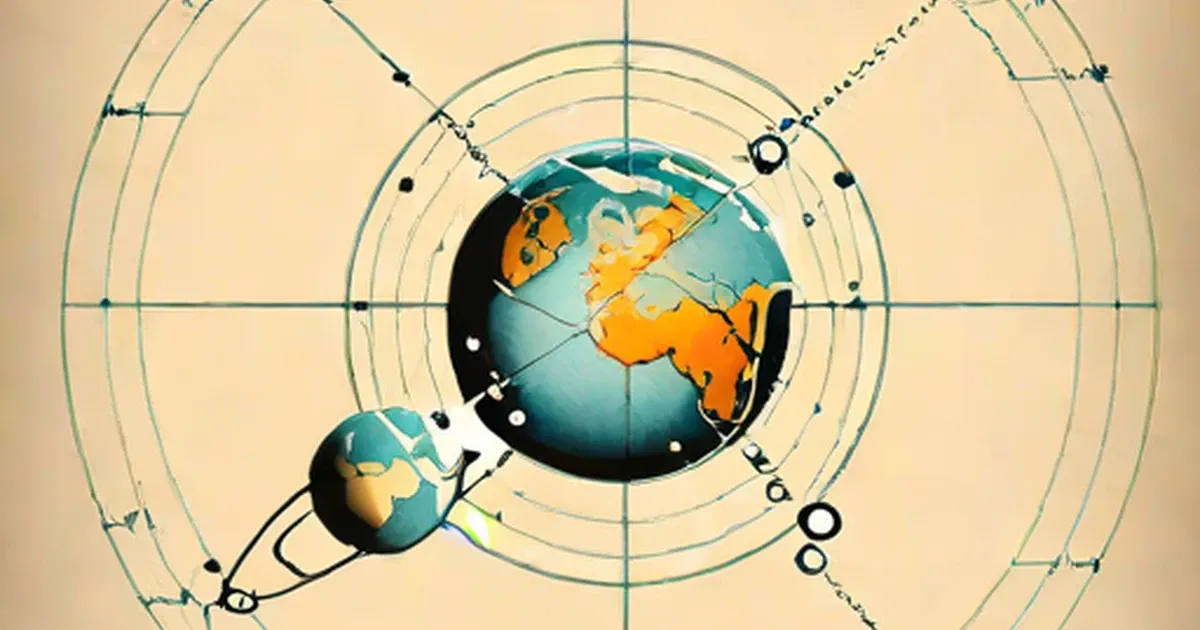
The giant impact theory proponents say that Earth had a companion planet around it, placed at a Lagrangian Point (L5 or L4 supposedly). (A Lagrangian point is a position in the Sun-Earth gravitational system, where the gravitational pull of both of them is nullified. The result being that any comparatively less massive object placed at that Lagrangian point is stationary with respect to the Earth and the Sun! There are 5 such Lagrangian points in the Sun-Earth system.) So the hypothetical planet Theia is supposed to have been created at this L5 or L4 point, revolving along with Earth around the Sun. During this period, Earth had no natural satellites. It was without a Moon! Theia was in almost the same orbit of Earth, except that it was 60º, out of phase from earth. That is, it either led or followed the Earth in its orbit around the Sun.
Orbit of Theia Destabilized
The path of every planet orbiting the Sun is affected by the gravitational pull of other planets in the Solar system. So many a times, planets including earth stray away from their normal paths. This means that they have eccentric orbits!
Similarly Theia's orbit was also affected by Earth and the other planets around. Theia as a planet was still growing in size through accretion of matter. Its earlier non-perturbed orbit kept it a safe distance away from Earth. However, as its mass increased through accretion, over a period of 20 to 30 million years, its orbit was destabilized and became increasingly erratic, taking it dangerously close to Earth.
Theia Collided with Earth, Creating the Moon
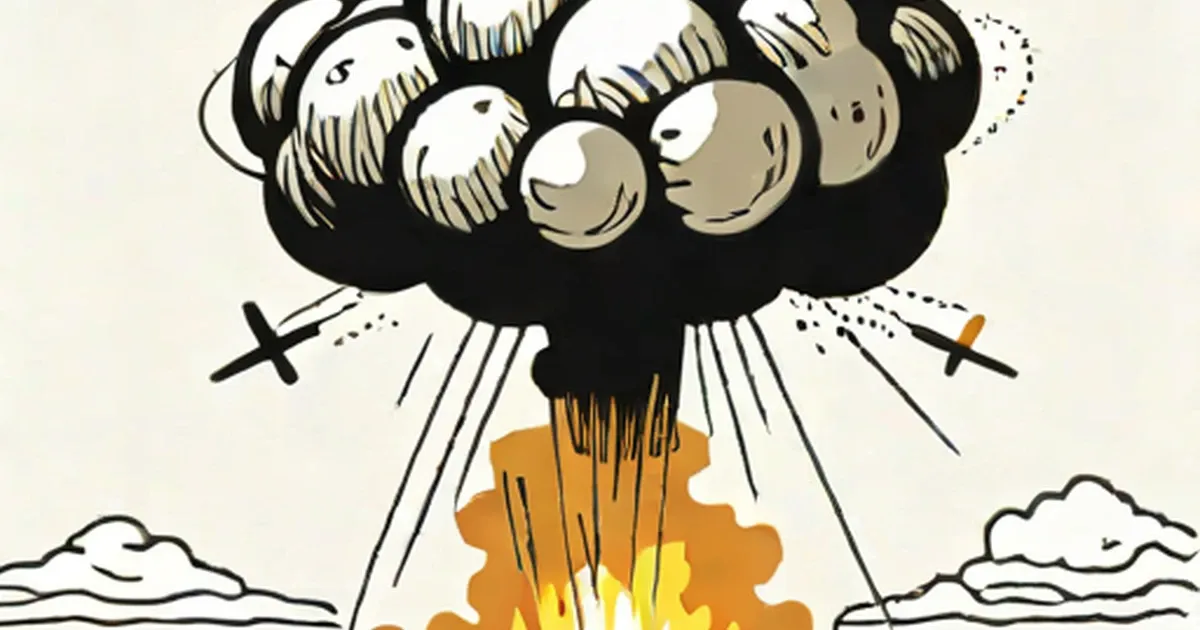
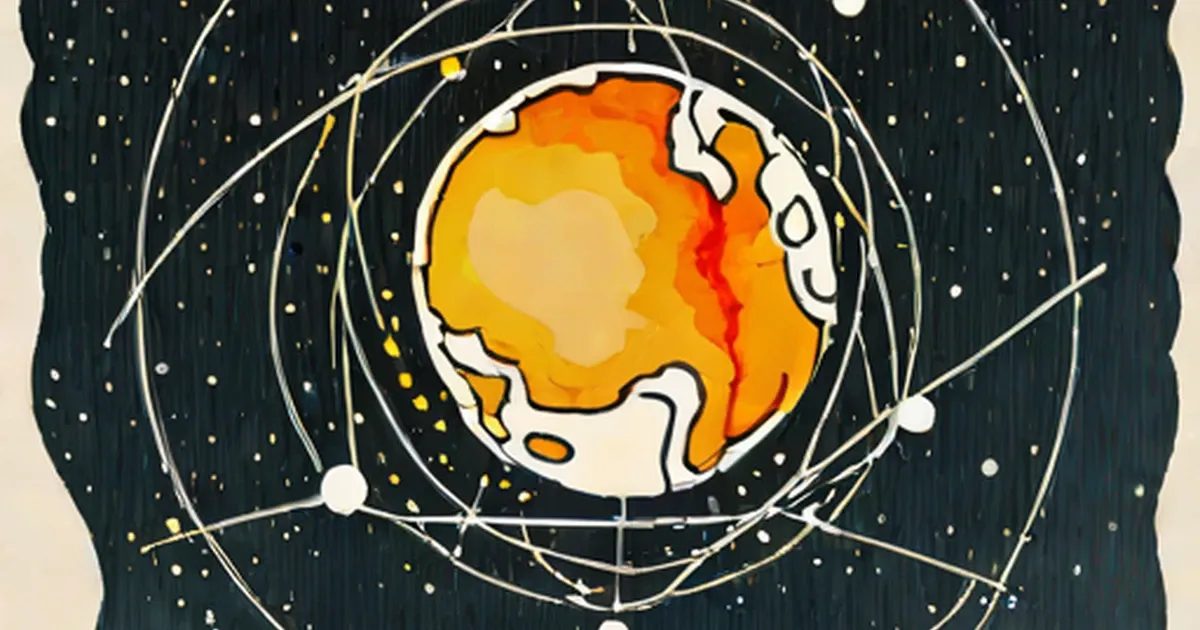
So finally one day, 4.53 billion years ago, the increasingly eccentric orbit of Theia lead to its inelastic collision with Earth at a very oblique angle. Imagine an object having a size of planet Mars (which is roughly ¾th size of Earth) colliding with our planet. It is like millions of atomic bombs exploding at the same moment on Earth. However, by cosmic proportions, it was a moderate impact! As the two planets collided they stuck together. This led to generation of an immense amount of heat, which led to the melting and sinking of Theia's Iron core into Earth's core, sending a significant amount of Theia's and Earth's crust, as well as mantle into orbit around them.
It was almost half of this molten debris, ejected from the collision that accreted and coalesced to become our Moon, in about a month after collision! The rest of the material may have been in orbit around the Earth, in small chunks. However, it was eventually cleaned up by Earth's gravitational pull. The reason we can talk quantitatively and put time bounds on this whole process is that, it has been studied through computer simulations that recreate all the conditions of collisions virtually. Through computer simulations, all these astrophysical models can be treated quantitatively and precise numerical analysis can be done. The Earth also got a boost in its angular momentum and mass from the collision. So this 'giant impact' theory is our best answer to the question, 'How was the Moon formed?'. Let us see why it is so by discussing the issues about the Moon that this theory correctly describes!

Earth rise photographed by the NASA's Apollo 11 Mission(Credit: NASA)
Evidence for Giant Impact Theory
Reasons why 'Giant Impact' is the best accepted theory of how the Moon was formed, are as follows:
Thus, Giant impact hypothesis, is quite convincing in its explanation of how was the Moon formed. Reconstructing the past from indirect evidence is a tough job and takes years of research. Hope this article has given you a good idea about how was the Moon formed and how it came to be our only satellite.
If any body were to ask, how was the moon discovered, it would be an absurd question! You just have to look out in the sky and there it is, as always, waxing and waning. However, the question of how was the Moon formed, has baffled people for years. There were an abundant number of hypotheses about how was the moon formed, but there was no way one could check which one was right, until man landed on the Moon!

Man on Moon during Nasa's Apollo 11 Mission (Image Credit: NASA)
The Apollo missions that landed on the Moon brought back lunar rock and for the first time, scientists got an idea, about composition of the Moon. To understand the origin of an object like our Moon, you must first understand what is it made of. Then, from the composition and the constitution and its similarities with the composition of Earth, one could decide which of the many hypotheses, regarding how was the moon formed, make sense. The theory that finally won over was the 'Giant Impact' theory, which describes most peculiarities regarding the Moon's origin, quite convincingly.
The Giant Impact Theory
According to this theory, the Moon was created from the debris ejected by an impact of a huge object (of the size of today's Mars) on our planet, about 4.53 billion years ago, when a molten Earth was still cooling down. Hence, formation of Moon is quite intimately connected to how was the Earth created. Let us understand how was the Moon formed from collision of young Earth with this huge Mars sized object (named Theia after the Greek Goddess who gave birth to Moon Goddess Selena, in Greek Mythology).
Theia is Created
As the protoplanetary disk, which orbited the young Sun (called Solar Nebula), condensed under gravity, many planetoids formed in the vicinity of the Sun, which revolved around it. These small planetoids, collided and coalesced together to form planets like Earth later.
The giant impact theory proponents say that Earth had a companion planet around it, placed at a Lagrangian Point (L5 or L4 supposedly). (A Lagrangian point is a position in the Sun-Earth gravitational system, where the gravitational pull of both of them is nullified. The result being that any comparatively less massive object placed at that Lagrangian point is stationary with respect to the Earth and the Sun! There are 5 such Lagrangian points in the Sun-Earth system.) So the hypothetical planet Theia is supposed to have been created at this L5 or L4 point, revolving along with Earth around the Sun. During this period, Earth had no natural satellites. It was without a Moon! Theia was in almost the same orbit of Earth, except that it was 60º, out of phase from earth. That is, it either led or followed the Earth in its orbit around the Sun.
Orbit of Theia Destabilized
The path of every planet orbiting the Sun is affected by the gravitational pull of other planets in the Solar system. So many a times, planets including earth stray away from their normal paths. This means that they have eccentric orbits!
Similarly Theia's orbit was also affected by Earth and the other planets around. Theia as a planet was still growing in size through accretion of matter. Its earlier non-perturbed orbit kept it a safe distance away from Earth. However, as its mass increased through accretion, over a period of 20 to 30 million years, its orbit was destabilized and became increasingly erratic, taking it dangerously close to Earth.
Theia Collided with Earth, Creating the Moon
So finally one day, 4.53 billion years ago, the increasingly eccentric orbit of Theia lead to its inelastic collision with Earth at a very oblique angle. Imagine an object having a size of planet Mars (which is roughly ¾th size of Earth) colliding with our planet. It is like millions of atomic bombs exploding at the same moment on Earth. However, by cosmic proportions, it was a moderate impact! As the two planets collided they stuck together. This led to generation of an immense amount of heat, which led to the melting and sinking of Theia's Iron core into Earth's core, sending a significant amount of Theia's and Earth's crust, as well as mantle into orbit around them.
It was almost half of this molten debris, ejected from the collision that accreted and coalesced to become our Moon, in about a month after collision! The rest of the material may have been in orbit around the Earth, in small chunks. However, it was eventually cleaned up by Earth's gravitational pull. The reason we can talk quantitatively and put time bounds on this whole process is that, it has been studied through computer simulations that recreate all the conditions of collisions virtually. Through computer simulations, all these astrophysical models can be treated quantitatively and precise numerical analysis can be done. The Earth also got a boost in its angular momentum and mass from the collision. So this 'giant impact' theory is our best answer to the question, 'How was the Moon formed?'. Let us see why it is so by discussing the issues about the Moon that this theory correctly describes!

Earth rise photographed by the NASA's Apollo 11 Mission(Credit: NASA)
Evidence for Giant Impact Theory
Reasons why 'Giant Impact' is the best accepted theory of how the Moon was formed, are as follows:
- Identical Oxygen Isotope Ratios: The Moon rocks brought back by the Apollo missions show the same Oxygen Isotope present in the Moon's composition as found on Earth.
- Moon was Once Molten: The surface impact features of the Moon are testimony to the fact that it was once molten in the past. The Giant Impact theory gives us a molten Moon which agrees with this evidence.
- Moon's Smaller and Low Metallic Core: There is evidence which indirectly shows that Moon has a very small core with less metal content compared to other terrestrial planets. Many simulations of the 'Giant impact theory' predict a Moon created from mantles of the two impacting objects, leaving it with a low metallic core.
Thus, Giant impact hypothesis, is quite convincing in its explanation of how was the Moon formed. Reconstructing the past from indirect evidence is a tough job and takes years of research. Hope this article has given you a good idea about how was the Moon formed and how it came to be our only satellite.

Use the feedback form below to submit your comments.

Use the form below to email this article to your friends.

- Facts About the Moon
- Who Was the Second Person to Set Foot on the Moon
- Moon Landing Conspiracy
- Moon Rovers
- 8 Phases of the Moon
- Moon Facts
- Marvellous Moon
- Space Probe Paves Way for European Moon Landing
- NASA planning moon bases
- One Giant Blip for Mankind As Moon Landing Tapes Are Mislaid
- Nasa Plans Another Giant Leap to the Moon
- Probe Will Uncover Secrets of the Moon
- US Plans Moon Settlement Before Heading on to Mars
- China sets sights on the moon
- It's official - US did land on moon
- The case of the piece of moon that went missing
- Geology of the Moon's Surface
- Myths and Legends about the Moon
- Moon Phases Calendar
- The Moon(views)
- Can You Buy Land on the Moon
- NASA's Quest For Water on Moon
- Lunar Eclipse
- Lunar Cycles
- Chandrayaan Mission - India's First Lunar Exploration
- Causes of Lunar Eclipses