How does Coal Become a Diamond
The common element between coal and diamonds is the presence of carbon. Is it then possible for a piece of coal to be transformed into a diamond. If yes, how does coal become a diamond? To know more about this intriguing subject, read on...
It is difficult to believe that any realtion exists between the dark brownish-black lumps of coal and shimmering diamonds. The common element between the two is that they both are made up of carbon. The element carbon exists in the earth in three different forms. One is the amorphous form, which lacks the crystal structure. Another form of carbon, termed as graphite, has hexagonal crystals. Diamonds are the third form of carbon and these glittering gemstones sport cubic crystals.
Relation between Coal and Diamonds Coal, which is an amorphous form of carbon, is not made of pure carbon. It is made up of complicated organic molecules of decomposed plant and animal material, which have been compressed for millions of years in the earth’s crust. Coal is subjected to various geological processes, which change its chemical composition and transforms it into its nearly purest form called graphite. This process requires suitable conditions and millions of years to take place. Diamonds are formed deep inside the earth, where the temperatures and pressures are very high. They are transported to the surface of the earth by the molten magma
.
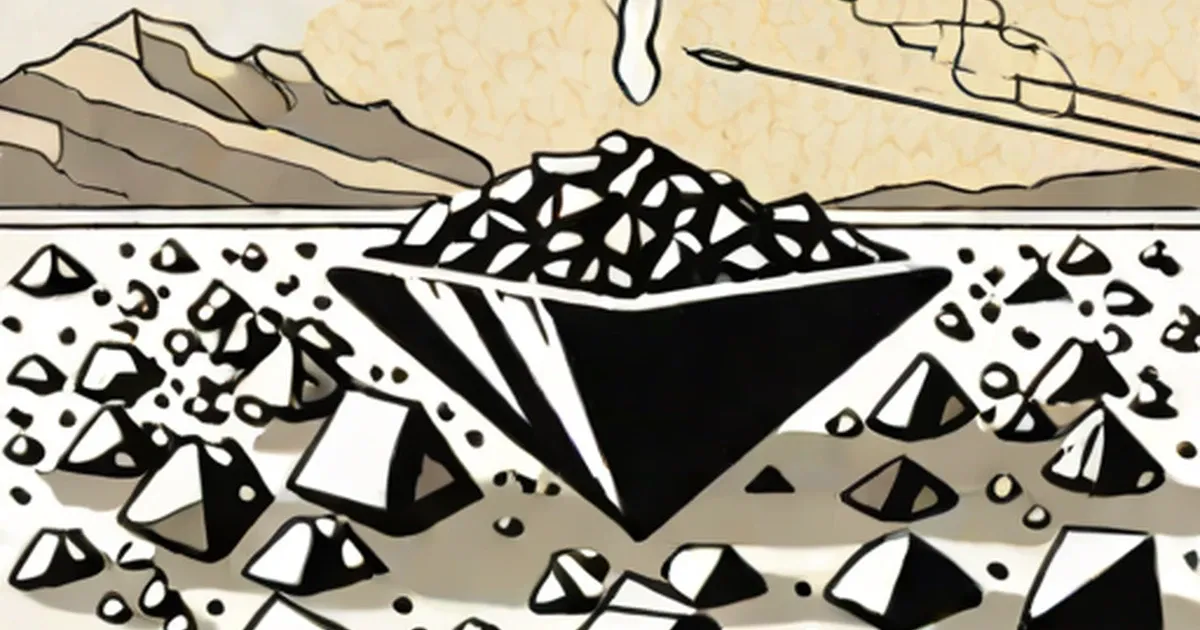
If both diamonds and graphite are made up of carbon, then why do they look different? The answer is that the arrangement of carbon atoms in graphite and diamonds differ, giving them entirely different looks. While carbon atoms are arranged in a hexagonal manner in graphite, in diamonds, each carbon atom is linked to four others in a tetrahedral manner. Hence, graphite is like sheets of carbon atoms, stacked one over the other and diamonds have a pyramid-like structure. The flat sheets of the graphite can absorb lights of different wavelengths and hence are opaque and black. The pyramid-like structure, found in diamonds lack this ability and are transparent and sparkling.
How does Coal Become a Diamond?
The conversion of coal into diamond is almost impossible. Even though there are carbon atoms in coal, the amount of impurities are so high, that it takes millions and millions of years for the coal to transform to its nearly purest form - graphite. The conversion of graphite to diamonds takes some more millions of years. This transformation cannot take place in the earth’s crust, as diamonds are formed deep inside the earth. The procedure takes place about 100 miles below the earth’s surface, where coal is subjected to various geological processes. It is believed that coal is exposed to a temperature above 2,000° F, and a pressure almost 50 times higher than that of the earth’s surface. Any variation in these factors may affect the formation of diamonds. A dip in the pressure or a hike in the temperature may result in the dissolution of the diamond or a partially-formed one.
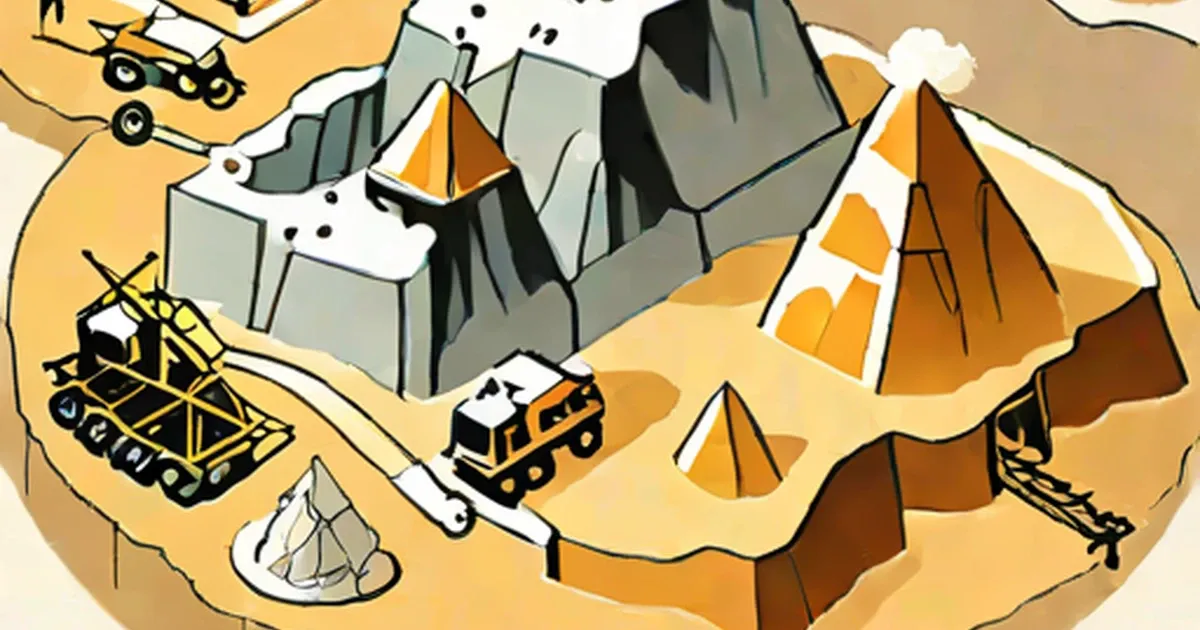
Even when diamonds is formed through such a process, it takes another 2000 to 3000 years for them to get carried to the earth’s surface. Molten magma brings them up and cools them off to form rocks in the form of veins, which are known as kimberlite. Hence, kimberlite veins are considered as preferable sites for mining diamonds. It is also possible that the diamonds are further transported from the kimberlite sites to a distant area. This is possible when the kimberlite erodes with time and the diamonds in it are carried away with the resultant sediments to distant places. However, rough diamonds are mined from the kimberlite sites and nearby areas and are polished to bring out the sparkle in them.
How does coal become a diamond has rasied quite a few doubts over the years. People find it difficult to belive something as ugly as coal can be transformed into something as beautiful as diamonds. However, even though this is possible, one has to inderstand that it is not a easy process. It takes millions and millions of years for mother nature to produce one diamond. Approximately 100 tons of mud need to be mined to produce one carat. So, how do you turn coal into a diamond? It is impossible, and you cannot do it yourself, it is a natural process, which takes millions of years.