How Does a Nuclear Power Plant Work
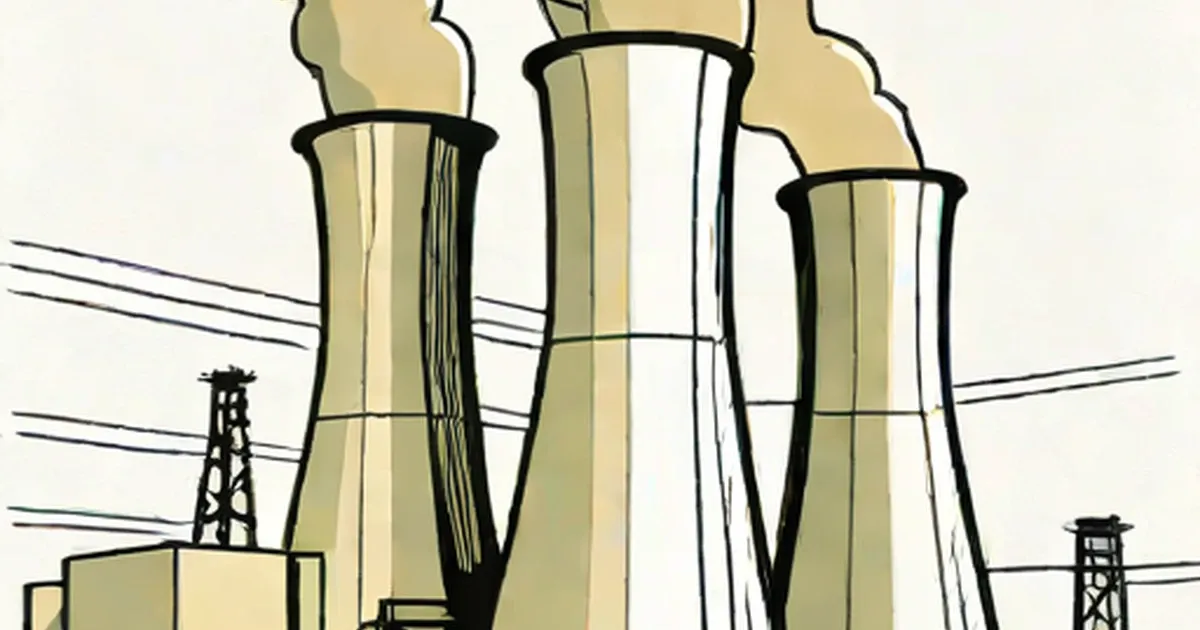
Nuclear power has been supported as one of the best alternative sources of power, but at the same time it has received severe criticism, especially owing to hazards of nuclear waste. Join us, as we explore the realms of nuclear power to find out how does a nuclear power plant work.
Nuclear power constitutes a large chunk of power required to produce electricity across the world. Though incidents like Chernobyl disaster prove to be a dark spot on nuclear power development, nuclear power plants today are properly operated ensuring optimum safety. In fact as one of the safety measures the whole plant is encased within a very thick dome shaped structure. Nuclear power plants can be differentiated on the basis of methods used to transfer heat produced in the reactors to the electricity generation unit. It is very important to know, how nuclear power plants work, in order to understand the concept of safe generation of nuclear energy.
How Does a Nuclear Power Plant Work
Nuclear power plants are powered by Uranium. In a process known as nuclear fission, uranium atoms are split to produce large amount of energy which is eventually converted to heat. The enormous amount of heat created, boils the water to produce steam, which is used to rotate turbines. These turbines in-turn spin the shaft of the generator. As the generator gets into action, the coils of wire within the generator are spun in a magnetic field to produce electricity. A nuclear reactor maintains and controls the nuclear reaction within the plant to produce energy. There are various types of nuclear reactors, such as Pressurized Water Reactor (PWR), Boiling Water Reactor (BWR), Pressurized Heavy Water Reactor (PHWR), Advanced Gas-cooled Reactor (AGR), etc.
Pressurized Water Reactor (PWR)
In pressurized water reactors, ordinary water is used as the moderator as well as coolant. The primary cooling circuit, flows through the core of the reactor under a high pressure, while the steam generated in the secondary circuit drives the turbines. Water in the core of the reactor tends to reach a temperature of 325 degree Celsius, therefore it has to be kept under about 150 times atmospheric pressure, in order to prevent it from boiling.
Pressurized Heavy Water Reactor (PHWR)
In pressurized heavy water reactors, the moderator is located in a large tank known as calandria. This tank is penetrated by horizontal pressure tubes which act as fuel channels. The calandria is cooled by the flow of high pressure heavy water in primary cooling circuit. The steam, which drives the turbines, is generated in the secondary circuit. Owing to its pressure tube design, the reactor can be refueled, by isolating each pressure tube from the cooling circuit, without shutting down the reactor.
Boiling Water Reactor (BWR)
In boiling water reactors, the top part of the core operates with approximately 15% water as steam. This steam goes directly to the turbines via drier plates located above the core. In these reactors, the water around the core is most often contaminated, with radionuclides. Therefore, the turbines have to be shielded by radiological protection during maintenance of the nuclear fission power plant. The expenditure saved, owing to the simple design on this nuclear reactor is spent on this shielding activity, thus balancing the expenditure incurred.
In the United States, pressurized water reactors and boiling water reactors are used in nuclear power plants. Though there are a few security concerns about operations of a nuclear power plants, they are necessary as an alternative energy source, to cope up with the ever increasing energy requirements. Owing to low levels of emission, this cost-effective source of power is steadily becoming a popular source. It is estimated that the demand for nuclear energy for production of electricity will increase by 20%, by 2030. Knowing how does a nuclear power plant work, and the safety measures ensured in the process, will perhaps make many people change their critical stance on nuclear plants.