Horse Facts - Interesting Facts About Horses
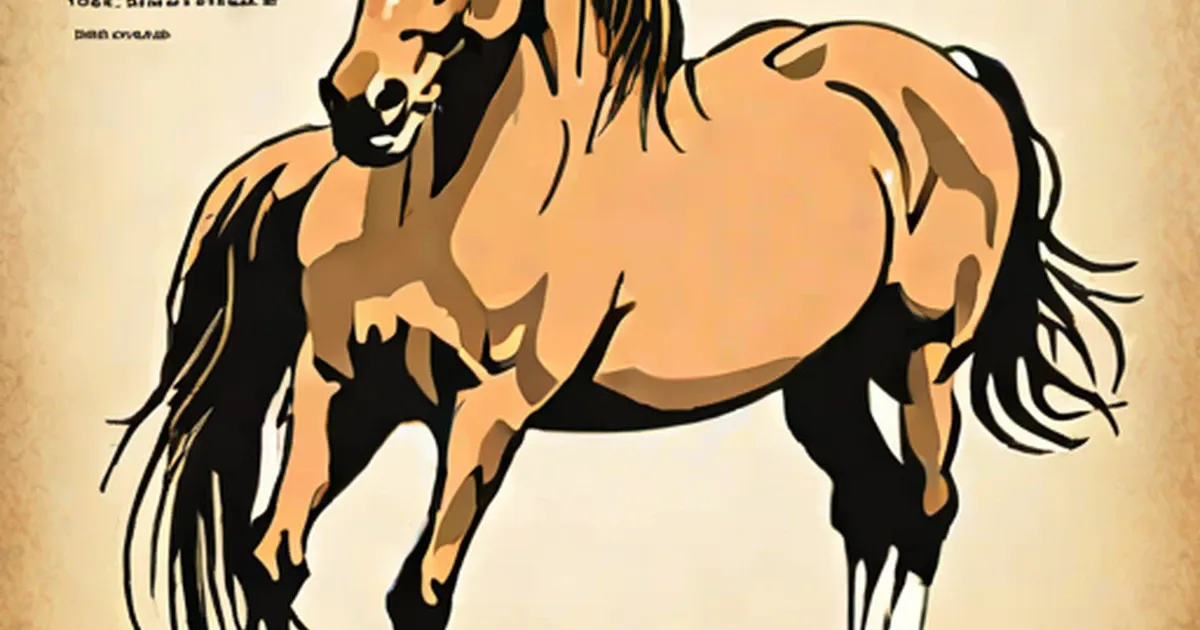
“Hyracotherium,” was one of the first horses that lived about 50 million years ago. It was as tall as a fox and had toes. This horse went through a transformation over millions of years to become the modern horse.
“She galloped away into the wilderness, free at last! She was thankful for the storm that had come as a welcome surprise, and had uprooted the trees and blown the roof and the walls of the stable away. She had heard voices and footsteps leading to where she was. The owner had come in and looked around, more taken up with the damage than to notice that chains did not bind his precious horse any longer. As soon as he left, she shook herself free from the shackles that had bound her so long.”
Just like Zebras, horses were wild animals in the beginning. They were hunted for their skin as well as meat. Around 3000 B.C. things changed and people began taming horses and using them to carry things. Around 1900 B.C. horses first appeared in Greece, which most probably came with the arrival of the Indo-Europeans. The invasion of the Hyksos or Amorites brought with them horses and chariots to Egypt. This was around 1700B.B.C.
Interesting Facts About Horses:
- A horse is a member of the “equus” family. This word comes from ancient Greece and means quickness.
- More than 350 breeds of ponies and horses can be found.
- A height of a horse can be measured with the hand, where each hand equals four inches.
- If you want to know how old a horse is, all you need to do is to count its teeth.
- An average horse’s head weighs 11.84 pounds.
- 10 Pounds is the weight of a horse’s heart.
- A horse is able to drink 10 gallons of water per day.
- Horses use their facial expressions to communicate. Their moods can be gauged with the help of their nostrils, eyes and ears.
- Horses spend more energy lying down.
- The hoof of a horse is like a fingernail; it keeps on growing and needs to be clipped.
- Any kind of mark, which appears on the forehead of a horse, is called a star, irrespective of whether it resembles one!
- A horse is able to walk, trot, canter and gallop.
- Horses usually live for around 20 to 25 years. Some of them can live up to 5 years more.
- In most cases, the foal is born at night, away from danger and prying eyes.
- After being born, it only takes a foal about 1-2 hours to stand up and walk.
- Foals are fully grown by 3-4 years of age.
- Horses eat short, juicy grass, and hay. Foods like barley, maize, oats and bran are good for working horses.
- Horses are either a mixture of colors or the same color all over. Horses are usually, black, brown, cream or gray in color.
- A horse has two blind spots; one is located directly in front of them while the other is located directly behind.
- A breed of horses called Akhal-Teke from Russia can go for days without water or food.
- One of the few breeds of horses that live in North America are called Mustangs.
- “Old Billy,” was the oldest recorded horse who lived to be 62 years.
- Falebella of Argentina, is the smallest breed.
- “Little Pumpkin,” is the smallest pony in history, it stood 14 inches and weighed 20 lbs.
- “Samson,” was the tallest horse recorded.
More Horse Facts:
- A male horse is known as a stallion.
- A female horse is known as a mare.
- A baby horse is known as a foal.
- A young female horse is known as a filly.
- The father of a horse is known as a sire.
- The mother of a horse is known as a dam.
- A fully-grown small horse is known as a pony.
- A farrier or blacksmith is the person who cares for a horse’s feet.
Head Markings:
- A narrow white mark, which runs down the face from the forehead, is called a Stripe.
- A white mark, which covers one or both of the lips and proceeds up to the nostrils, is called a White muzzle.
- A broad splash of white that covers most parts of the forehead between the eyes and carries down the nose to the muzzle is called a Blaze.