History of Chess
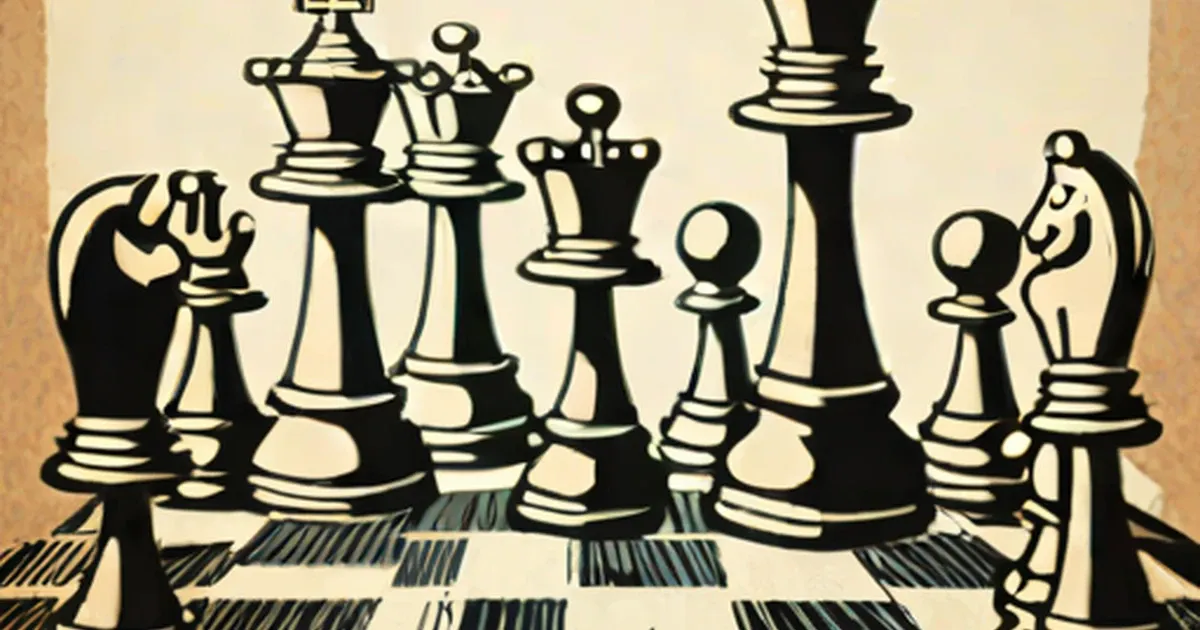
Chess is an internationally acclaimed recreational game. The game played between two players is competitive and demanding on time, tact and skill. Chess, as we know it today, was developed in the 15th century, in Southern Europe. However, a research into the history of this strategic game reveals Indian and Persian origin...
The game of chess is very popular today. It is played on an international level, at tournaments online, as well as in real time. The square checkered chessboard is also kept as an ornamental add-on in many homes and offices. The 64 squares and eight-by-eight grid are divided between two players, who maneuver white and black pieces. The pieces include a king, queen, eight pawns and two (each) rooks, knights and bishops. The checkmate objective is realized when the king is cornered in a ‘check’, with no forward maneuver possible. The modern tradition of competitive chess has developed extensively into an indoor sport, rife with strategies, tactics, mental composition and focus. The online version allows players located in remote regions across the globe to compete with one another via internet connectivity.
History of Chess:
Chess history dates back to the 6th century, in India. During the reign of the Gupta kings, the game was called caturaṅga. It then comprised four military divisions of infantry, cavalry, chariotry and elephants. The game made its way to Persia, where it took on the name shatranj, in Sassanid. The rules were developed further and soon Shatranj became the favorite royal leisure activity in the Muslim world. Though the pieces retained their Persian names and the dictates remained the same, the game was adopted and prized by the Arabs. Chess then made its presence known throughout Spain, by the name of ajedrez, and as xadrez in Portugal. Slowly, Caturanga became zatrikion in Greek and finally, chess in Europe. The popular game-call chess and mate or check and mate remains synonymous with Caturanga.
Over the years, the board game was distributed in the form of curios and souvenirs to royalty and the crème de la crème of society. Research on the history of chess reveals that the game reached Western Europe and Russia by the 9th century. The Moors are credited with the popularity of the game across the Iberian Peninsula, in the 10th century and its mention in a 13th century manuscript as shatranj. A parallel theory states that chess or xiangqi was played much before Caturanga, in China. In the year 1200, rules and dictates of chess were defined in southern Europe. The modern rules that specify the outcome of basic moves were first adopted in Spain and Italy. The rules spread throughout the western world, all except that of ‘stalemate’. This rule and maneuver was defined in the 19th century and it was then that the game earned a new epithet: Western Chess.
The earliest theory on the game was written in the 15th century. The book ‘Repetici’n de Amores y Arte de Ajedrez’ or ‘Repetition of Love and the Art of Playing Chess’ was published in 1497, authored by Luis Ramirez de Lucena. Many of the earliest rules were determined by Lucena, Pedro Damiano, Giovanni Leonardo Di Bona, Giulio Cesare Polerio, Gioachino Greco and Ruy L’pez de Segura. By the 18th century, chess became very famous in Southern Europe and France. Fran½ois-Andr” Danican Philidor, Louis-Charles Mah” de La Bourdonnais and Alexander McDonnell were among the first few grandmasters of chess. All through the 19th century, chess clubs and books made the game part and parcel of practically every home. The first ever modern chess tournament was won by Adolf Anderssen, in London, in 1851. Strategies highlighted by the likes of Paul Morphy, Wilhelm Steinitz, Johannes Zukertort, Emanuel Lasker, Jos” Ra’l Capablanca and the current champion Viswanathan Anand have made the game timeless.