History of Brazilian Dance

Brazil is a colorful country known for some really attractive dance-forms, and some of them have gained immense popularity on the international level. But do you know the history of these dances? Read on to discover the history of Brazilian dances...
History of Brazilian Dance
Dance is a form of non-verbal communication for expressing human experiences, which in the course of time has developed into a form of art. Brazil is a land of many popular dances that contain the elements of African, Portuguese and European dance forms. Samba, carimbo, capoeira, Furro or Forro and lundu are some of the famous dances of Brazil. Here is an account of the origin and evolution of these dances.

Samba
Samba is what immediately comes to mind at the very mention of Brazilian dance. Some believe that samba was derived from the word 'semba', which signifies a naval bump in Kimbundo, the African Bantu language, and symbolizes the invitation to dance from a man to a woman. 'Semba' is also an infinitive of 'kusamba', which means 'to pray', or to appeal for the favor of the Gods or ancestors by singing and dancing. So, the dance was an indispensable part of the religious ceremonies.

Brazil was a colony of the Portuguese during the period 1500 to 1822, and African slaves, mainly were brought to Brazil from Angola by the Portuguese rulers. When the African slaves reached Brazil, they were converted into Christians, and prevented from worshiping their traditional gods by the Portuguese government. They continued to carry out religious practices in the guise of parties. But, soon, they came under the suspicion of the authority, as a result of which, such parties were often raided by the police. Eventually, they tried to preserve the secret rhythms of samba by combining them with other musical forms, which over a period of time gave birth to a series of dances and music genres.

With the end of slavery in 1888, many schools for samba dance were established and were known as 'Escolas de Samba'. Initially, samba was regarded as an improper and obscene dance by the upper class Brazilians, and hence was performed in secret societies. But, in 1917, samba carnavalesco was presented to the public by Ernesto dos Santos, a well-known musician of Brazil. In 1920, its popularity grew immensely, and in the course of time, it received international recognition as a musical genre and dance form. Samba has also evolved into different sub genres like Partido alto, Pagode, Samba de breque, Samba-canção, Samba-enredo and Samba de Gafieira, etc.

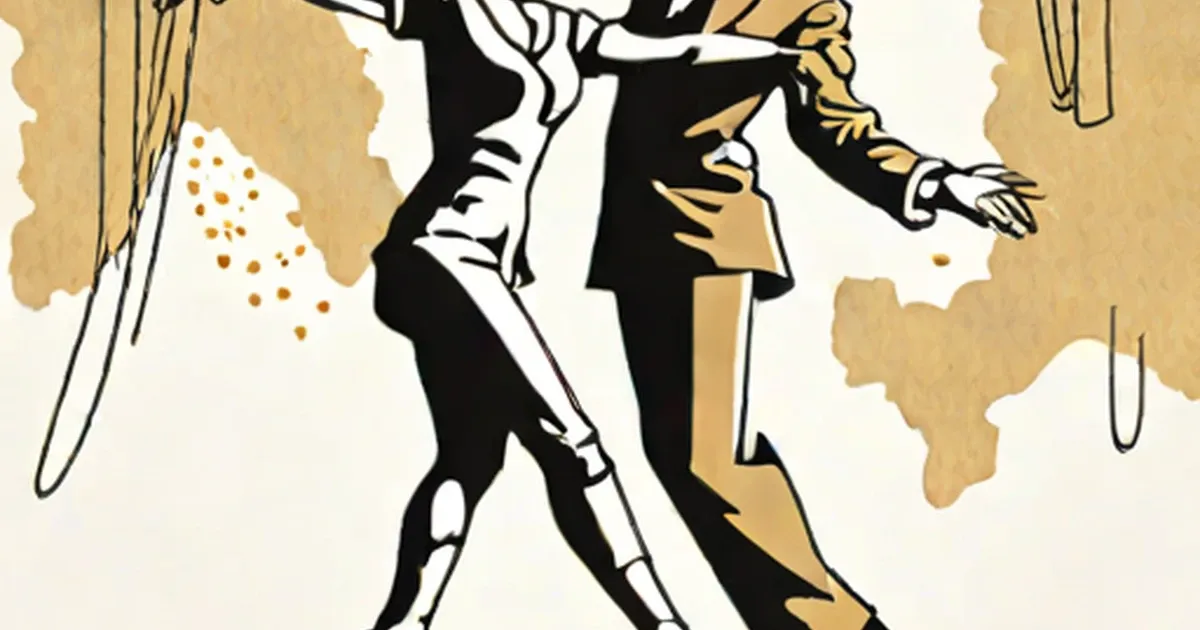
Samba is usually performed by couples, reflecting each other's steps. The rhythm is 2/4 at a time, or 2 beats to a bar of music. There are three steps to every bar of music, or three steps to two beats. The first step performed by women involves sliding of the right foot smoothly and placing the weight of the entire body on it. In the second step, the left foot is slided slowly and the body weight is shifted to it. In the third step, the right foot which has been raised is allowed to come back to the floor with the entire body weight placed on it. In men, the steps are similar but, they start with the left foot unlike women.

Capoeira
Capoeira is another important Afro-Brazilian dance, and believed to have evolved from martial arts. It was also created in Brazil by African slaves, mainly from Angola. However, there are lots of controversies regarding the origin of this dance. Some historians are of the opinion that it directly evolved from the African fighting style, while others think that it is a Brazilian dance having both Brazilian and African influences.

Some experts suggested that the word 'capoeira' was derived from the word 'capao', which is a Portuguese word for castrated rooster. The dancing style is also similar to a fight between two roosters. Kongo K. Kia Bunseki Fu-Kiau also suggested that capoeira could have got its name from the kikongo word 'kipura', that describes the movement of a rooster while fighting.

Though there are considerable differences of opinion regarding the origin of the dance and its name, it is an undeniable fact that the dance steps have close similarity with martial arts, as a lot of fighting movements like kicks, sweeps, punches and elbow strikes can be seen in this dance. The participants usually form a circle and then take turns in pairs in playing a musical instrument, or singing or performing fighting acts in the center.

Carimbo and Lambada
Carimbo is the name of both the dance and the large drums that accompany it. In Tupi language, it means the drum. Carimbo is a folk dance of the Para state in Brazil, in which African, Portuguese and European influence can be noticed. It is a sensual dance, where the woman tries to cover the man with her skirt. Sometimes, the woman throws her handkerchief on the floor, which her male partner has to retrieve by using his mouth.

With the influence of more modern rhythms, carimbo contributed to the development of another dance form 'Lambada'. In Portuguese, lambada means 'strong slap' or 'hit'. It may refer to the wave-like motion of a ship in Brazilian Portuguese language. The dance is also characterized by wave-like body movements of the dancers and became popular throughout the world in 1980s.

Lundu
Lundu, or Lundum is also a dance form brought by the African slaves, and it became very popular in Brazil during the seventeenth and early eighteenth centuries. The basic musical instruments involved are guitar, piano and drum. This dance also involves the use of handkerchief and castanets, an instrument consisting of a pair of hollow pieces of wood, or bone, and is held between the thumb and the fingers.

Forro
Forro, derived from the word forrobodo, means 'great party'. However, there is another theory that suggests that forro is the derivative of the English 'for all'. It is one of the most popular dances of Northeastern Brazil and can be danced to the rhythm of different music genres. The instruments used in this dance are accordion, zabumba and a metal triangle. A lot of variation can be observed in the dancing style of forro in different regions of Brazil. It is danced with partners and the participants move in proper synchronization, performing many complex steps.

Nowadays, Brazilian dances have received immense popularity throughout the world. Most of these dances have evolved through ages by embracing the African, Portuguese and European dancing traditions, and now they have become an indispensable part of Brazilian culture and tradition.

By Chandramita Bora
Published: 4/24/2009
 
Use the feedback form below to submit your comments.
Your Comments:
Your Name:
Use the form below to email this article to your friends.
Recipient Email Address:
 Separate multiple email addresses by ;
Your Name:
Your Email Address: