Groundwater Pollution
Groundwater pollution is caused due to natural, agricultural, industrial and other man-made sources. There are certain ways to minimize groundwater contamination, like proper drainage pipes, safe storage of chemicals, safe disposal of waste...
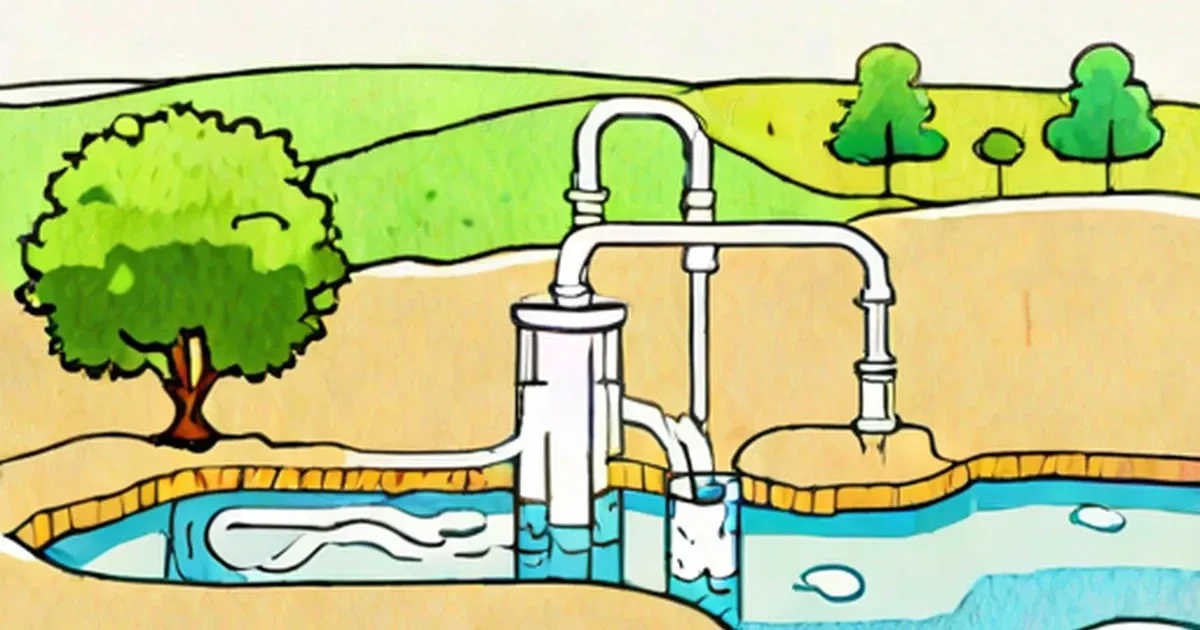
Groundwater refers to water collected under the Earth’s surface. The sources of groundwater are rain, snow, hail, sleet, etc. Water that falls on the Earth’s surface continues to travel downwards due to gravity, until a zone comes where it is saturated with water. At this depth, the spaces between the soil and rock particles are filled up with water. This particular zone is known as the saturated zone. The topmost portion of the saturated zone is referred to as water table. The level of water table changes depending upon the season, it is highest in spring and lowest in summer.
Groundwater is connected to surface water such as rivers, streams and lakes. In fact, there is continuous exchange of water between surface water and groundwater. Many of us are not aware of the fact that groundwater is one of the natural sources of water. We rely on groundwater for drinking and other household purposes. It is estimated that, more than half of the population of United States depend on groundwater for drinking. In some areas, groundwater also serves as the major source for irrigation of crops and for use in factories. However, one major concern is regarding pollution of groundwater. Like surface water pollution, groundwater is also susceptible to contamination from various natural and man-made sources.
Groundwater Pollution: Sources and Prevention Groundwater pollution is a change in the properties of groundwater due to contamination by microbes, chemicals, hazardous substances and other foreign particles. It is a major type of water pollution
. The sources of groundwater pollution are either natural (mineral deposits in rocks) or man-made. Natural sources are less harmful compared to hazardous chemicals generated by human activities. Any chemical present on the surface can travel underground and cause groundwater pollution. The seepage of the chemical depends on the chemical type, soil porosity and hydrology.
One of the major sources of groundwater pollution is industries. Manufacturing and other chemical industries require water for processing and cleaning purposes. These used water is recycled back to water sources without proper treatment, which in turn, results in groundwater pollution. It is also to be noted that solid industrial wastes that are dumped in certain areas also contribute to groundwater pollution. When rainwater seeps downwards, it dissolves some of these harmful substances and contaminates groundwater.
Another source of groundwater pollution is agriculture; the fertilizers, pesticides and other chemicals used in growing plants contaminate groundwater. Residential areas also generate pollutants (microorganisms and organic compounds) for groundwater contamination. Groundwater pollutant can be divided into point source and non-point source based on the nature of disposal. The former refers to contaminants originating from a particular source such as sewage pipe or tank; whereas non-point source is spread over large areas (for example, pesticides and fertilizers).
Groundwater pollution cannot be prevented completely. As there are varied sources, it is not always practical to prevent the contamination of groundwater. However, there is no doubt that individuals can contribute in many ways to reduce groundwater pollution. Some of the basic tips are proper disposal of waste, waterproof storage of household chemicals (paints, medicines, detergents) and agricultural chemicals to avoid leaching, etc. Proper installation of septic systems along with regular cleaning will reduce groundwater contamination.
It is very difficult and costly to treat contaminated groundwater. Hence, it is better to minimize the risk of groundwater pollution. Public awareness programs about the importance of groundwater and ways to minimize its contamination should be implemented.