Georgian Architecture
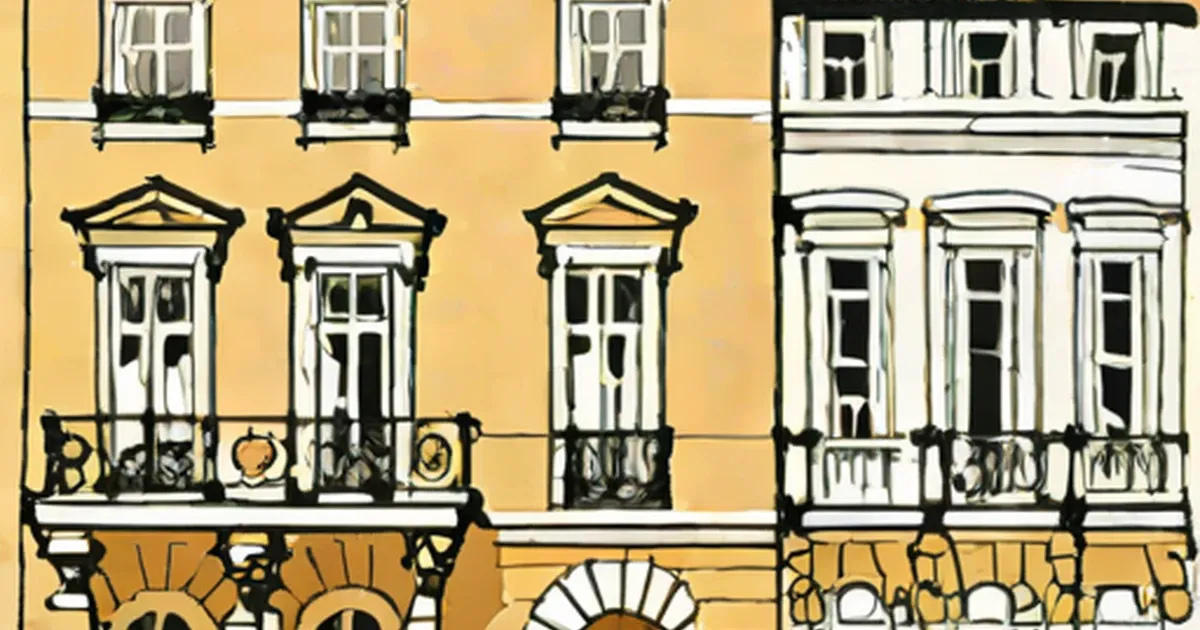
The classical Georgian architecture was a result of renaissance in Britain, and is known for its splendid buildings with beautiful proportions, light rooms and subtle understated style. The houses built in the Georgian era still stand erect, flaunting their beauty which is remarkable even centuries later.
Just the mention of Georgian architecture conjures up an image of a large Gothic style building with red bricks, commodious hall with exotic chandeliers hanging down the roof and windows carved out beautifully in the neoclassical style. But of course, it’s a lot more than what meets the eyes and a deeper look at the intricacies and complexities involved from laying of the very first brick in foundation of these buildings may leave us in awe.
The Georgian era which traces back its history from 1714 to 1830 was the time when most of the Georgian structures were made. The prime rulers of this era were George I, George II, George III and George IV and all of them had a very ostentatious taste for architecture. Before them, British architecture was dominated by great architects like Sir John Vanbrugh, James Gibbs and Thomas Archer who basically followed the Baroque style. Although Georgian architects planned to rebuild existing towns and cities, the scope was very limited. So when England prospered in the late 17 th and early 18 th century, new towns were formed, providing an opportunity for framing new structures of Georgian architecture. As these towns flourished, the architects used to construct at least one fine Georgian church in each town, with their classical facades, tall steeples, spacious altars and transepts, gleaming white exteriors and many tall windows.
The Georgian architecture was influenced by architectural styles from all around the world, including Chinoiserie, Pallandialism and Mughal rendering Britain’s growing presence as a global power. An amalgamation of all these styles augmented with the classical Gothic touch and a completely new Georgian approach resulted in what we see today as Georgian architecture. Collen Campbell, who was one of the leading architects of this style, openly challenged the architectures of very popular Cristopher Wren, calling them ‘foreign’ as they were dominated by the French style. He was the one who came up with the establishment of ‘National taste’ for English people and was followed by many famous architects like Robert Adams, Thomas Archer and Henry Holland, who proved to be cornerstones of Georgian architecture.
The basics of Georgian structures are charmed by the Palladian architecture named after the famous Venetian architect Andrea Palladio of the 16 th century. A normal Palladian house was considered to be a symbol of grace and was built on classical orders. Both the doorway and windows together are known as Palladian which exhibit novelty. These structures also consist of modillions which are basically projections under the eves. Similar to this, windows in the Georgian architecture were almost exclusively sash-windows, made of standardized panes of glass divided by thin, delicate wooden glazing bars. The whole structure was supposed to be an epitome of opulence and luxury. It was light and very spacious with large windows that showed off pale color schemes and plenty of woodwork. The pattern of windowing was the same everywhere, however their shapes and sizes were dependent on various factors. On the ground floor, despite the spacious halls, windows were kept short in order to provide stability to the overall structure. First floor windows were tall and elegantly expansive and added to grandeur of the building. Second floor windows were made shorter as compared to the first floor ones and the top floor windows were kept almost square.
Later on in the Georgian era, red bricks got replaced by yellow ones. Although stucco fascias, which made the structure look splendid, were still used as the basic norm, stone was more of the favored choice. Basic paint colors during the early phase of the period included burgundy and sage green which later on shifted to lighter colors like gray, dusky pink and white. “Bath” is still counted as the best example of Georgian architecture. It was built as a fashionable resort in which people could meet up for social gatherings and leisure time. Besides this, St. James Church, Whitehaven Castle, Harvard University and Theatre Royale are good illustrations of Georgian architecture.
There are different types of architecture all around the globe famous for their splendid beauty as well as unassailable strength. It’s a wonder how people with lesser technology as compared to today were able to come up with such masterpieces. Like their counterparts, the Georgian architects have certainly applied their skills and dexterity to come up with magnificent man-made structures which will remain on the face of earth for centuries to come.