First Aid for Children
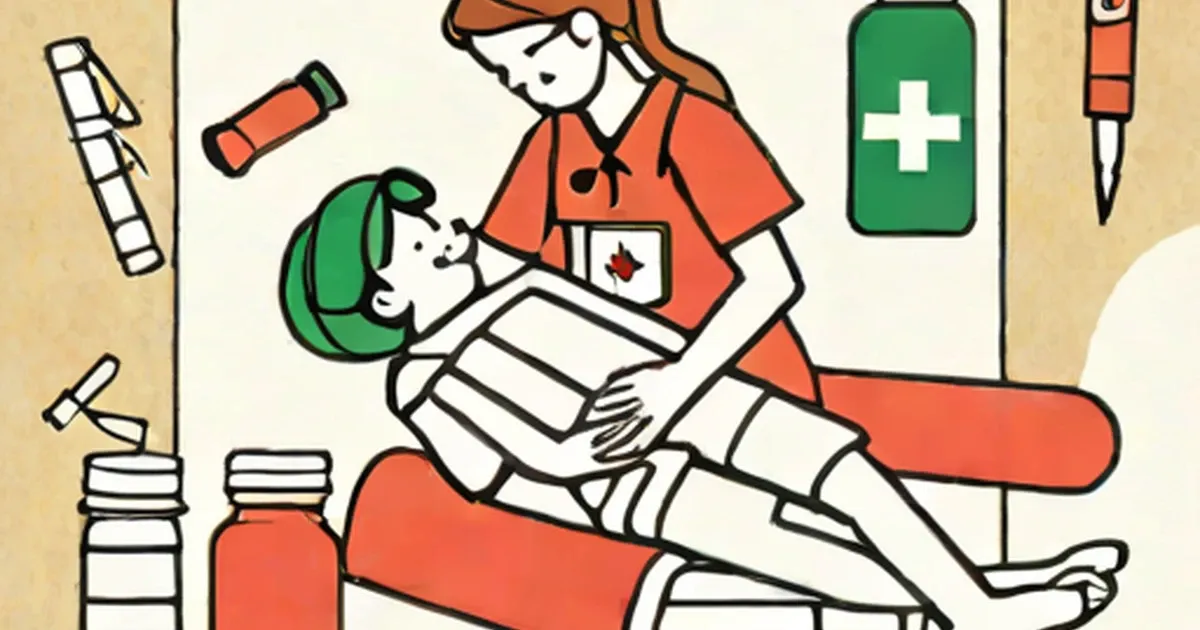
These days everyone including children should know how to administer first aid . Here’s an article on first aid for children.
The first medication that is given to an injured person in case of an accident is called first aid. First aid is therefore the first treatment given to an injured person. In case of severe injuries resulting from accidents, first aid ensures that the victim is given the basic treatment, to avoid loss of blood, etc. before advanced treatment can be given to him. The best bit about first aid is that you do not need to be a doctor or medical practitioner to do it. In fact, first aid is something that ideally everyone should be aware of. A lot of lives can be saved by performing the basic treatment on an injured person before a hospital ambulance comes to pick up the person. Hence it is important that everyone knows about first aid.
Children too can be taught about first aid and child safety. Although they will not be expected to perform first aid on elder people, they can surely treat their own injuries. Children keep getting injured while playing sports or simply running on the pavement. Not all parents can be home to treat the wounds and it is silly to trouble a doctor over slight matters like this. Hence the knowledge of first aid comes quite handy to children, so that they can take care of themselves. Here are some basic things you can teach in first aid for children.
Teaching First Aid For Children
Here are some first aid practices to teach your children.
Bandages: One of the simplest and most essential first aid for kids that they need very often is how to tie a bandage. Kids keep on falling and getting themselves hurt. So teach them how to tie a bandage to the wounded area. Firstly it is important to clean the area with water. Then, using a cotton swab, antiseptic should be applied. Applying an antiseptic is very important as bacteria
and other germs gain access to the body through the wound. So it is good to clean the wound first. In case you don’t have an antiseptic, use an anti-bacterial soap. If the wound is small, a band-aid will do, but if it is a big wound, you will need a gauze.
Insect Bites
: Another wound that children routinely get is insect bites. So while teaching first aid for children, this also should be included in the curriculum. In case of an insect bite, it is important to clean the bite with antiseptic and water. Again, insect bites leave the skin open, so an anti-bacterial is a must. Insects often function as vectors - they act as carriers of the germs of various diseases. Hence the use of soap is recommended. Apply ice to the wound for around 20 minutes. In case of spider bites, use antibiotic creams to avert the risk of infection.
Nosebleeds
: Nosebleeds are another common occurrence with children. Luckily treating nosebleeds is very simple and quite within the scope of children. In case of a nosebleed, make sure that you lean forward and pinch the bottom part of your nose. Do not lean backwards as the blood might enter your wind pipe through your nose, causing complications. Lean forward and pinch the nose till the bleeding stops. Typically, the bleeding will stop within 10 minutes as the blood will clot. Pinching the nose will stop the loss of blood.
Burns: There are often chances that children might come in contact with some hot substances and suffer minor burns
. So you can teach them how to deal with minor burns. The way is to cool the burn by holding the wounded part under a cold water stream. Then apply a pain relieving ointment on the burn.
Rashes
: Small children may have allergies to a lot of things and might develop rashes on contact. There are various creams available based on the type of rash such as calamine lotion and zinc oxide ointment.
These were the common first aid for children which you can teach them. The above mentioned safety measures for children are simple and are required quite frequently. These are some treatments which kids should ideally be well-acquainted with.