Facts About Ants
2 min read
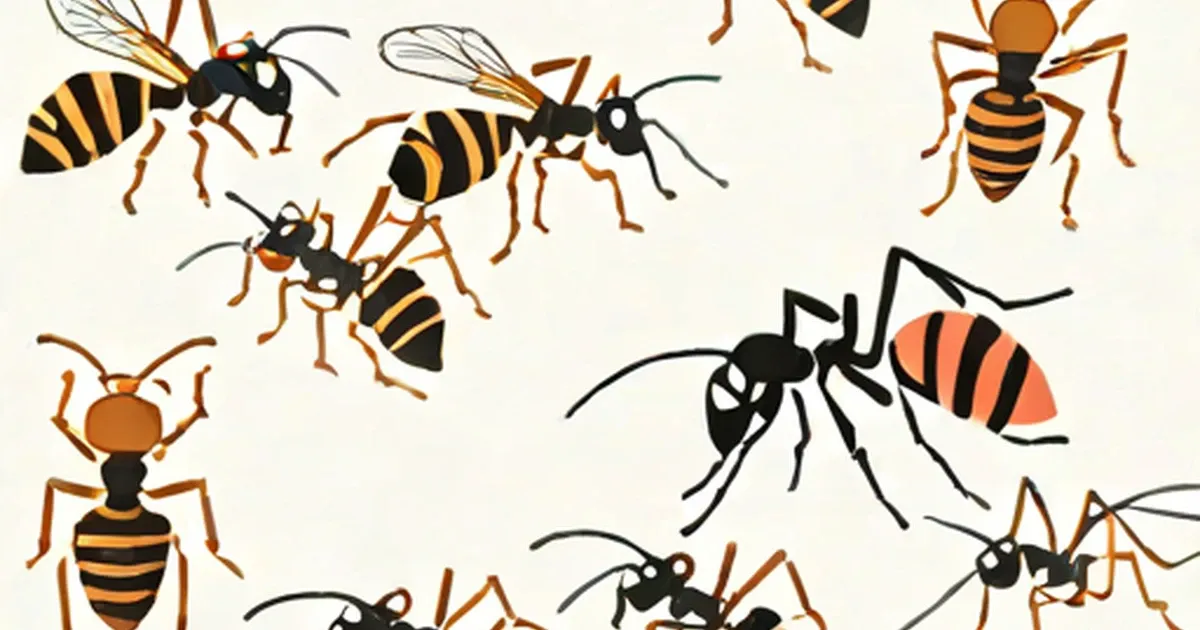
As ants are social insects, they are unable to live on their own and need to live in an organized community or colony. Here are some interesting facts about those little insects...
Ants belong to the order “Hymenoptera,” and are said to be closely related to sphecid wasps. It is believed that ants first appeared during the Cretaceous period and that they had evolved from the wasps that had come out during the Jurassic period. Scientists have also estimated that ants have been living on the earth for more than a 100 million years.
More Facts About Ants
- Ants are mostly found in hot climates.
- Over 10000 known species of ants exist in the world.
- The average life span of an ant is 45 to 60 days.
- The ant has very strong legs which help it to run very quickly.
- Ants appear in shades of green, red, brown, yellow, blue or purple.
- An ant is able to lift about 20 times its own body weight.
- Adult ants are unable to swallow solid food. They depend on the juice they are able to squeeze out from pieces of food.
- An ant uses its antenna for touch as well as smell.
- Ants normally range from 2 to 7 mm in length. The carpenter ant is an exception to the rule, as it can stretch to 2 cm, or even an inch.
- There is at least one queen in each ant colony.
- An ant has two stomachs, in one stomach it stores food for itself and in the other it stores food that is to be shared with other ants.
- An ant has the largest brain amongst insects. It is said that the processing power in an ant’s brain and a Macintosh II computer might be similar.
- Some ants are able to sleep seven hours a day.
- Ants are mostly omnivorous, that is, they eat other insects, seeds, oils and bread.
- Queen ants are provided with wings at birth, they lose these wings after they fly off to start new colonies.
- Black ants and Wood ants do not have a sting, instead they are able to squirt a spray of formic acid.
- A Tropical Leafcutter ant uses its sharp outer jaw to cut leaves and make them into pulp. The pulp is later used to make fungus gardens. These gardens are looked after and harvested for food.
- Worker ants are given the responsibility of taking the rubbish from the nest and putting it into the rubbish dump.
- When a worker ant finds a source of food, it leaves a trail of scent to attract other ants in the colony to it.
- The Slave-Maker ant (Polyergus Rufescens) is so named because it raids the nest of other ants and steals their pupae. Once the pupae hatch, they are made to work as slaves within the colony.
- Around 700,000 members can be found in the colony of the Army ants (Ecitron Burchelli).