Dingo - Australian Wild Dog
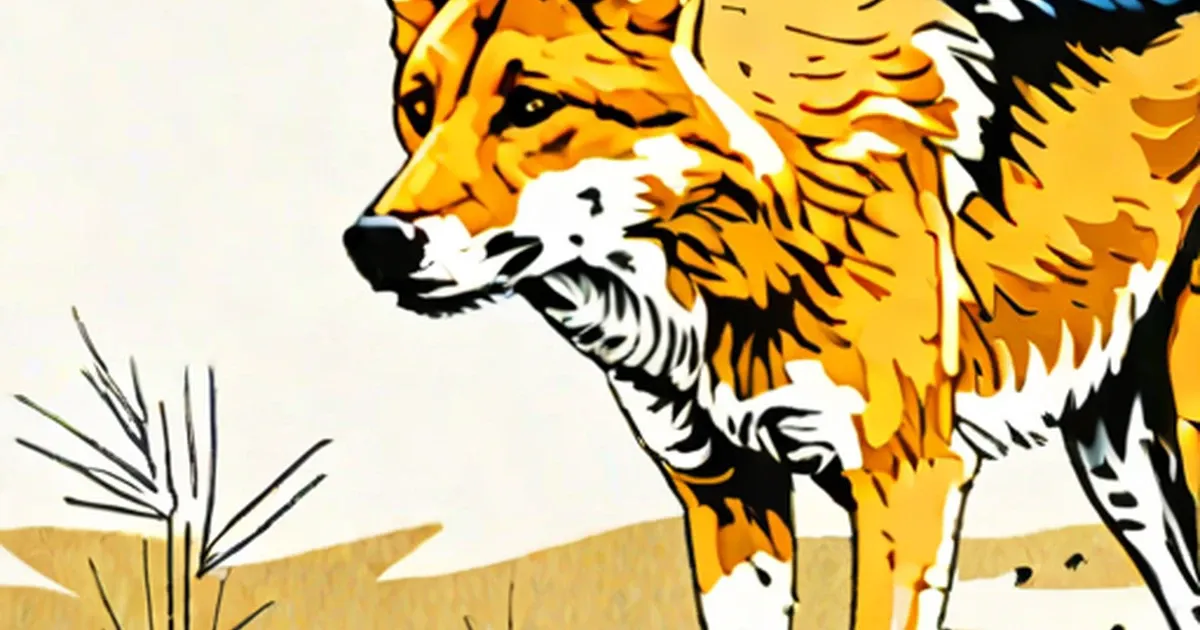
Dingo, a member of the Canidae family looks quite similar to a dog or a wolf, but has some fascinating traits which makes it stand out in the crowd.
Dingo is a carnivorous animal found in Australia and Southeast Asia. It has a striking resemblance with the common dogs and wolves. Its scientific name is Canis Lupus Dingo, but is quite often referred to as Dingo, Australian Wild Dog, Warrigal, Decker Dog or Australian Native Dog.
Although found in the wild now, it is believed that dingoes were initially a domesticated species which returned back to the wild. A study by researchers at the University of New South Wales along with their colleagues in Sweden and Britain, revealed that dingoes descended from domestic dogs from East Asia. There is a consensus among researchers that dingoes were transported from Asia to Australia, mostly by seafarers who traveled between both continents.
Dingoes do look like common dogs, but most of their features are sharper as compared to the domesticated counterparts. Standing 19 to 23 inches tall, a dingo weighs about 50 to 55 pounds or 23 to 32 kilograms. Australian dingoes are larger than their Asian counterparts. This beautiful animal sports a fur coat that is yellowish orange in color, a bushy tail, and has a patch of white fur on each of its legs. But unlike other breeds of the canine family, they do not have claws. Dingoes don’t bark; they use ‘howling’ as an effective way to attract other members of the group or to warn of intruders.
Breeding takes place once in a year and autumn is the breeding season. They choose a mate for a lifetime and often mourn to death in case of loss of their partner. Male species get sexually active between the age of 1 to 3 years, while female species become sexually active around the age of 2 years. The gestation period for this mammal is about 60 to 69 days, and on an average they give birth to 5 to 6 puppies at a time. These puppies leave the pack at a very early age of 3 to 6 months and lead an independent life, hunting small animals and gradually growing to full-fledged hunters.
Being a carnivorous animal, they mostly feast on animals of smaller sizes. Dingoes from the Northern Wetlands of Australia hunt mainly for Magpie geese and Dusky rats, while in Central Australia, Red kangaroo, European rabbit and lizards are a prized catch. In Southeast Asia, dingoes mainly feed on rats and lizards. Lately, it has been observed that the distance between wild and human habitation is slowly decreasing, which has also led to dingoes attacking human livestock.
The technique of hunting used by Australian wild dogs is simple - chase to exhaustion. Dingoes can hunt alone, but this restricts their opportunities to hunt down animals bigger in size. They hunt in groups, which helps them to take down animals much bigger like a kangaroo or a water buffalo. A study by biomechanics at the University of New South Wales, showed that although dingoes have weaker bites, their skull is designed to resist great stress, and this helps them pull down larger preys. They cannot swim; they are only able to wade through water, and this acts as a drawback for them when it comes to hunting.
Dingoes are not just predators, sometimes they end up to find themselves on the opposite side as a prey. Wedge-tailed Eagles and saltwater crocodiles are the main predators for a dingo. The young pups also have a potential threat to their lives from snakes, as they stay mainly in burrows of trees.
Although dingoes were a domesticated species earlier, their relationship with humans has been strained over a period of time. This can be mainly attributed to the difficult situation people face while inculcating discipline into these creatures, who are basically independent in nature. Lately, there have been cases where dingoes have attacked human beings, and this has just added to the woes of the already strained relationship between the two. The first such case came to light in August 1980, when a 10 week old girl, Azaria Chamberlain was attacked by a wild dog on Ayers Rocks. Until 2001 more than 200 cases of dingoes biting people were recorded throughout Australia.
Dingoes also play an important role in maintaining the ecological balance. A study at James Cook University revealed that re-introducing dingoes would curb the growth of pests such as Cane toads and Rufous rats, and lessen the pressure on the native biodiversity.
Strangely the biggest threat to the survival of pure dingoes is cross-breeding with common dogs. Around 80% of the species found along the eastern seaboards of Australia are supposed to be dog-dingo crossbreeds. This increasing number has led to Australian authorities adopting the idea of culling and protecting purebreds. In the conservation status list, dingoes currently hold the status of being vulnerable to extinction. So it’s time the authorities understood the importance of the issue and increased efforts towards this wonderful creature from becoming extinct.