Different Types of Whales
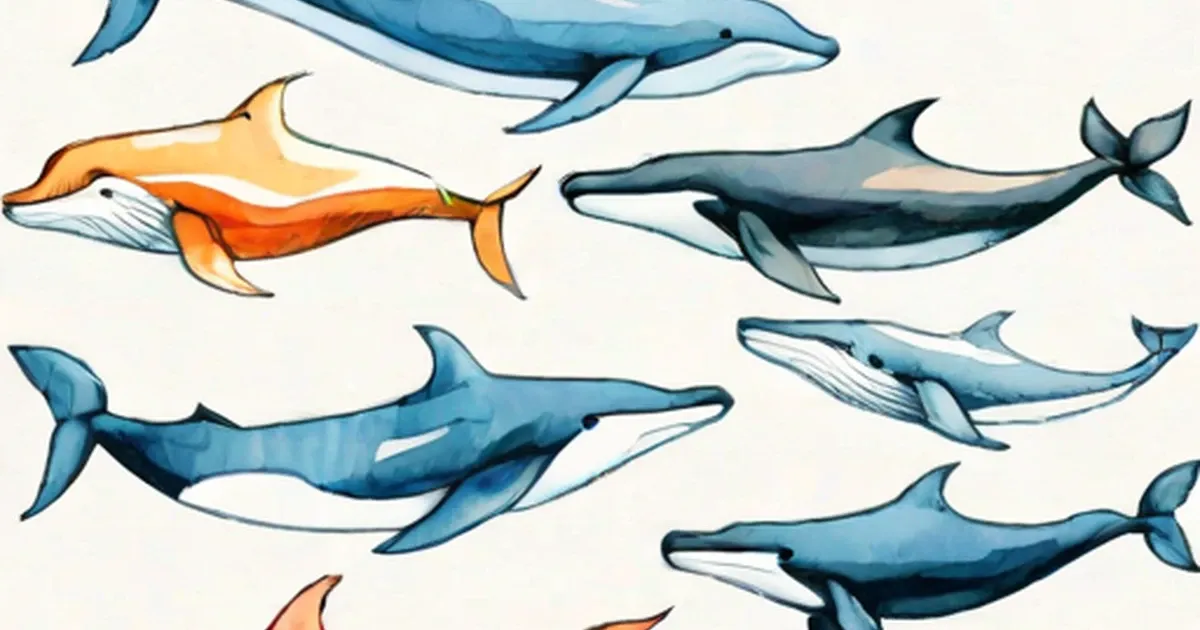
Since time immemorial, whales have always fascinated us. Read on, to know more about these gigantic creatures of the sea...
The word whale, brings to my mind the images of ‘Moby Dick’, the great white gigantic, killer whale, prowling the southern seawaters. It also brings to mind, ‘Willy’, the nice, adorable, huge Orca whale, of ‘Free Willy’.
Whales
are elusive and difficult to see, and that’s what makes them most fascinating.
Whales are found in all the oceans of the world. They are most numerous in the Arctic and the Antarctica, as they prefer cooler and deeper waters. At times, they have also been spotted along the eastern coast of the U.S. There have also been rare sightings in warm waters in Hawaii, Bahamas and The Gulf of Mexico. One even swam some 110 mi up the Columbia River, just to eat fish. Their seasonal movement is mostly influenced by the migration of fish, other aquatic prey and pack ice.
Whales are the largest predator known; they eat nearly 3 to 4 percent of their body weight. While every aquatic life is a prey, they are known to eat polar bears, reptiles and even a moose. They hunt as a team in pods for food. Resident pods eat a wide variety of fishes and rarely seek out marine mammals, while transient pods do exactly the opposite.
Whales are mammals and not a fish, classified under Cetaceans; split in two groups depending on whether they have teeth or not viz. Odontoceti and Mysticeti. Like mammals they breath air and to do so, they return to the surface at regular intervals. They give birth to their young ones, who stay with the mother for over a year and feed on milk produced by the mother. They are also warm blooded and have a skeleton structure, though modified to suit the aquatic life, similar to us. There are different types of whales, some extinct and others endangered.
Blue Whale
It is the largest as well as the loudest animal to live on earth. Adult female blue whales are larger than adult males in size. They can grow up to 105 feet long weighing up to 200 tons. Despite their gigantic size, they are shy and placid. They are generally found to be swimming in small groups or pairs. The summers are spent in polar waters and migrate towards the Equator during winters. Their diet mainly composes of nearly 4 tons of krill, tiny shrimp like animals, in a day. They emit a series of sounds to communicate with each other up to 1,000 miles away. Scientists believe they also use these vocalizations to sonar-navigate the ocean depths. They look true blue underwater, but on the surface their coloring is more a mottled blue-grey.
Orca Whales
One of the most powerful predators, also commonly known as ‘killer whales’ They grow to be anywhere between 82 to 105 feet and can weigh up to 200 tons. Their average lifespan in the wild is 80 to 90 years. Most of the times, they hunt together in pods of 40. They often frequent coastal waters, but can also be found in regions close to the Equator. They prey on marine mammals as well fish. They can even grab seals and polar bears right off the ice, using their four inches long teeth. They use a variety of sounds to communicate and each pod is known to have its own typical sound. They have distinctive black-and-white coloring and perform in many aquarium shows.
Humpback Whales
Known for their magical songs, which they sing to communicate with others and to attract potential mates is quite complex and can continue for hours on end. They weigh up to 40 tons and grow anywhere between 48 to 62 feet.
Humpback whales
migrate annually for feeding as well as breeding. They are omnivore in their dietary habits, feeding on fish, plankton, and tiny shrimp-like krill. They are powerful swimmers; using their tail fin called a fluke to propel and even leap out of water. They are affectionate in their gestures, with mother and calves often swimming close and touching each other with their fins.
Beluga Whales
They are also called as white whales; though they are born gray or brown, they turn white upon reaching sexual maturity. Their color makes them easily distinguishable among other whales. They are found in the Arctic Ocean’s coastal waters and in subarctic waters. Their migration depends on the environmental conditions. They range from 13 to 20 feet in length and weigh around 2200 pounds. They are social mammals, living and hunting together in small groups. They mostly hunt for schooling fishes, which are found in abundance in the coastal area. They have two unusual characteristics; first they never chew their food; they swallow it whole and second, have flexible necks, that enables them to turn its head in all directions.
Fin Whales
It’s the second largest species of whale, commonly also known as the, ‘greyhound of the sea’, because of its speed. They are found world over, migrating in the summer to breed. They travel in small pods, even solitary at times. They are known to dive, as deep as 800 feet, when hunting for squids or fishes. They grow to be nearly 90 feet long and can weigh up to 70 tons. Unlike other whales, they may not need any feed whole of winter, as they rely on their accumulated blubber for energy.
Gray Whales
They are often referred as great migrates, they can swim 12,430 miles round-trip from the Alaskan waters to the Mexican coast. They are the most primitive of all whales, mottled gray and covered with abundant abrasions, scars and clusters of parasitic barnacles on their heads and backs. They are 40 to 50 feet in length and can weigh up to 40 tons. They are omnivore in nature and generally feed on amphipod crustaceans. They are fiercely protective of their Young ones. Scammon’s Lagoon, off Baja California, is famous for spotting the gray whale.
Sperm Whales
The whale was named after a milky white waxy substance, believed to be sperm, found in its own head. It has the largest brain, found in any animal in the world. They can grow up to 59 feet and weigh around 35 to 45 tons. It feeds on several species, but has a taste for the giant squid, its mortal enemy.
Whale hunting
is a reality, endangering many of the whale species. There are many organizations working towards the protection of these gigantic mammals, however, they still remain vulnerable after decades of protection. The WWF Cetaceans Action Plan aims to ensure that by 2012, a significant reduction of threats to cetacean populations will be achieved. It would be an empty ocean, without these fascinating mammals!