Desert Insects
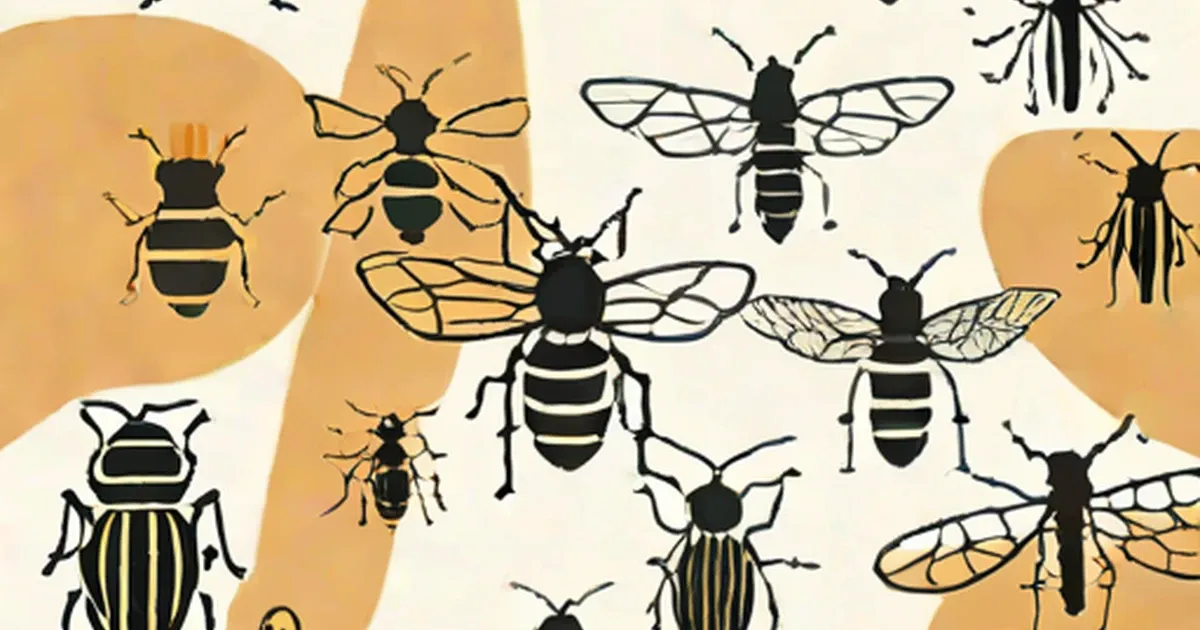
The silent surroundings of the desert may give us a feeling that no living thing exists, but there are various kinds of insects living in the desert that we are not aware of.
Desert insects are well-evolved and suited for handling the rough conditions in the deserts. Their evolution depends upon various factors such as temperature, sand, availability of water, etc. They have adapted to every ecological condition that we can find in a desert. Some insects blend so well with the surroundings that they are hardly visible. They make their homes in plants, sand, soil, rocks, etc. There are different species of ants, bees, beetles, and spiders
in the desert, which vary in terms of shape, size, color, habitat, and diet. They also have different kinds of life cycles and behaviors.
Desert Insects: Body Structure and Breathing Mechanism
Every insect has a head, a thorax, and an abdomen. The head includes eyes, antenna, and mouth. The thorax, which is also known as the middle body segment includes wings and six jointed legs. The abdomen part includes the heart, digestive tract, and reproductive organs. The outer covering of a desert insect is hard and made up of a tough waterproof substance known as the ‘chitin’. Some insects also have a semi-transparent outer covering, which is made in such a way that the moisture in the body is trapped inside, and the insects lose less moisture by evaporation, as compared to other animals. When a desert insect breathes, it does not exhale continuously like human beings do. It waits until the level of carbon dioxide is enough in its body, before exhaling once. This results in minimum water loss. Most desert insects do not drink water at all, as they get the needed moisture from the food that they eat. Due to this, and the fact that they experience minimum water loss, they can survive easily in the harsh desert conditions.
Desert Insects: Life Cycle
Some desert insects have a specific life cycle. They lay eggs underground, which hatch when there are rains in the region. In the rainy season, there are many short-lived plants on which the insects feed. After the insects hatch, they come out of the ground, grow up, and then lay eggs under the ground. Likewise, the eggs that are laid wait for the next rains and follow the same cycle. In such a way, some desert insects escape the hard, desert life and come out only when there is rain and food.
Types of Desert Insects Harvester Ants: During daylight hours, these ants search the desert for vegetation and plant seeds, and carry it along back to their nest. These ants live in an anthill, a large pile of excavated gravel. They discard the waste from their food, such as seed coverings, around their entrance. The normal growth size of these ants is about half-inch in length. They are capable of delivering a bite or a sting which can be very painful.
Horse Lubber Grasshoppers: These grasshoppers
are commonly seen in late summer. They take little effort to hide, unlike their grasshopper cousins. Their normal growth size is 3 inches or more. The two, strong, back legs of such grasshoppers have a row of long, sharp spines that can give severe scratches.
Blister Beetles
: This beetle is named after its ability to exude a liquid from its joints that causes severe blisters on the skin. It is mostly colorful and innocent looking, but the cleverest among all insects. A typical blister beetle can have an elongated and pliable body. The normal growth size ranges from half-inch to 1½ inches in length. It consists of ‘Cantharidin’, which is a toxic chemical compound and can poison domestic animals.
Walking Sticks
: They are one of the most fascinating insects found in the desert. There are many species of walking sticks. They are slow-moving and strange-looking insects that feed on plants. They are well-known for their camouflage ability and become almost invisible to predators. They are also known as witch’s horse, devil’s horse, devil’s darning needle, and specter. Their sex ratio is very unbalanced, only one in 1,000 walking sticks is a male. Their size can vary from half-inch to 13 inches. Their color is usually brown, green, and gray. They remain motionless, especially during the day.
Black Widow Spider
: It is considered to be the most venomous spider in North America. Its venom is 15 times more poisonous than that of a Prairie rattlesnake. Only the female is harmful to humans. The female, at times, kill and eat the male after mating. They live in rocks, plants, debris or ledges. Their normal growth size is 1 inch to 1½ inches. Their life span can be up to three years.
Scorpions: They are eight-legged invertebrates with an extended body and an erectile tail that ends with the ‘telson’ (the sting). There are approximately 1,300 known species of scorpions in the world. The normal length of scorpions is between 2 to 3 inches. The longest scorpion in the world is the African Scorpion that can grow up to eight inches. There is a greater diversity (about 60 species) of scorpions
in California and Arizona. They hide in logs, cracks, rocks, and burrows.
There are many more desert insects having differences in all aspects that are yet to be discovered. While crossing a desert on foot, one would surely come across many different desert insects, some which may not have been ever seen before.