Desert Animals List
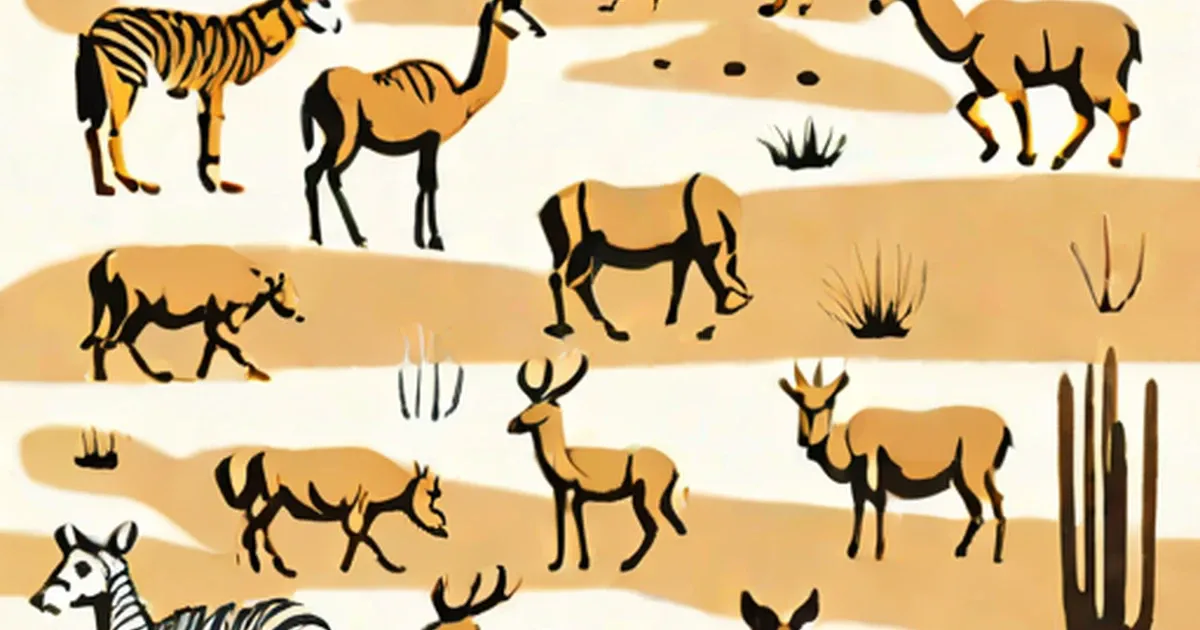
The various desert animals and plants are adapted to survive adverse climatic conditions. The desert animal list given below, explains the habitats, diet and anatomy of various animals found in the deserts worldwide.
There is great diversity in the animals found on earth. Animals and plants survive in various climatic conditions including the
deserts
(hot and cold), jungles, oceans, etc. The different desert animals and plants found in the world have adapted themselves to survive in harsh climatic conditions. The desert biome poses adverse conditions for living beings to survive and it requires adaptations on the part of these desert animals and plants to fulfill their basic needs. It would be interesting to know the desert animals facts and understand their different characteristics.
Desert Biome: Animals and Plants
This biome is characterized by various desert animals and plants requiring minimum amount of moisture. The annual rainfall received in the deserts is maximum 10 inches and the evapotranspiration that takes place in these areas is greater than the total rainfall received. The soil in such areas is saline or alkaline in nature while the topography is characterized by sand dunes and rocks. Shrublands, grasslands and woodlands are observed in the arid regions. The plants found in such areas include the cactus, date, oleander, etc. The Sahara desert plants grow mostly in regions along the Nile river and the highlands. The northern region of the Sahara that is along the Mediterranean sea, has olive plants in large numbers. The highlands of the Sahara have plant growth in the form of doum palms, oleanders, date palms, etc.
Xerocoles
The xerocoles are the animals that have adapted themselves to live in deserts. These animals could be classified into drought resistors and drought evaders. The important Arizona desert animals include the Diamondback rattlesnake, Mountain lion, The American Golden Eagle, The Great Horned Owl and the Mexican Gray Wolf. In order to conserve the water present in their body, xerocoles avoid the loss of moisture during excretion and evaporation.
Addax Antelope
It is one of the Sahara desert animals found in its isolated pockets. The addax weighs between 60-120 kg and is 1 m tall. The grass called Astridia is the staple food of these creatures. However, they also feed on the leaves, grasses and bushes found in the desert. Every herd of the addax consists of around 20-25 animals.
African Porcupine The African or crested porcupine is mainly found in sub-Saharan Africa, North Africa, Sicily and Italy. The body length of this porcupine could range from 600 and 900 mm. The distinguishing characteristic of this creature is that its body is covered with brown or black colored bristles. It is a terrestrial animal which can also swim however, it doesn’t climb trees frequently. Although the porcupine feeds on small vertebrates, insects and carrion, it is mainly a herbivorous animal which feeds on roots, crops, bulbs, etc. Read more on porcupines
.
Arabian Horse
The Arabian horse is a large animal with a slender body and possesses great stamina and intelligence. These are herbivorous animals with a lifespan of 20-25 years. The weight ranges between 800 - 1000 pounds and the height is 1.5m. Hoofed feet, long legs, flowing mane are some of the distinguishing characteristics of the Arabian horse.
Bats
The bats are the only mammals able to attain true flight. They live in almost all the regions of the world excluding the extreme climates of the polar regions. The lifespan of bats ranges from 4 to 32 years. Their weight could be anything between a half ounce to 3.3 pounds. More on Bats. The description of different types of bats is given below.
- Big Free-tailed Bat: These bats are found in the Chihuahuan and southern Sonoran deserts. The big free-tailed bats are also known as bulldogs or mastiff bats since, their face resembles that of dogs. This bat comprises around 90 species of the Molossidae family.
- Brazilian Free-tailed Bat: It is found in almost all the 4 deserts of the US. The 100 million population of these bats makes them the most populous mammals in the United States.
- Cave Myotis: The Cave Myotis bat is seen in the Chihuahuan and Sonoran deserts.
- California Leaf-nosed Bat: These bats inhabit the Mojave and Sonoran deserts.
- Mexican Free-Tailed Bat: The Mexican Free-Tailed Bat is a sub-species of the Brazilian Free-Tailed Bat and is found in the Chihuahuan desert.
- Spotted Bat: It is one of the largest North American bat and is found in all the 4 deserts of the US. The bat is also known as Death’s Head bat.
- Vampire Bats: There are 3 species of Vampire bats and they feed on warm-blooded animals by making sharp incisions on the bodies of their prey. The 3 species of these bats are the White-winged (Diaemus youngi), Common (Desmodus rotundus) and the Hairy-legged (Diphylla ecaudata).
Bighorn Sheep The bighorn sheep which is found in the deserts of North America has the scientific name Ovis canadensis nelsoni. This creature is found in the region between Nevada, California, south Mexico and west Texas. The bighorn sheep has a muscular body, pointed ears and a narrow muzzle. These are gregarious animals and generally found in groups of 100. They eat a variety of desert plants and consumes sedges, forbs, grasses, etc. Read more on facts about desert bighorn sheep
.
Bilby The Bilby which is also known as Rabbit-Eared Bandicoot is found in the deserts of Australia. This burrowing animal is nocturnal in nature and has strong claws which are used for excavating long and complex burrows. The bilby feeds on mice, lizards, worms, snails, seeds, fruits and some other plants. It has a poor vision however, the senses of smell and hearing are sharp. Feral cats and foxes
are the predators of the bilby.
Cape Hare
The cape or brown hare is found throughout the continent of Africa and has spread to Australia, Middle East, Asia and Europe. This nocturnal and herbivorous animal feeds on shrubs and grasses.
Chuckwallas
These are large lizard species found in the Mojave desert (Nevada, California, Arizona and Utah) of North America. The chuckwallas could be as long as 16 inches and their weight around 2 pounds. These herbivorous creatures feed on brittle bush, flowers, leaves, etc. More on Chuckwallas.
Civet
It is an arboreal animal found in Africa and Asia. The body length of civets is between 17-28 inches and the weight is around 5 pounds. It has a cat-like appearance and the muzzle is pointed and extended.
Collared Peccary
These pig-like mammals inhabit different regions including deserts, chapparels, dry woodlands of Mexico and southwestern USA. The body length of collared peccary is 3 feet while the shoulder height is around 22 inches. The collared peccary is a herbivorous animal and feeds on grass shoots, plant bulbs, nuts, fruits, roots, mushrooms, berries, grubs, etc.
Coyotes These carnivorous animals are mostly found in the deserts of North America. The coyotes
have brown, black, gray or cream colored skin coats and their body weight is between 20-50 pounds.
Desert Elephant The desert elephants inhabit the Damaraland and Kaokoland regions of the northwestern Namibia and are found near the ephemeral riverbeds. These elephants
are adapted to the desert conditions and travel regularly in search of waterholes that are scattered across the desert. They feed on shoots, leaves, flowers, barks, tubers, bulbs, roots, etc. Their size is slightly smaller than normal African elephants. A desert elephant is the best example of adaptations in desert animals. Read more on African bush elephants and Asian elephants.
Desert Iguana
It is found in the Mojave and Sonoran deserts of northwestern Mexico and southwestern United States. The desert iguana grows 16 inches in length and has a gray-tan color with a reticulated pattern that is light brown. These are herbivorous animals which feed on fruits, buds and leaves of various annual and perennial plants. More on Desert Iguana.
Desert Tortoise The desert tortoise is found in the Sonoran and Mojave deserts of the USA and Mexico. These are 4-6 inches in height and grow around 10-14 inches in length. The shells have a greenish-tan color with a dome-shaped structure. It has claw-like scales and heavy front legs which are used for digging. Diet of the desert tortoise includes fruits, herbs, wildflowers and new growths of cacti. Read more on desert tortoise: food and habitat
.
Dingo It is a wild dog found in the dry plains of Australia. These hunting dogs are medium in size and have a yellowish-tan fur. The dingo has large ears and a sharp sense of smell. They are nocturnal in nature and feed on lizards, rabbits, kangaroos, rats
, birds and farm animals.
Donkeys
These are hoofed mammals which inhabit desert regions and grasslands. These nomadic animals are herbivorous in nature and feed on shrubs, grasses and other plants available in the deserts.
Dromedary
The dromedary which is also known as the Arabian camel is found in the middle east, the northern regions of Africa and also in the Thar desert which falls on the border between India and Pakistan. These camels possess a hump which stores fats and helps them survive without water and food for 3-4 days. They have strong limbs, padded feet and leathery pads on their chest and knees. Their specialized nostrils protect them from the sandstorms in deserts. The dromedary camels are 7 feet tall and weigh around 1600 pounds. These are herbivorous and feed on grass, dates, oats and wheat.
Eagle (Bald) The bald eagle
which is native to North America is diurnal in nature. White feathers are present on the tail head and wing tips while rest of the body is covered with brown feathers. Snakes, small mammals and other birds form the diet of these eagles.
Egyptian Vulture The Egyptian vulture is 85 cm in length and their wing span is 1.7 m. These vultures
are found in northern Africa, southern Europe and Asia. They feed on the carcasses of dead animals and also prey on small mammals.
Fan-tailed Raven
The fan-tailed raven is a member of the crow family and is native to the Arabian peninsula and Eastern Africa. It is 47 cm in length, has a short tail and thick bill. The raven obtains its food from scrapes left by humans, grains found in animal dung, carrion, etc. It also feeds on invertebrates and a variety of insects.
Fennec Fox
These foxes are found in the northern part of Africa and the Sahara. The Fennec fox is a nocturnal animal and lives in groups of 10. Large ears which is the distinguishing characteristic of a Fennec fox, helps it in losing excess heat. The body length is around 14-17 inches and the weight ranges between 2-3.5 pounds. The fennec fox feeds on desert animals and plants including rodents, insects, birds, snails, berries, fruits and plant material.
Flamingo
These birds inhabit warm and tropical areas including the deserts lakes of Africa. The flamingos have long necks & legs and webbed feet. They have orange-yellow eyes and a large bill used for filter-feeding on crustaceans, insects and plants like algae and diatoms. The water that is consumed by flamingos is filtered for nutrients by a comb-like organ present in the tongue.
Gerbil This animal from the rodent family is found in sandy areas of the Middle East, Africa and Asia. The body length of gerbils ranges between 3-7 inches, excluding the 3-9 inch tail. Their skin color could be gray, white or light brown. They have a sharp sense of hearing and teeth that grow throughout their life. The gerbils are omnivorous and feed on seeds, grains, fruits, flowers, roots, grasses, desert insects
and worms.
Gila Monster
The Gila Monster is a venomous lizard found in the Sonoran, Mojave and Chihuahuan deserts. This lizard weighs 3 pounds and is 18-22 inches in length. It is a carnivorous animal and feeds on frogs, lizards, birds and their eggs.
Great Indian Bustard
It is a land dwelling bird with long legs, similar to those of the ostrich. It is mainly found in the Indian states of Rajasthan, Madhya Pradesh, Maharashtra and Karnataka. The average height of the male and female is 48 inches and 36 inches respectively. The omnivorous diet of the bustard includes small shrubs, grasses, rats, insects, groundnuts, millets, grams, etc.
Hedgehog These are small animals with hair modified into spiky spines. This nocturnal animal lives in a wide range of climatic zones including deserts, plains and forests. It has a soft underbelly with white hair and the length of the body is 6 to 14 inches. They are primarily insectivorous however, feed on a wide range of foods. Their food includes bees, beetles, wasps, snails, lizards, mice, birds, snakes
, dead meat and plants.
Hyena
Most of the species of hyenas are found in the sub-Saharan deserts, bushlands and the Savannahs. The hyenas are characterized by a bear-like gait and their front legs are longer than the hind ones. These creatures are known for both scavenging and hunting. They hunt in packs and the ungulates from small to medium size form their primary diet.
Ibex
It is a wild goat found in East Africa, North Africa and Eurasia. The goat weighs between 90 and 120 kg while the height is 27-43 inches.
Jerboa
The jerboas are rodents found in the drylands of Asia and Africa. The notable features of jerboas are the large eyes, short front legs and long hind legs. The body length ranges between 2-6 inches and the skin fur has a tan color. The jerboas feed on seeds and insects.
Kangaroo Rat
These are nocturnal animals which inhabit the western region of North America. Their strong hind legs prove to be useful in digging burrows and for the purpose of hopping. The body length of kangaroo rats is between 9-16 inches. Seeds form the primary diet of kangaroo rats and the moisture is obtained from the food they consume.
Lappet-faced Vulture
The lappet-faced vulture is an endangered species of vultures belonging to the genus Torgos. It is found in the north-west of Saudi Arabia, Negev desert of southern Israel and the Sinai peninsula in Egypt. The body length of these vultures range from 95-115 cm while the wing-span is 2.5-3 m. The vulture obtains its food by scavenging the carcasses of animals.
Lizards
The lizards form a large group of reptiles and consist of 5000 species. The presence of external limbs and ears make them different from snakes.
Llama These are desert animals similar to the camel
and are raised to obtain wool and meat. Their feet are two-toed, toenails are present on the top and the height is 3-4 feet. The lifespan of llamas ranges from 15-28 years. The llamas are herbivorous and ruminate their food. Their diet mostly includes herbs and grasses.
Marsupial Moles
These are burrowing animals found in the deserts of Western Australia. The marsupial moles are blind since their eyes are in the form of vestigial lenses. They are 12-16 cm in length and weigh around 40-60 grams. These insectivorous creatures primarily feed on cossid caterpillars and beetle larvae. The short limbs and reduced digits help them in soil excavation.
Meerkat
The meerkats are burrowing animals and one of the different types of mongoose. These animals inhabit the Kalahari desert of southern Africa. The body length of meerkats is between 10-14 inches and the weight is around 2 pounds. They feed on insects and the larvae obtained by scratching or digging the ground.
Nine-Banded Armadillo
The Nine-Banded armadillo lives in a wide range of climatic zones including deserts and semi/arid regions. Being an omnivore, the nine-banded armadillo feeds on fruits, ants, termites, beetles, worms, berries and vegetables. The body of this animal is covered in a bony and platy protective shell and possesses white hair on the stomach. It has pointed ears and snout while its eyes are small. The body color is brownish tan while the length is 15-23 inches. The body of the nine-banded armadillo is around 10-22 pounds.
Onager
It is a grazing animal from the Equidae family which is found in Iran, Syria, Pakistan, Israel and Tibet. The onager which is also known as the Asian Wild Ass is 2.1 m tall and weighs around 290 kg.
Oryx
The oryx is actually a genus of antelope which has 3-4 species. These are native to Africa and the Arabian peninsula. It became extinct in the Arabian peninsula in 1972, after which it was reintroduced in countries like Bahrain, Qatar, Jordan, Israel and Saudi Arabia. These animals live in herds and have the ability to survive for a long time without water.
Pack Rat It is found primarily in the deserts of northern Mexico and western USA. These rats are known for building specialized nests called ‘middens’ which make use of the cactus
plant. The cactus plays an important role in the desert food chain. The pack rats search for food and the material required for their nest at night.
Penguin
The penguins are found in the cold desert of Antarctica which lies in the southern hemisphere of the earth. The various fishes found in the sea form their main diet. These creatures weigh around 35 kg and their average height is about 1.1 m. More on Penguins.
Peregrine Falcon
It is the fastest bird on earth and flies with a maximum speed of 90 mph. The peregrine falcon is carnivorous and preys on pigeons, sea birds, waders, etc. It is found in the mountainous regions of North America.
Peruvian Fox
The Peruvian fox which is also known as the Sechuran fox is found in the Sechuran desert which is located in the region between southwestern Ecuador and northwestern Peru. The Peruvian fox weighs around 25 kg and is 60 cm in length, excluding its 25 cm tail. This animal with gray fur has small teeth and feeds on dry plants and insects.
Phrynosoma Platyrhinos
The Phrynosoma platyrhinos is native to North America and is found in southwestern Idaho, Oregon and northwestern Mexico. The desert horned lizard which is also known by the names ‘horny toads’ and ‘horned toads’ is 3-5 inches in length and is characterized by thorn-like scales present on either side of its throat. More on Phrynosoma Platyrhinos: The Desert Horned Lizard.
Pocket Mouse
These are nocturnal animals with a long tail, soft pelage and small feet. Their long claws help them in burrowing which helps in sifting the sandy substrates for seeds. These mice are known to go in torpor (temporary hibernation) and stay there (burrows) for extended periods of time.
Polar Bear
The polar bear lives in one of the coldest deserts, the Arctic region. It is the largest bear and carnivore in the world. An average adult male is 2.4-3 m in length and weighs around 350-650 kg. The bearded and ringed seals form the main diet of polar bears. More on Polar Bears.
Quokka It is a type of kangaroo found in southwestern Australia. The quokka weighs around 3 kg and is 3 feet in length. They have powerful legs and make use of all the four limbs while walking. These herbivorous animals first swallow the food and chew it later after regurgitating it. They survive on leaves, grass, roots and leaves. Read more on kangaroo habitat
.
Rattlesnakes
These are poisonous snakes which lead a solitary life. They have a characteristic rattle on their tail which is used to make a buzzing sound. The Eastern Diamondback rattlesnake is considered to be the biggest rattlesnake. The rattlesnake is a cold-blooded animal which grows in size every year. The rattlesnake uses its venom to kill the prey which also acts as a digestive juice. It preys on animals like the lizards, rodents and other small animals.
Roadrunner The Roadrunner which is also known as a Ground Cuckoo inhabits the deserts, grasslands and scrubs of southwestern USA and Mexico. It has long legs, a long tail and the body length is around 23 inches. Scorpions, small lizards, spiders
, etc. form the primary diet of roadrunners.
Sand Cobra
It is one of the venomous snakes found in the Arabian desert. The body is slim and sand-colored. This animal is nocturnal in nature and lives in rocks and sand.
Sandgrouse
It is a family of 16 bird species found in many different regions of the world including the Middle east, Central Asia, India and Eastern Africa. The body length of a sandgrouse could be anything between 24-40 cm while the weight ranges between 150-500 grams. The main diet of these birds is seeds while the legumes are most preferred by them.
Scorpion
The scorpions are known to survive in extreme climatic conditions ranging from freezing temperatures to hot deserts. The body of scorpions is divided into cephalothorax and abdomen. Reproduction in most of the species is that of sexual nature. The lifespan of these creatures range between 4-25 years. The venom possessed by scorpions is used for paralyzing or killing the prey.
Serval It is an endangered species from the cat family, mostly found in the sub-Saharan region of Africa. The serval cat grows 40 inches in length and 20 inches shoulder height. An adult cat weighs around 30 pounds. The servals feed on hares, rodents, antelopes
, reptiles, birds, etc.
Sidewinder
There two different sidewinder snakes: the Bitis peringueyi which is found in the deserts of Namibia while the Crotalus cerastus inhabits the southwestern US and northwestern Mexico.
Skink These creatures look similar to the lizards
however, their small legs and absence of a proper or well defined neck differentiates them from lizards. Most of the skinks have a body length of 12 cm while some arboreal species like the Corucia can measure upto 35 cm. The skinks are found the world over in varied habitats ranging from deserts to grasslands. Their diet includes insects (grasshoppers, crickets, caterpillars, beetles, etc.), slugs, snails, isopods, rodents and other lizards.
Tarantula These are hairy spiders which inhabit almost all the warm regions of the world including Africa, Australia, America and Europe. Most of the tarantulas live in underground burrows. Their diet includes reptiles, insects
, frogs and some birds. Strong jaws which possess venomous fangs is the distinguishing characteristic of tarantulas. Read more on facts about tarantula.
Veiled Chameleon
It is found in the deserts of southern Saudi Arabia and Yemen. They have the ability to change their body color in response to the changes in temperature, light, emotions (excitement and fright). The length of their body ranges from 1.3 to 2 feet and they have a long tongue which is used to catch insects.
Wallaby
These are marsupials which include animals like the Nabarlek and Quokka. Their skin coat is soft, woolly and is colored in red, brown and gray.
White-Tailed Deer
This long-legged animal is found in the North, Central and South America. The deer weighs around 400 pounds and has a height ranging from 3-3” feet. Diet of the White-Tailed Deer includes grass, acorn, bark and plants.
The desert biome is an interesting subject to study since it provides us with the information as to how the different desert animals and plants make use of the limited natural resources and survive extremes of temperature and water availability. The above article just gives a snapshot of the innumerable animals found in the desert.