Cord Blood Banking: Donating Umbilical Cord Blood
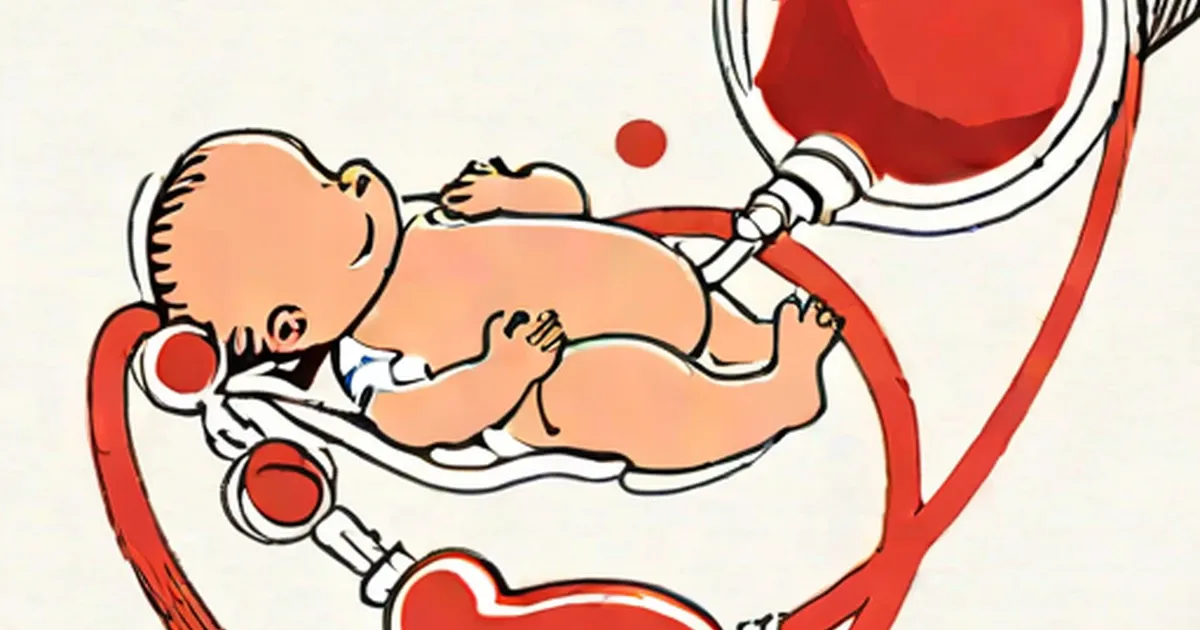
Umbilical cord blood banking is often referred to as biological insurance for a newborn baby. In fact, it’s an advancement of medical science that has helped in treatment of certain life-threatening diseases. Let’s look into the details about cord blood banking.
Umbilical cord is a flexible cord like structure that connects the developing fetus or embryo with the placenta. It consists of two umbilical arteries and one vein; umbilical vein is responsible for providing oxygenated, nutrient-rich blood to the developing fetus and the umbilical arteries remove the deoxygenated, nutrient-depleted blood. An umbilical cord is about 50 cm long and has a diameter of about 2 cm.
Umbilical Cord Blood
In general, the umbilical cord is cut after a baby is born; however some amount of blood still remains in the placental blood vessels and its attached umbilical cord. This blood is called umbilical cord blood or placental blood or simply cord blood. About 180 ml of cord blood can be obtained at the time of childbirth.
Cord blood contains all the basic elements of blood such as red blood cells (RBC), white blood cells (WBC), blood platelets and plasma. In addition, it contains blood-forming (hematopoietic) stem cells similar to the ones found in the bone marrow. They have the potential to develop into other types of cells of the body. Because of this important property of hematopoietic stem cells, cord blood is used for transplantation as an alternative to bone marrow.
Cord Blood Banking At present, umbilical cord blood storage
is done for treatment of certain high-risk illnesses. In both vaginal and cesarean deliveries, collection of cord blood is done shortly after birth; however, amount of cord blood collected in case of caesarian deliveries is less. The procedure for collecting cord blood is carried out by a qualified midwife or a physician.
Immediately after delivery of a baby, both sides of the umbilical cord are clamped and cut. After cutting, one side of the cord is unclamped and a tube is inserted in the umbilical vein to collect blood. Collection is also done from the side of placenta that the embryo is connected and the large blood vessels that reach the fetus. Usually, collection takes less than 10 minutes and about 75 ml of cord blood is used for storing.
The collected blood is placed in bags and sent to the cord-blood bank for future use. The cord blood will be assigned with an identification number. Cord-blood banks can be either private or public - private or family cord-blood banks store cord blood for future use to treat diseases within the family, whereas public banks store the same for the benefit of other people. Majority of the private banks charge an amount of $2000 for preserving the cord blood.
Some of the cord-blood banks separate out the red blood cells, whereas some prefer to retain them. In both the ways, the cord blood is processed and cryopreserved. A cryopreservant is added to the cord blood and is cooled down slowly to -90 Celsius. Then, it is transferred to a liquid nitrogen tank of temperature -196 Celsius. This way, the cells are kept alive and stored in a deep-freezing state. Tests for infectious diseases such as HIV, hepatitis and certain others are done before storing cord blood.
Cord blood is mostly used to treat diseases related to blood and immune system and for restoring functions of several genetic metabolic diseases. Studies have found out that cord blood transplants can treat more than 70 different diseases. Some of the diseases that are treated by using cord blood are leukemia, lymphoma, sickle cell anemia, osteopetrosis (genetic disorder of increase bone density) and Krabbe’s Disease (genetic brain disease). Parents who have a medical history of a major hereditary illness or bone marrow transplant can benefit from cord-blood banking for their children.
Donating Umbilical Cord Blood Earlier after childbirth
, the umbilical cord was thrown away as it is no longer needed for the baby. Now, instead of throwing away as a waste, it can be donated for public use. It is noteworthy that donating cord blood neither affects the mother nor the child. A healthy woman (18 years and older) who had a normal pregnancy and delivery can donate her child’s umbilical cord blood in public cord-blood banks. This can be used later for saving someone with a life-threatening disease.
If a woman has decided to donate cord blood, she needs to talk to the concerned physician and contact public cord-blood banks. If the concerned hospital has facilities for collecting public cord blood, then the public cord-blood bank will confirm whether she can donate or not based on the result of the blood test. If the blood test result is negative for infectious diseases, the concerned bank will give a consent letter in which the mother has to sign. After that further procedure of collecting and preserving cord blood is done and the cord blood is stored for public use.