Baroque Architecture
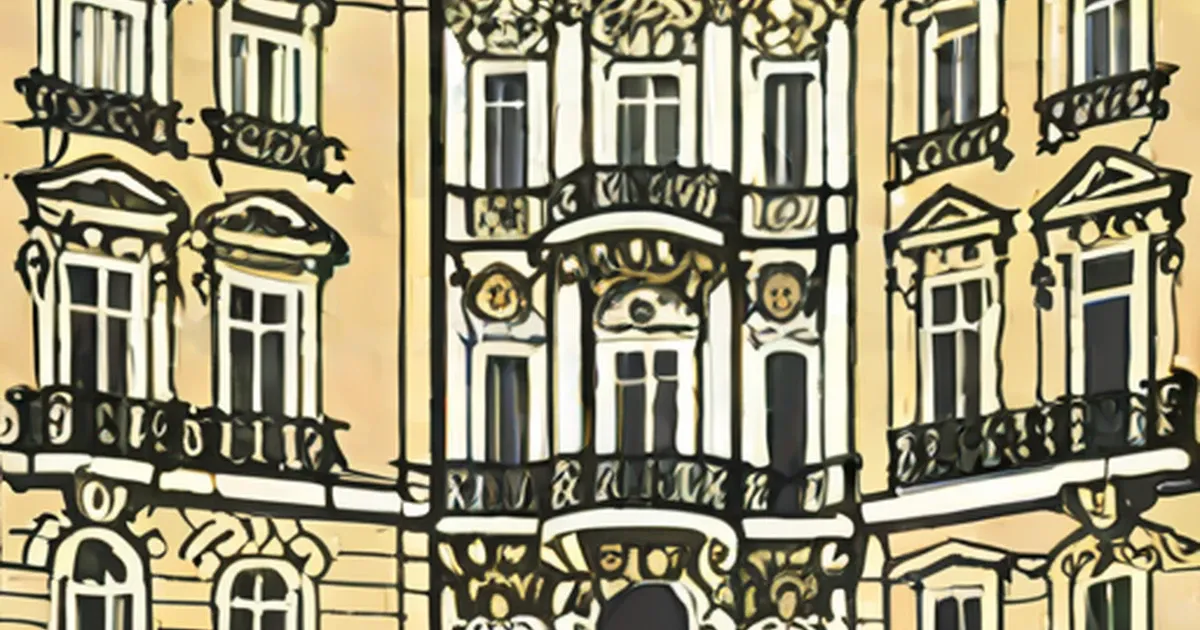
If you are one of those people who is fascinated with Baroque architecture, this article is just for you.
The term Baroque architecture were just words I had seen in the pages of books until last month when I stood in front of St. Paul’s Cathedral and tried to capture the beauty of it in my camera lens. I say tried, because this beautiful structure has so much to offer that some details could not be captured on camera, they just got etched in your mind!
Baroque Architecture
The architecture of this time was called Baroque because it was considered to be very odd. This architecture evolved out of Renaissance architecture in Italy in the 1600’s when the architects there began to get bored of the same symmetry and forms that they had been using for the past 200 years. When this happened, they began to make curving facades and used the double curve on many different buildings.
Marble, gilt and bronze were the materials the Baroque architects used in abundance. Oval was the most distinct shape of the Baroque style and was a very common shape among the Baroque buildings. Gian Lorenzo Bernini and Francesco Borromini were the two main architects of the Baroque era. Since Bernini’s first medium was sculpture, this was what he liked to incorporate into his buildings. Francesco Borromini was a sculpture and mason who incorporated many shapes and different forms into his designs.
Features of Baroque Architecture
Some of the features of Baroque architecture are listed below:
- Large-scale ceiling frescoes
- Dramatic or uniform use of light
- Dramatic central projection on the external fa’ade
- Opulent use of ornaments, such as plaster or stucco, marble or faux finishing
- Use of the interiors as a shell for painting and sculpture (especially during the late Baroque)
- Use of columns, domes, towers and oval windows
Baroque Architecture – Rome and South Italy
The beginnings of Baroque architecture were in the Italian paradigm of the basilica with the crossed dome and nave. The church of Santa Susanna was the first Roman structure to break with the Mannerist conventions exemplified in the Ges”. It was the use of dynamic columns and pilasters, central massing and the protrusion and condensation of central decoration that added complexity to the structure.
Saint Peter’s square has been praised as the masterstroke of the Baroque theatre. This square is shaped by two colonnades, which were designed by Gian Lorenzo Bernini on an unprecedented scale to suit the space and provide emotions of awe. The polychromatic oval church of Sant’Andrea al Quirinale was one of Bernini’s favorite designs.
Francesco Borromini was Bernini’s chief rival in the papal capital. Borromini condemned the anthropomorphic approach of the 16th century and thus, chose to base his designs in complicated geometric shape. The church of San Carlo alle Quattro Fontane, which is distinguished by a corrugated oval plan and complex convex-concave rhythms, is Borromini’s iconic masterpiece. Sant’lvo all Sapienza, one of his later works also displays the same antipathy to the flat surface and playful inventiveness, which was epitomized by a corkscrew lantern dome.
It was Carlo Fontana who was the most influential architect in Rome after Bernini’s death. Fontana’s academic approach exerted substantial influence on Baroque architecture through his prolific writing and also through a number of architects who he trained. It was the 18th century that saw the capital of Europe’s architectural world transferred from Rome to Paris with the Italian Rococo, which flourished in Rome from the 1720’s being profoundly influenced by Borromini’s ideas.
Baroque Architecture – North Italy
It was in the north of Italy that the monarchs belonging to the House of Savoy were receptive to the new style. Guarino Guarini, Filippo Juvarra and Bernardo Vittone were architects who were employed by them in order to illustrate their grandiose political ambitions and the newly acquired royal status of their dynasty.
Guarini who was a peripatetic monk, combined many traditions to create irregular structures that were remarkable for their unconventional facades and oval columns. The most flamboyant application of the Baroque style of architecture applied to the design of a private house in the 17th century may have been Guarini’s Palazzo Carignano.
It was Juvarra’s architecture that anticipated the art of Rococo with its weightless details, fluid forms and airy prospects. Bernado Vittone was one of the people who was profoundly influenced by the brilliance and diversity of Juvarra and Guarini. Bernardo Vittone is remembered for his flamboyant Rococo churches, which were quatrefoil in plan and delicate in detailing. His designs included features like multiple vaults, structures within structures and domes within domes.
Baroque Architecture – England
Christopher Wren was the person who rebuilt fifty-three churches in England after the Great Fire of London. Each church that was built by Wren displays Baroque aesthetics in its dynamic structure and multiple changing views. Wren’s most ambitious project was the St. Paul’s Cathedral, which has many similarities with the most effulgent domed churches of Italy and France.
Despite the fact that Wren was active in secular architecture too, the first truly Baroque country house was designed and built by William Talman at Chatsworth. The culmination of Baroque architecture comes with Sir John Vanbrugh and Nicholas Hawksmoor, who worked in tandem. Their most notable work was at Castle Howard and Blenheim Palace. Seaton Delaval Hall, which was a comparatively modest mansion, was Vanbrugh’s final work. It was at this place that Vanbrugh, who was a skillful playwright, achieved the peak of restoration drama, once again highlighting a parallel between contemporary theatre and Baroque architecture. Vanbrugh made an effort to make Baroque architecture a part of the English empire; unfortunately it was never truly one with the English taste.
Baroque Architecture – Spanish America
Baroque architecture in America developed as a style of stucco decoration with full-fledged American Baroque only appearing in 1664, when a Jesuit shrine on Plaza des Aramas in Cusco was built. Even after this structure, the new style hardly affected the structure of churches.
The monastery of San Francisco at Lima is an example of Peruvian Baroque architecture. The Church of Our Lady of La Merced, Lima is an example of the late Baroque type of Peruvian fa’ade. In Mexico there were some fantastically extravagant and visually frenetic architecture which was known as the Mexican Churrigueresque. Sagrario Metropolitano in Mexico City is a masterpiece by Lorenzo Rodriguez. Another example of Baroque architecture is the Baroque cathedral, the Sanctuary at Ocotlan which is surfaced in bright red tiles which contrast delightfully with a plethora of compressed ornament lavishly applied to the main entrance and the slender flanking flowers, which are on the interior and exterior.
Puebla is the true capital of the Mexican Baroque. It is here that a ready supply of hand-painted ceramics and vernacular gray stone led to its evolving further into a personalized and highly localized art form that had an Indian flavor. In Puebla you are sure to find about sixty churches whose facades and domes display glazed tiles of different colors and often arranged in Arabic designs. The interiors of these churches are densely saturated with gold leaf ornamentation. It was in the 18th century that local artisans developed a distinctive brand of white stucco decoration. This decoration was called alfenique, after a Pueblan candy made from sugar and egg whites.