Animal Cloning
What is Animal Cloning?
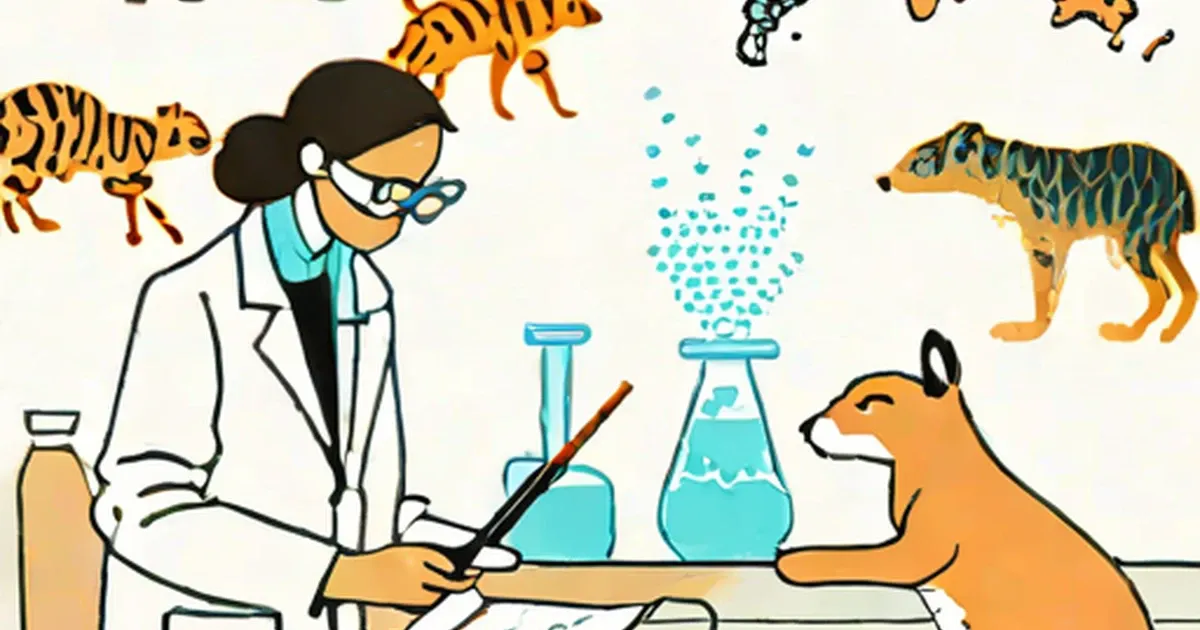
Animal Cloning is the process by which an entire organism is reproduced from a single cell taken from the parent organism and in a genetically identical manner. This means the cloned animal is an exact duplicate in every way of its parent; it has the same exact DNA.
Cloning happens quite frequently in nature. Asexual reproduction in certain organisms and the development of twins from a single fertilized egg are both instances of Cloning.
With the advancement of biological technology, it is now possible to artificially recreate the process of Animal Cloning.
Development of Animal Cloning in the Lab
Scientists have been attempting to clone animals for a very long time. Many of the early attempts came to nothing. The first fairly successful results in animal cloning were seen when tadpoles were cloned from frog embryonic cells. This was done by the process of nuclear transfer. The tadpoles so created did not survive to grown into mature frogs, but it was a major breakthrough nevertheless.
After this, using the process of nuclear transfer on embryonic cells, scientists managed to produce clones of mammals. Again the cloned animals did not live very long. The first successful instance of animal cloning was that of Dolly the Sheep, who not only lived but went on to reproduce herself and naturally. Dolly was created by Ian Wilmut and his team at the Roslyn Institute in Edinburgh, Scotland, in 1997. Unlike previous instances, she was not created out of a developing embryonic cell, but from a developed mammary gland cell taken from a full-grown sheep.
Since then Scientists have been successful in producing a variety of other animals like rats, cats, horses, bullocks, pigs, deer, etc. You can even clone human beings now and that has given rise to a whole new ethical debate. Is it okay to duplicate nature to this extent? Is it okay to produce human clones? What would that do to the fabric of our society?
The Process of Animal Cloning
Initial attempts at artificially induced Animal Cloning were done using developing embryonic cells. The DNA nucleus was extracted from an embryonic cell and implanted into an unfertilized egg, from which the existing nucleus had already been removed. The process of fertilization was simulated by giving an electric shock or by some chemical treatment method. The cells that developed from this artificially induced union were then implanted into host mothers. The cloned animal that resulted had a genetic make-up exactly identical to the genetic make-up of the original cell.
Since Dolly, of course, it is now possible to create clones from non-embryonic cells.
Now animal cloning can be done both for reproductive and non-reproductive or therapeutic purposes. In the second case, cloning is done to produce stem cells or other such cells that can be used for therapeutic purposes, for example, for healing or recreating damaged organs; the intention is not to duplicate the whole organism.
Ethics of Animal Cloning
While most scientists consider the process of animal cloning as a major break through and see many beneficial possibilities in it, many people are uncomfortable with the idea, considering it to be 'against nature' and ethically damning, particularly in the instance of cloning human beings.
The truth is that most of the general public are not aware of the exact details involved in cloning and as a result there are a lot of misconceptions about the entire matter.
In recent times, there have been a spurt of new laws banning or regulating cloning around the world. In some countries, animal cloning is allowed, but not human cloning. Some advocacy groups are seeking to ban therapeutic cloning, even if this could potentially save people from many debilitating illnesses.
Points against Animal Cloning
In a large percentage of cases, the cloning process fails in the course of pregnancy or some sort of birth defects occur, for example, as in a recent case, a calf born with two faces. Sometimes the defects manifest themselves later and kill the clone.
Points for Animal Cloning
On the favorable side with successful animal cloning - particularly cloning from an adult animal - you know exactly how your clone is going to turn out. This becomes especially useful when the whole intention behind cloning is to save a certain endangered species from becoming totally extinct.
That this is possible was shown by cloning an Indian Gaur in 2001. The cloned Gaur, Noah, died of complications not related to the cloning procedure.
Animal Cloning is the process by which an entire organism is reproduced from a single cell taken from the parent organism and in a genetically identical manner. This means the cloned animal is an exact duplicate in every way of its parent; it has the same exact DNA.
Cloning happens quite frequently in nature. Asexual reproduction in certain organisms and the development of twins from a single fertilized egg are both instances of Cloning.
With the advancement of biological technology, it is now possible to artificially recreate the process of Animal Cloning.
Development of Animal Cloning in the Lab
Scientists have been attempting to clone animals for a very long time. Many of the early attempts came to nothing. The first fairly successful results in animal cloning were seen when tadpoles were cloned from frog embryonic cells. This was done by the process of nuclear transfer. The tadpoles so created did not survive to grown into mature frogs, but it was a major breakthrough nevertheless.
After this, using the process of nuclear transfer on embryonic cells, scientists managed to produce clones of mammals. Again the cloned animals did not live very long. The first successful instance of animal cloning was that of Dolly the Sheep, who not only lived but went on to reproduce herself and naturally. Dolly was created by Ian Wilmut and his team at the Roslyn Institute in Edinburgh, Scotland, in 1997. Unlike previous instances, she was not created out of a developing embryonic cell, but from a developed mammary gland cell taken from a full-grown sheep.
Since then Scientists have been successful in producing a variety of other animals like rats, cats, horses, bullocks, pigs, deer, etc. You can even clone human beings now and that has given rise to a whole new ethical debate. Is it okay to duplicate nature to this extent? Is it okay to produce human clones? What would that do to the fabric of our society?
The Process of Animal Cloning
Initial attempts at artificially induced Animal Cloning were done using developing embryonic cells. The DNA nucleus was extracted from an embryonic cell and implanted into an unfertilized egg, from which the existing nucleus had already been removed. The process of fertilization was simulated by giving an electric shock or by some chemical treatment method. The cells that developed from this artificially induced union were then implanted into host mothers. The cloned animal that resulted had a genetic make-up exactly identical to the genetic make-up of the original cell.
Since Dolly, of course, it is now possible to create clones from non-embryonic cells.
Now animal cloning can be done both for reproductive and non-reproductive or therapeutic purposes. In the second case, cloning is done to produce stem cells or other such cells that can be used for therapeutic purposes, for example, for healing or recreating damaged organs; the intention is not to duplicate the whole organism.
Ethics of Animal Cloning
While most scientists consider the process of animal cloning as a major break through and see many beneficial possibilities in it, many people are uncomfortable with the idea, considering it to be 'against nature' and ethically damning, particularly in the instance of cloning human beings.
The truth is that most of the general public are not aware of the exact details involved in cloning and as a result there are a lot of misconceptions about the entire matter.
In recent times, there have been a spurt of new laws banning or regulating cloning around the world. In some countries, animal cloning is allowed, but not human cloning. Some advocacy groups are seeking to ban therapeutic cloning, even if this could potentially save people from many debilitating illnesses.
Points against Animal Cloning
In a large percentage of cases, the cloning process fails in the course of pregnancy or some sort of birth defects occur, for example, as in a recent case, a calf born with two faces. Sometimes the defects manifest themselves later and kill the clone.
Points for Animal Cloning
On the favorable side with successful animal cloning - particularly cloning from an adult animal - you know exactly how your clone is going to turn out. This becomes especially useful when the whole intention behind cloning is to save a certain endangered species from becoming totally extinct.
That this is possible was shown by cloning an Indian Gaur in 2001. The cloned Gaur, Noah, died of complications not related to the cloning procedure.

Animal Cloning
The world of science and the very concept of experimentalism have been woven into the fabric of life. There is a very thin line between the real and unreal now that science dares as never before! Cloning is a possible biodiversity enhancer, assuring the longevity of endangered species.
Clones for Supper?
The FDA has approved cloned animals for human consumption.
Food from Cloned Animals Ruled Safe to Eat
The European Food Safety Authority has declared that food from healthy cloned animals "should" be safe for consumers to eat.
Genetic Savings and Clone Forced to Shut Down
A biotechnology company that caused a stir by offering to clone pets for grieving owners has been forced to close its doors because there weren’t enough people willing to pay the price.
Cloned Meat is Safe for Consumers, Say Us Officials in 968-page Report
Provisional backing given by European agency· Critics claim method detrimental to welfare
Cloned Meat Could Be on Next Year's Us Christmas Menu
Ten years after the birth of the world's first cloned animal, Dolly the Sheep, America was set yesterday to become the first country to introduce meat and milk from cloned cattle into the food supply.
Discovered, Wiped Out and Cloned: the Bizarre Life Cycle of the Saola
Just over a decade ago, the saola made headlines round the world. Scientists discovered the animal in the remote Vietnamese highlands, the first large mammal to have been found anywhere in the world in more than half a century.
Stem Cell Pioneer Accused of Faking All His Research. Apart From the Cloned Dog
· Korean scientist fabricated series of research results · Only cloning of Snuppy the puppy found to be true
After Dolly the Sheep Comes Snuppy the Puppy
Scientists have finally broken the hound barrier - they have cloned an Afghan puppy called Snuppy from the skin cells of a three-year-old male hound.
Koreans Create Something Exactly Like a Hound Dog
A team of South Korean scientists announced today that they have successfully cloned a dog for the first time.
Horse Racing: Bloodstock and Biotech Face Off
The cloning of a champion endurance horse, long-since gelded, has raised questions about the future of racing, says Greg Wood.
Scientists Clone Champion Racehorse
Scientists have cloned a champion racehorse for the first time. The foal, born in February, is the world's first stallion clone, and the first clone from a sterile animal.
T-rex Find Could Bring Jurassic Park to Life
Scientists say dinosaur cloning possible from DNA.
"Kitty Kitty"
News Item: A Texas woman paid $50,000 for a clone of her deceased pet cat, Little Nicky, the first such clone-to-order sale in the US.
The World's First Cloned Pet (cost $50,000)
A cat lover in Texas has become the world's first owner of a cloned-to-order feline, paying $50,000 for a genetic duplicate of her dead pet.
Cloning Breeds Hope for India's Big Cats
Scientists' $1m plan to save Asiatic lions and return cheetahs to the wild. Indian scientists have announced ambitious plans to use cloning technology to save the country's dwindling lion population from extinction and return Asiatic cheetahs, which disappeared from India half a century ago, to the wild.
Cloned Meat a Step Nearer Us Menus
Food agency gives the all clear, but it will be years before test-tube animals are cheap enough to eat. America moved a step closer to serving meat and milk from cloned animals or their progeny yesterday when the government's food regulation agency said they would be as safe to eat as conventional foods.
Cloning Breakthrough Raises Hope of Tackling Human Diseases
Researchers in France report in Science today that they have successfully transferred DNA from an adult rat cell into an egg, raising hopes that scientists will be able to test promising drugs on identical, genetically modified rats.
Pig Heart Attacks Raise New Fears About Cloning
After three pigs cloned from adult animals recently died of heart attacks before reaching six months of age, new questions about the health of cloned animals are being raised.
Scientists Announce First Cloned Horse
Italian scientists have announced the birth of a cloned female foal named Prometea. Prometea is not only the first horse to be cloned, but is also the first clone born to its genetically identical mother.
Cloned Foal Romps Into Record Books
Prometea the Halflinger foal is little more than three months old, but already has a place in the record books as the first horse to be cloned. It is also the first cloned mammal born to its genetic mother. It could show the way to a new generation of champion jumpers or show horses - and...
Japanese scientists take first step towards cloning ice age beast
After a six-year search Japanese scientists are preparing to clone prehistoric woolly mammoths from frozen DNA samples found in Siberia.
First Mule Clone Born
University of Idaho and Utah State University scientists recently created the first clone of a mule. Idaho Gem, named after the state in which he was born, is "vigorous and healthy," according to Dr. Dirk K. Vanderwall, who participated in creating him.
Cow Gives Birth to First Clone Created in Africa
Embryo Plus recently announced that one of its cows had given birth to the first animal clone created in Africa. Futhi, a Holstein whose name is the Zulu word for "replica," was created with deoxyribonucleic acid extracted from an ear cell of a former South African milk production record holder.
Dolly the sheep is put to sleep, aged only six
She was a copy. And, like most copies, she faded a little bit quicker than the original. Dolly the sheep, the world's first animal to be cloned from an adult cell, has been put to sleep, it was announced yesterday. She was only six and a half years old - barely 40 in human terms.
New Zealand Clones Cows for Cheaper Cheese
New Zealand scientists have cloned genetically modified cows to make the first GM milk for sale in shops and supermarkets. The team - from a centre belonging to a government-owned research institute in Hamilton, 80 miles south of Auckland - say that the cows will make cheese-making...
Milking the technology
Agricultural cloners hope to make money out of cloning, but how? Sale of meat from slaughtered, cloned animals to the consumer.
The Cloned Cow Coming to a Farm Near You
Genesis has her head stuck in a bale of hay on Greg Wiles's farm. She has the same large glossy body as her mother, Zita, once the reigning queen of American dairy cattle, and Zita's trademark white triangle patch on her forehead. Actually, Genesis is Zita, or her genetic double. The...
Scientists Claim Cloning Success
Researchers in the US have fabricated and implanted primitive artificial kidneys using tissue from a cloned animal embryo, it was announced last night.
Back from the dead
Scientists who for three years have been trying to clone the extinct Tasmanian Tiger say they have made a breakthrough. But Julia Leigh, who wrote a novel about one man's search for the last remaining thylacine, is dubious.
Scientists Pledge to Clone Extinct Tasmanian Tiger
A team of Australian scientists pledged yesterday to salve their country's conscience by bringing a cloned Tasmanian tiger back to the island where it was hunted to extinction more than 60 years ago.
First Cloned Kitten - But It's Not an Exact Copycat
The world's first cloned cat, announced in the online edition of the journal Nature yesterday, heralds the possible beginning of a lucrative industry to bring beloved family pets back from beyond.